Could Africa finance nuclear power by taking the world’s radioactive waste?
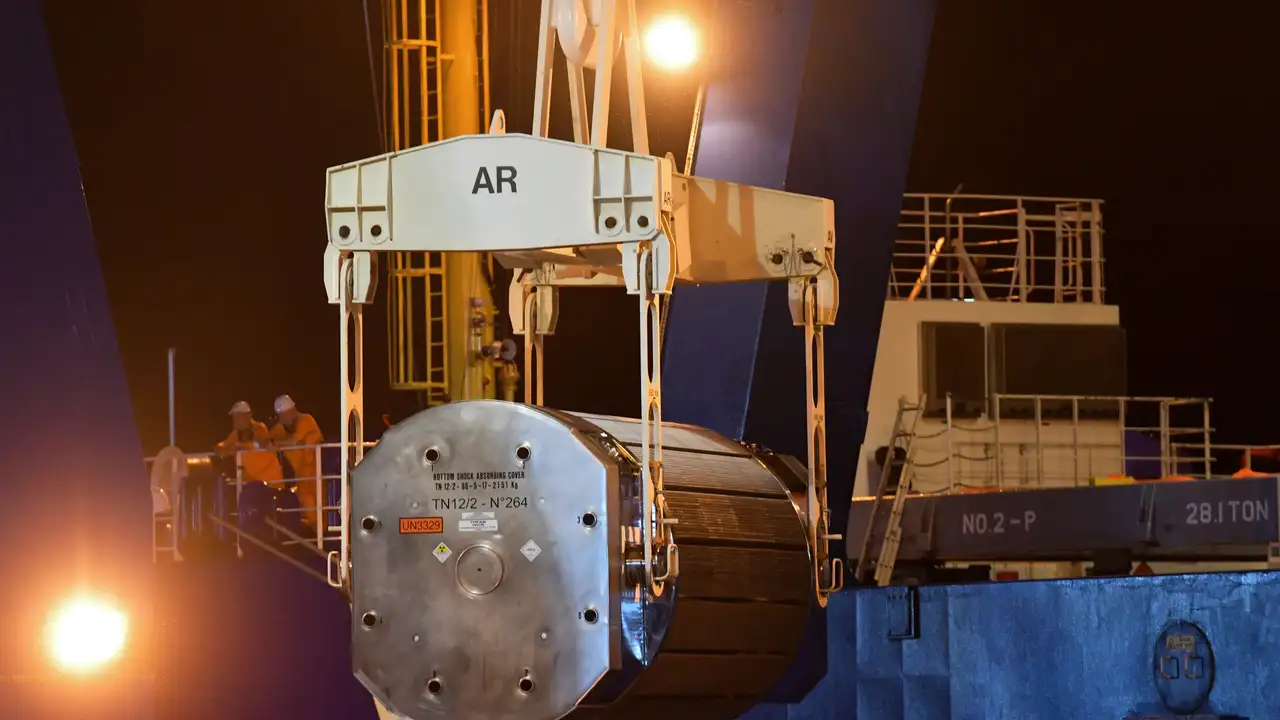
Africa’s nuclear ambitions face an expensive problem: building a power plant can require billions of dollars before it generates electricity.
DeepGEO believes part of the answer could lie in another difficult problem, which is what the world does with spent nuclear fuel.
The nuclear project developer is pursuing a model combining nuclear power development with deep geological repositories (DGRs), underground facilities designed to isolate high-level radioactive waste.
David Hess, DeepGEO’s chief business development officer, told Global South World that multinational repositories could allow a host country to accept spent fuel from other countries for a fee, with some proceeds potentially supporting nuclear development.
“If we can establish that, some of this capital that is provided via the trust fund would be invested into new nuclear infrastructure projects,” he said.
RECOMMENDED FOR YOU
Six countries account for three-quarters of Europe’s unicorn startups
DeepGEO's plans are not limited to Africa. The company is also pursuing potential projects in Finland and Canada, with Hess saying it is seeking to launch the multinational repository concept in Finland first.
Why Africa?
DeepGEO sees Africa as a potential nuclear growth market, but Hess acknowledged that many countries are not yet ready under existing international requirements.
Financing is another obstacle. The international environment is changing, however. In 2025, the World Bank Group and International Atomic Energy Agency (IAEA) formalised a partnership on nuclear energy, marking the Bank's first concrete step towards re-engaging with nuclear power in decades.
DeepGEO proposes that countries with spent fuel could pay a host to dispose of it. Hess said customer payments would cover repository operations, with additional money going into a trust fund that could support development and provide financial protection if remediation were eventually required.
Countries developing nuclear power also have to confront what happens to their high-level radioactive waste. In the absence of a regional or international solution, countries pursuing nuclear energy must ultimately develop their own national disposal facilities. DeepGEO argues that a multinational repository could offer an alternative by allowing countries to share disposal infrastructure rather than each developing a separate facility.
DeepGEO also argues that the proposition offers benefits beyond waste disposal. Nuclear power can provide reliable, low-carbon electricity, while nuclear infrastructure projects can bring investment, specialised jobs and supporting infrastructure. A multinational repository, under the company's model, could add another source of investment while providing a long-term destination for spent nuclear fuel.
The company itself remains at an early stage. Hess described DeepGEO as a startup and said it had completed an angel investment raise of about $5 million. The funding has supported the development of four teams that identify and work with willing communities on infrastructure development. The company is now raising its next round, which Hess said would allow it to acquire and begin the permitting process for an initial site.
In Ghana, DeepGEO has a regional team currently focused on small modular reactor (SMR) development and has held discussions with government departments, industries and potential financiers. But Hess said there is currently no formal agreement between the company and any Ghanaian government agency.
RECOMMENDED FOR YOU

Olympic flame arrives on African soil for first time as Senegal begins Dakar 2026 countdown
DeepGEO previously pursued multinational repository development in Ghana, but Hess said the government response was not favourable. The company's current priorities in its African locations are nuclear power development and capacity building, with the multinational repository proposition potentially coming later.
Can the waste be kept safe?
Any such model hinges on a much longer-term question: whether highly radioactive material can be safely isolated for periods extending far beyond the lifespan of the company storing it.
Enobot Agboraw, an international nuclear energy expert and advisor who spent 32 years working at the IAEA, told Global South World that deep geological disposal remains the strongest available solution.
“In terms of sustainability, a deep geological repository is the best solution for storing spent fuel and high-level radioactive waste,” he said, noting that repositories combine engineered barriers with rock formations that can remain stable for extremely long periods.
IAEA guidance similarly describes deep geological disposal as suitable for spent nuclear fuel and high-level waste requiring long-term isolation, using engineered barriers within stable geological environments.
Agboraw said one conceivable long-term failure would involve a breakdown of institutions so severe that records identifying repository locations were lost and future generations inadvertently drilled into them. Even then, he argued, repositories are designed to be deep, backfilled and sealed without requiring continuing human intervention.
Transport presents another concern if the repository accepts foreign material.
Agboraw said spent fuel is already transported internationally under rules covering safety, security, safeguards and liability, using casks designed to maintain containment during accident scenarios. IAEA transport standards provide an international framework for moving radioactive material and include provisions covering emergency response and radiation protection.
RECOMMENDED FOR YOU
Norway has Europe’s highest petrol prices, Russia and Belarus remain cheapest
Who ultimately owns the risk?
The harder question may be who remains responsible after the commercial operator is gone.
Asked what would happen if DeepGEO eventually ceased to exist, Hess acknowledged that responsibility would ultimately have to pass to the state under arrangements established for a repository.
“At some point, many decades into the future… there could be a transfer of liability,” he said. “Any asset in a country reverts to the nation if all else fails. DeepGEO protects against that with a self-insurance fund and layers of insurance.”
There is also the political question of whether accepting foreign nuclear waste could amount to wealthy nuclear countries transferring an unwanted burden to countries seeking investment.
Agboraw challenged that interpretation. He compared the proposition with manufacturing and services moving internationally and argued that geological disposal should be considered an industrial and technological specialisation if stringent safety standards are maintained.
For Hess, the greater risk is that Africa’s nuclear projects never materialise.
“The thing which scares me most of all is that these nuclear projects never get started,” he said.
This story is written and edited by the Global South World team, you can contact us here.
