'Dragon-Restaurant Diplomacy' is more profound - and appreciated - than Western critics claim
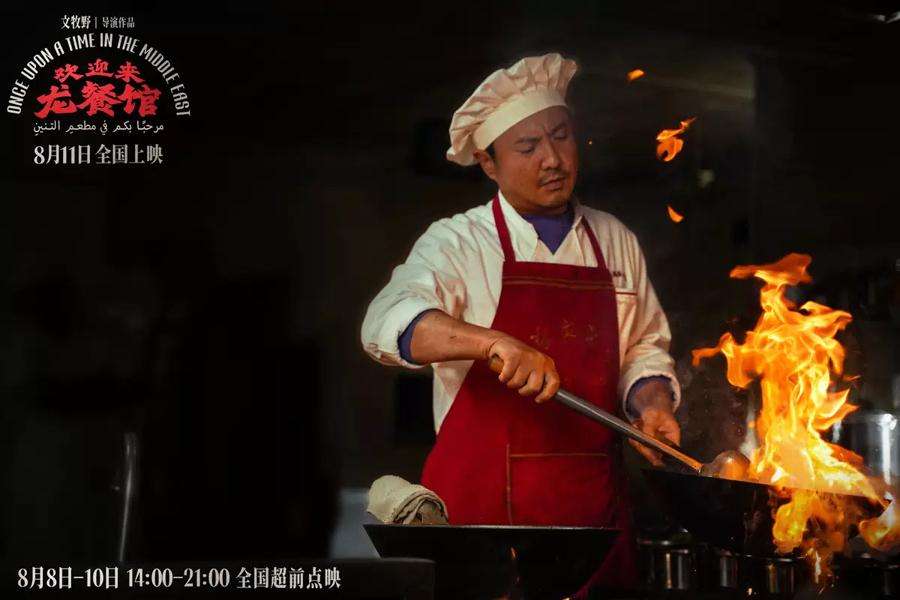
Recently, the Chinese film Welcome to the Dragon Restaurant (internationally titled Once Upon a Time in the Middle East) has sparked significant attention. Set against the backdrop of war in the Middle East, the film revolves around a simple, grounding theme: "eating well and raising children well." However, this struck a nerve with some Western commentators.
While I have lived and worked in my journalistic career on three continents, I have never been based in an active war zone. However, I have many colleagues who emerged from the chaos of Iraq, Syria, and Libya, sharing a unique, profound calmness forged through life-and-death trials. My conversations with four former war correspondents reveal that the film's gritty and cruel scenes closely mirror their own war-torn memories.
The real "Dragon Restaurant"
The correspondents found the film’s depiction of the Middle East highly authentic, though in reality, civilians face the deadliest threats from unpredictable car and suicide bombs. Yanyan Xu, who served in Iraq, recalled a truck exploding outside his hotel. His first instinct was not fear, but duty to his audience - a rush to file a news flash; the fear only set in later when he realised the blast had claimed the lives of security guards just a few metres away. Coincidentally, Yanyan Xu lived next to Baghdad's only Chinese restaurant, located dangerously on the edge of the "Green Zone". Just like in the film, the restaurant was eventually destroyed by a car bomb.
RECOMMENDED FOR YOU
Nepal flood death toll rises to 389 as hundreds remain missing
Delayed Fear and the "One in 1.8 Million" in Syria
In a war zone, fear is a delayed emotion. Once a correspondent in Syria, Xu Dezhi remembered a rocket striking near his hotel in Damascus. Instead of seeking shelter, his instinct drove him toward the blast for news, initially unfazed by the danger from secondary strikes. While a Chinese ambassador once quantified the chance of dying from random explosives as "one in 1.8 million," the more real threat for journalists of East Asian appearance was kidnapping.
Syria’s complex civil war created an epistemological crisis for journalists. To find the truth amidst propaganda, Xu Dezhi built a mental "Venn diagram," overlapping information from the government, opposition, Kurdish forces, and even ISIS to find the single intersection of facts. Refusing to trust manipulated death tolls, they maintained objectivity by strictly attributing claims rather than asserting what they could not verify.
Wang Meng recalled a 20-year-old in Libya who instantly switched from a naive Inter Milan football fan to a fierce warrior ready to die. Even more tragic was the war-weariness of the children. Once, loud gunfire startled Wang and the local children, accustomed to the violence, actually apologised to her for the noise. It was a heartbreaking demonstration of how war warps a child's sense of normalcy.
Breaking the Hollywood filter: The non-participant's gaze
The film’s most devastating undertone is the psychological destruction of civilians. When homes are destroyed and loved ones killed, pure hatred turns ordinary people into extremists. The film masterfully uses a montage: an orphan frying an egg that slowly burns to a crisp, intercut with children sent as suicide bombers - a chilling metaphor for young lives consumed by extremist ideologies.
The film provides a distinct "Chinese narrative" characterised by a detached observation. Because China is a non-participant without the historical baggage of dropping bombs or backing warlords in the region, the film dares to strip away political hypocrisy. It skips Western moral dilemmas and focuses entirely on the civilians struggling to survive in the crevices of war.
This very focus on ordinary survival, however, has struck a nerve with some Western commentators. Recently, The Economist coined the term "Dragon-restaurant diplomacy," mocking the film's simple theme of "eating well and raising children" as a reflection of China's supposedly shallow, commercially driven foreign policy. Yet, this critique exposes a profound arrogance.
RECOMMENDED FOR YOU
Goita pledges stronger military and domestic-led growth as Mali marks independence
For those trapped in the rubble of the Middle East, the most urgent questions are not about abstract political models, but tangible realities: having electricity, sending children to school, and ensuring hospitals function. Believing that these basic needs are less "profound" than ideological debates is, in itself, a shallow political judgment. Chinese diplomacy does not demand that other nations replicate its model; it understands that development and survival are the bedrock of human dignity.
As my war correspondent colleagues noted, recording these conflicts is about preserving an unmanipulated draft of history for justice, and reminding those in peacetime how ugly war truly is. A restaurant striving to stay open amidst gunfire is not a symbol of shallow diplomacy, but a quiet resistance against violence. True diplomatic success is not about dictating the geopolitical chessboard, but ensuring that everyone has a chance to sit at the table, eat well, and live in peace. And what could be more profound than that?
(Du Yubin is a CGTN journalist, producer, and chief editor. Having been stationed in Washington, D.C., and London for six years, he focuses on Sino-US and Sino-European relations, with over 16 years of experience in international communication and new media. This article solely represents the author's personal views.)
