Customer service from local authorities? Yes, it is possible. Opinion
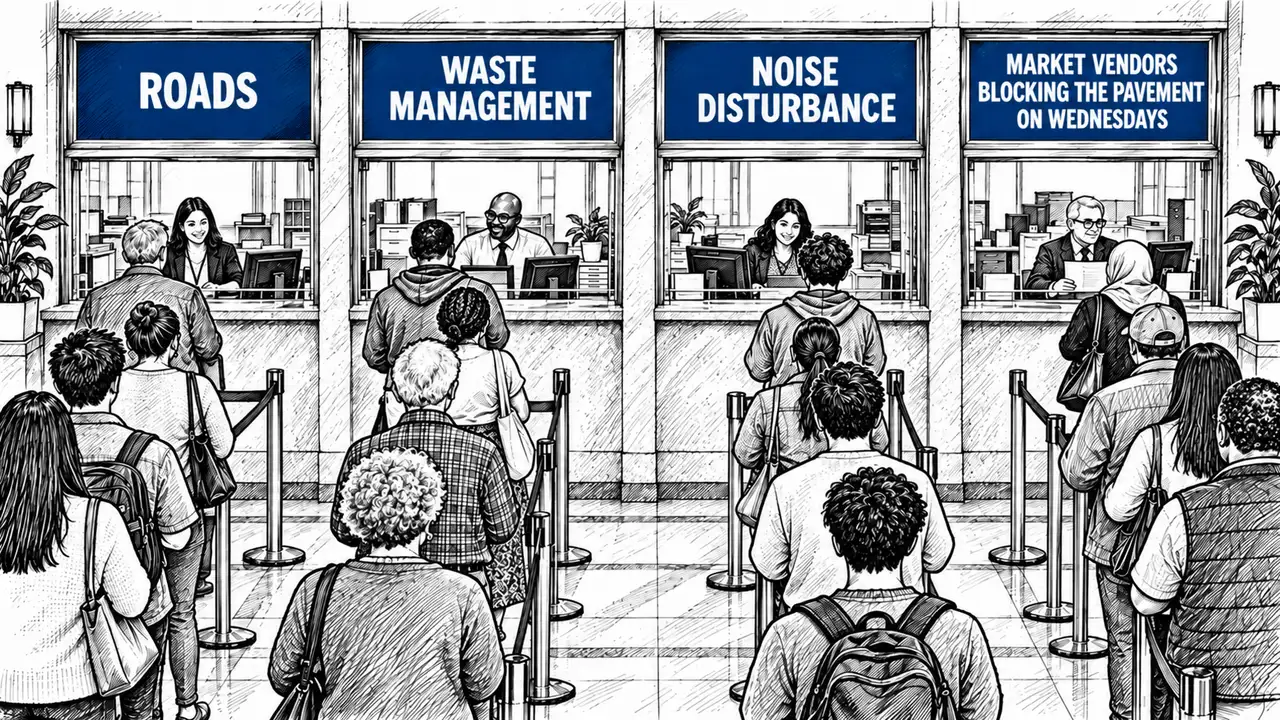
Asking Europeans and Americans about government customer service usually elicits little more than a shrug of resignation. In Paris, efforts to research citizen responses were undermined by the fact that most people didn't even know they could contact the local authorities, and had certainly never tried. In London, users of the 111 non-emergency health line were often simply told to visit a hospital. Many are so familiar with being told that their complaint needs to be dealt with by a different department that they simply give up. Interviewees in Madrid acknowledged the convenience of municipal apps for reporting minor issues like broken streetlights, yet they shared a common frustration: a lack of follow-up, leaving them entirely unaware of whether the issue had genuinely been resolved.
The story is similar in the US, at least in areas where such services exist. In New York, residents mentioned the 311 non-emergency service line, pointing out that staff and resource shortages often stretch a promised "24-hour response" into a lengthy wait of several weeks.
Having lived in Washington and London for over a decade, I had grown accustomed to a certain pace of public service. However, upon returning to Beijing last winter, a series of firsthand experiences fundamentally overturned my perception of what efficient public governance looks like. Take a recent experience in Tianjin as an example. While dining at a restaurant, I was asked to pay a mandatory fee for "sterilised tableware". I refused this charge and dialled the local mayor's hotline. The speed of the response was unexpectedly fast. In less than two hours, staff from the Market Regulation Bureau replied, stating explicitly that the charge was a violation of regulations. They promised to inspect and address the practice, demanded they apologise to me, and initiated a strict follow-up procedure. That afternoon, the restaurant did indeed call to apologise, inviting me back to inspect their rectifications. Due to a scheduling conflict, I could not go, but the Bureau called me again later to confirm whether I was satisfied with the outcome. Since then, I have also used the hotline to report several other public infrastructure issues: an escalator at a high-speed railway station that only travelled upwards, smoking in the connecting carriages of trains, and a hazardous bus stop outside a park exit that was placed directly next to the motor vehicle lane instead of on the pavement. Expecting an instantaneous resolution to all these structural issues would be unrealistic but what impressed me deeply was the authorities' prompt acknowledgement, their visible efforts, and the clear direction provided towards a solution.
The structure of power
The massive disparity in response times and resolution rates stems fundamentally from the underlying architecture of administrative power. In countries like the US and the UK, public governance is fragmented, with local councils and counties holding separate responsibilities and accountabilities. While this autonomy facilitates localised decision-making, it frequently leads to fragmented services, staff shortages, low overall efficiency, and a noticeable lag in digital transformation. China employs a more vertical and unified administrative model. This structure allows for the rapid mobilisation of resources and enables the highly efficient rollout of digital government initiatives nationwide. In recent years, China's advancements in digital governance have been transformative. Policies such as the "Run at Most Once" initiative have drastically streamlined red tape. Digital government platforms ensure that issues are actively tracked and allocated, complete with a mandatory feedback loop, preventing complaints from vanishing into the bureaucratic void. The core objective of public governance is always to genuinely serve the people.
RECOMMENDED FOR YOU

Six countries account for three-quarters of Europe’s unicorn startups
The Jie Su Ji Ban (Swift Response to Public Complaints) forum which will be held in Beijing perfectly embodied this spirit. This event provides a crucial platform for mutual learning, exploring how global cities can share and implement best practices. Just as interviewees in New York were curious about how China uses technology to handle non-emergency issues, and Londoners wished to understand data analysis in Chinese public services, cross-border administrative exchanges hold immense value. By juxtaposing the robust feedback mechanisms of China's hotline systems with the community initiatives of Western metropolises, cities worldwide can find inspiration for improvement. Enhancing public governance is a shared global goal, and drawing upon diverse experiences will provide a clear roadmap for the future of modern city management.
Du Yubin is a CGTN journalist, producer, and chief editor. Having been stationed in Washington, D.C., and London for six years, he focuses on Sino-US and Sino-European relations, with over 16 years of experience in international communication and new media. This article solely represents the author's personal views.
