Elon Musk predicts a $250 trillion humanoid robot market
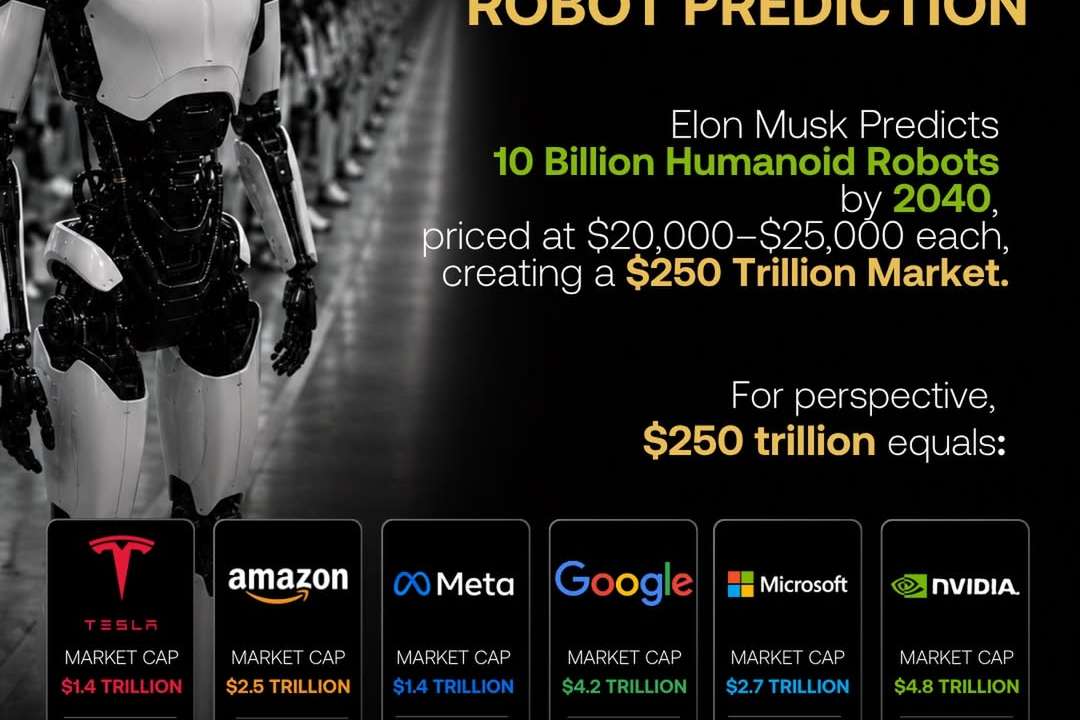
Tesla CEO Elon Musk has projected that humanoid robots could become one of the largest industries in history, forecasting a global market worth as much as $250 trillion by 2040 if billions of robots are deployed worldwide.
Main Points
- Musk predicts 10 billion humanoid robots by 2040.
- Tesla targets mass production of its Optimus robot.
- A $250 trillion market would exceed today's biggest tech companies combined.
Tesla CEO Elon Musk has projected that humanoid robots could become one of the largest industries in history, forecasting a global market worth as much as $250 trillion by 2040 if billions of robots are deployed worldwide.
Speaking about Tesla's Optimus programme, Musk said he believes there could eventually be around 10 billion humanoid robots in operation globally, with each unit priced between $20,000 and $25,000. Based on those figures, the market could reach approximately $250 trillion, dwarfing the current valuations of the world's largest technology companies.
The prediction comes as Tesla accelerates development of Optimus, a general-purpose humanoid robot first unveiled in 2021. The company has demonstrated successive generations of the robot performing tasks such as walking, carrying objects, sorting items and operating in controlled factory environments.
Tesla plans to begin wider deployment of Optimus within its own manufacturing facilities before expanding commercial availability. Musk has repeatedly described the robot as potentially more significant to Tesla's long-term future than its electric vehicle business.
RECOMMENDED FOR YOU
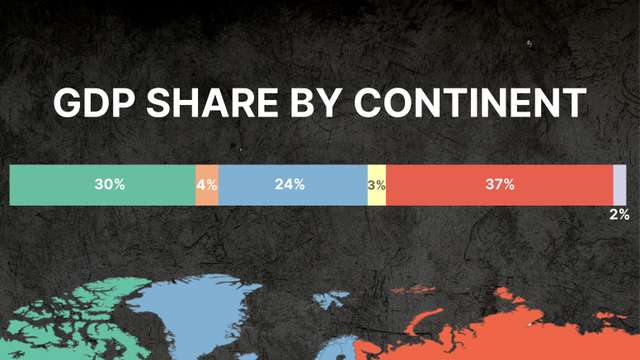
Asia produces the largest share of global GDP
The forecast aligns with growing interest across the robotics industry. Goldman Sachs estimates the global humanoid robot market could reach tens of billions of dollars over the next decade, driven by advances in artificial intelligence, declining hardware costs and labour shortages in manufacturing, logistics and elder care.
However, Musk's projection remains far more ambitious than most industry forecasts. Analysts note that reaching 10 billion robots would require production volumes comparable to or exceeding the world's human population, alongside breakthroughs in AI, battery technology, safety systems and manufacturing capacity.
The scale of the prediction becomes clearer when compared with today's corporate giants. According to CompaniesMarketCap data, a $250 trillion market would be worth roughly 52 times Nvidia's market value, 60 times Google's parent Alphabet, 93 times Microsoft, 100 times Amazon and nearly 180 times Tesla's current valuation.
Despite the challenges, investment in humanoid robotics is accelerating. Companies including Tesla, Figure AI, Agility Robotics, Boston Dynamics, Unitree and Chinese manufacturers are competing to commercialise machines capable of performing repetitive and physically demanding tasks currently carried out by humans.
Whether Musk's $250 trillion forecast becomes reality remains uncertain, but industry analysts agree that humanoid robots are moving from science fiction toward commercial deployment, setting up what could become one of the defining technology races of the coming decades.
This story is written and edited by the Global South World team, you can contact us here.