EU ends duty-free era for low-value imports
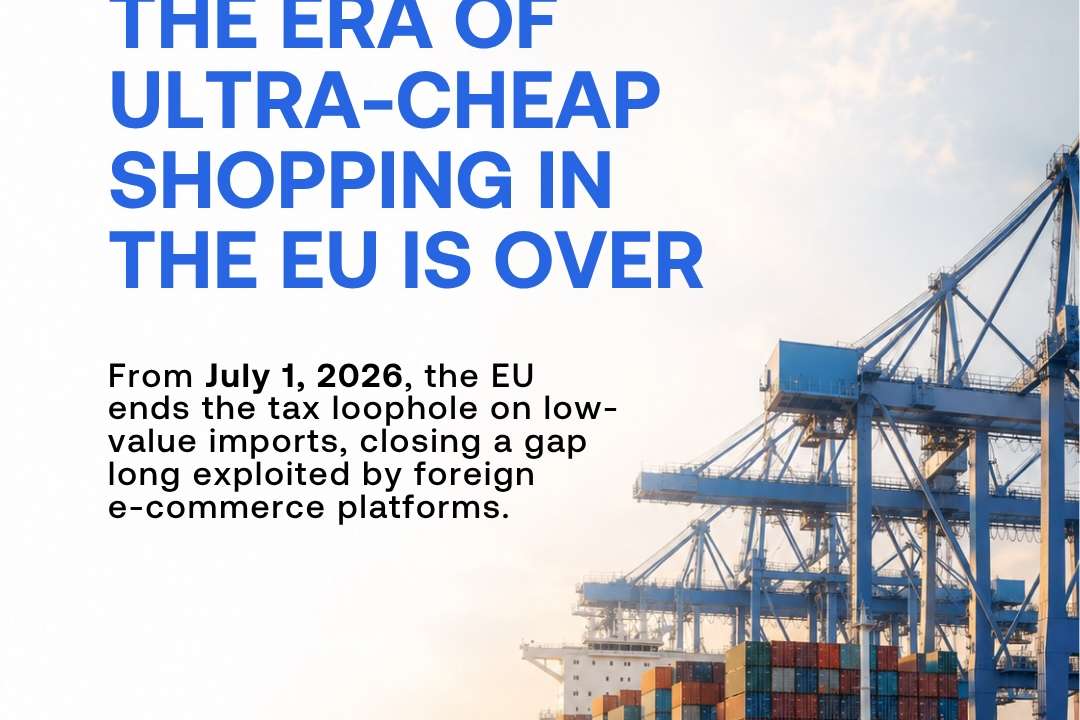
The European Union has introduced sweeping changes to the way low-value imports are handled, ending a long-standing system that allowed millions of inexpensive parcels to enter the bloc with minimal customs scrutiny.
Main Points
- EU ends simplified customs rules for low-value imports
- New customs fees and declarations raise shopping costs
- Reform targets unfair competition and stronger product safety
The European Union has introduced sweeping changes to the way low-value imports are handled, ending a long-standing system that allowed millions of inexpensive parcels to enter the bloc with minimal customs scrutiny.
Since 1 July 2026, new customs rules have been designed to tighten oversight of cross-border e-commerce, improve product safety and create fairer competition for European retailers.
The reform, proposed by the European Commission as part of its Customs Union overhaul, comes after a surge in small parcels shipped directly to EU consumers. According to the Commission, around 5.8 billion low-value consignments entered the EU in 2025, equivalent to roughly 12 million parcels every day. Approximately 90% of those shipments originated from China, with platforms such as Shein, Temu and AliExpress accounting for a significant share of the volume.
Under the new framework, every imported parcel will require a customs declaration, including consignments valued below €150, which previously benefited from simplified procedures.
RECOMMENDED FOR YOU
Democrats expand 2026 senate battlefield, Republican-held seats come under pressure
Online marketplaces also face a handling fee on direct-to-consumer shipments. The European Commission has proposed a €2 fee for parcels handled through the Import One Stop Shop (IOSS) system and €3 for consignments processed outside that scheme.
The measure still requires approval by EU member states and the European Parliament, but customs reforms introducing stricter controls have begun taking effect from July. Reuters has reported that the proposed fee is intended to help national customs authorities manage the rapidly growing volume of imports.
Consumers may therefore face higher final prices as retailers pass on some of the additional administrative and customs costs.
EU officials argue that the existing system has struggled to cope with the explosive growth of ultra-low-cost online shopping.
The Council of the European Union and the European Commission say the reforms aim to reduce unfair competition for European businesses, strengthen customs enforcement and improve checks on products entering the single market. Authorities have repeatedly raised concerns about unsafe products, undervalued shipments and counterfeit goods entering through high-volume e-commerce channels.
The Commission estimates that the previous customs framework was designed for a far smaller volume of imports and no longer reflects today's digital retail market.
This story is written and edited by the Global South World team, you can contact us here.