EU irregular border crossings fall 35% as Western Mediterranean route rises
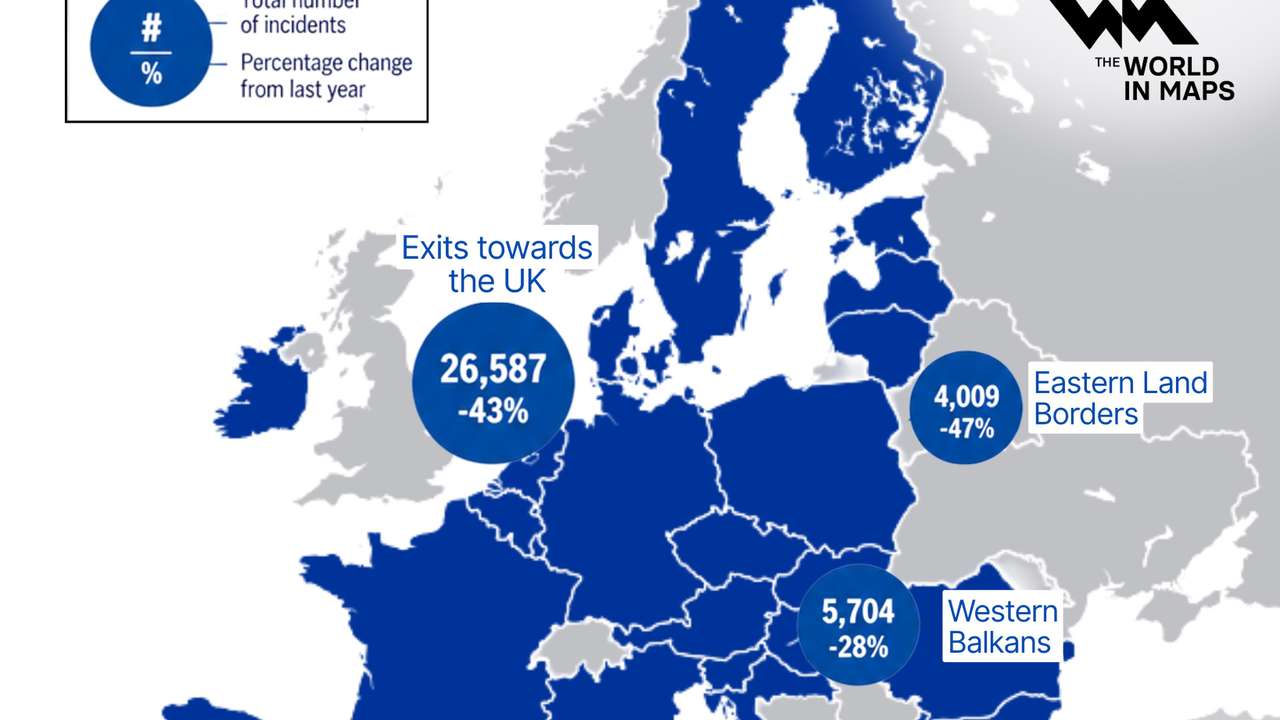
Irregular border crossings into the European Union fell sharply in the first eight months of 2026, but one route moved in the opposite direction as arrivals towards Spain increased, according to preliminary data from EU border agency Frontex.
Key points
- EU irregular crossings fell 35% overall
- Western Mediterranean crossings rose 34%
- Central Mediterranean arrivals dropped 55%
Irregular border crossings into the European Union fell sharply in the first eight months of 2026, but one route moved in the opposite direction as arrivals towards Spain increased, according to preliminary data from EU border agency Frontex.
Frontex recorded just over 74,000 irregular border-crossing detections between January and August, down 35% from the same period in 2025. Most of the EU's major migration routes recorded substantial declines.
The biggest exception was the Western Mediterranean route, linking North Africa mainly with mainland Spain and the Balearic Islands. Frontex recorded about 15,900 crossings, an increase of 34% from a year earlier, with Algeria becoming the main country of departure.
That stands in sharp contrast with the Central Mediterranean, where detections fell 55% to about 19,400. The Western African route to the Canary Islands dropped 58% to 5,070, while the Eastern Mediterranean recorded more than 24,200 crossings, down 25%.
RECOMMENDED FOR YOU
Argentina takes Britain to International Court, demands halt to Falklands oil project
The Eastern Mediterranean remained the busiest individual route over the eight months. Movement from eastern Libya towards Crete was particularly significant, although by July the land border with Türkiye had become the busiest section of that route.
Despite the overall decline, the figures show that migration pressure can shift quickly from one route to another. The route from eastern Libya to Crete, for example, has become increasingly busy while crossings elsewhere have fallen.
This story is written and edited by the Global South World team, you can contact us here.