Europe’s independence movements share a cause, but not the same goal
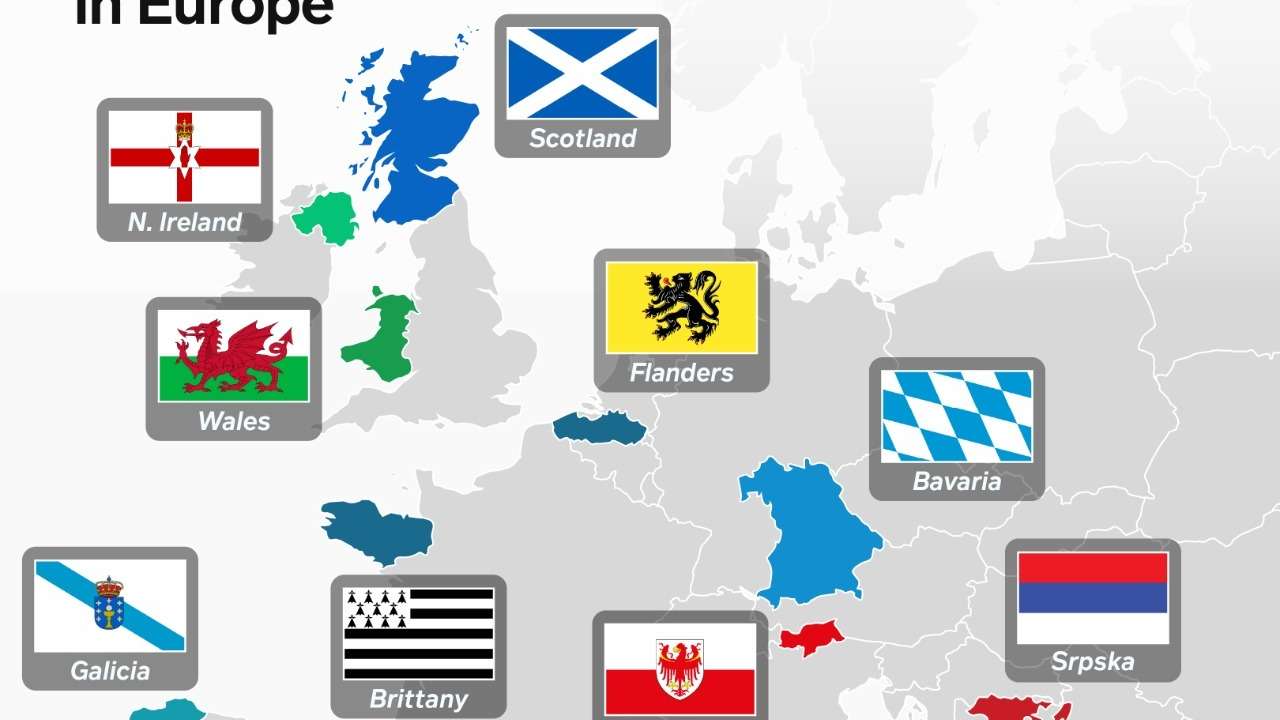
From Scotland to Catalonia, movements seeking independence or greater self-government remain part of Europe's political landscape, but the map risks making very different campaigns look more alike than they really are.
Key points
- Scotland has renewed its push for another referendum
- Catalonia and Flanders retain influential nationalist movements
- Some regions seek greater autonomy rather than independence
From Scotland to Catalonia, movements seeking independence or greater self-government remain part of Europe's political landscape, but the map risks making very different campaigns look more alike than they really are.
Scotland has one of the continent's most prominent independence movements. Scots rejected independence by 55% to 45% in a 2014 referendum, but the Scottish National Party continues to seek another vote. In August 2026, Scotland's government published a draft referendum bill proposing the same basic question used in 2014, although it says the legislation would be introduced only after the necessary legal powers are secured.
The UK government remains opposed to another referendum. In September it said it had been elected on a commitment not to support Scottish independence or another vote.
Wales also has an organised independence movement led politically by Plaid Cymru, while Northern Ireland's constitutional debate is different. Nationalists there generally seek reunification with the Republic of Ireland, rather than an independent Northern Irish state. Under the 1998 Good Friday Agreement and Northern Ireland Act, a referendum must be called if it appears likely that a majority would support a united Ireland.
RECOMMENDED FOR YOU
Rwanda Roundup: Kagame begins Oman visit, 7,188 pupils ordered to resit exams and youth leadership takes centre stage
Independence is not the goal everywhere
In Belgium, Flemish nationalism remains politically significant. The New Flemish Alliance, or N-VA, says its eventual goal is an independent Flanders within Europe, but currently advocates a gradual move towards a more confederal Belgium and acknowledges there is no democratic majority for outright independence.
Catalonia remains another of Europe's best-known cases. Its 2017 independence referendum, which Spanish courts had ruled illegal, triggered the country's biggest constitutional crisis in decades. The movement remains politically active, although the balance of power and strategies within Catalan nationalism have changed considerably since then.
Other places shown on the map have much weaker separatist movements or are mainly debating greater autonomy. South Tyrol already enjoys extensive self-government within Italy, for example, and academic research describes support for secession there as relatively weak.
Corsica provides an even clearer example of why the distinction matters. France is considering a constitutional change that would give Corsica an autonomous status within the French Republic, not independence. France's National Assembly approved the proposal at first reading in June 2026 before sending it to the Senate.
Movements also exist in places including Brittany, Galicia, the Basque Country, Bavaria, Sicily and Republika Srpska in Bosnia and Herzegovina, but they differ substantially in their political support, objectives and legal circumstances. Some campaign for sovereignty, others for more regional powers, while some independence parties have only limited electoral support.
This story is written and edited by the Global South World team, you can contact us here.