Gen Z is now the world’s largest generation, estimates show
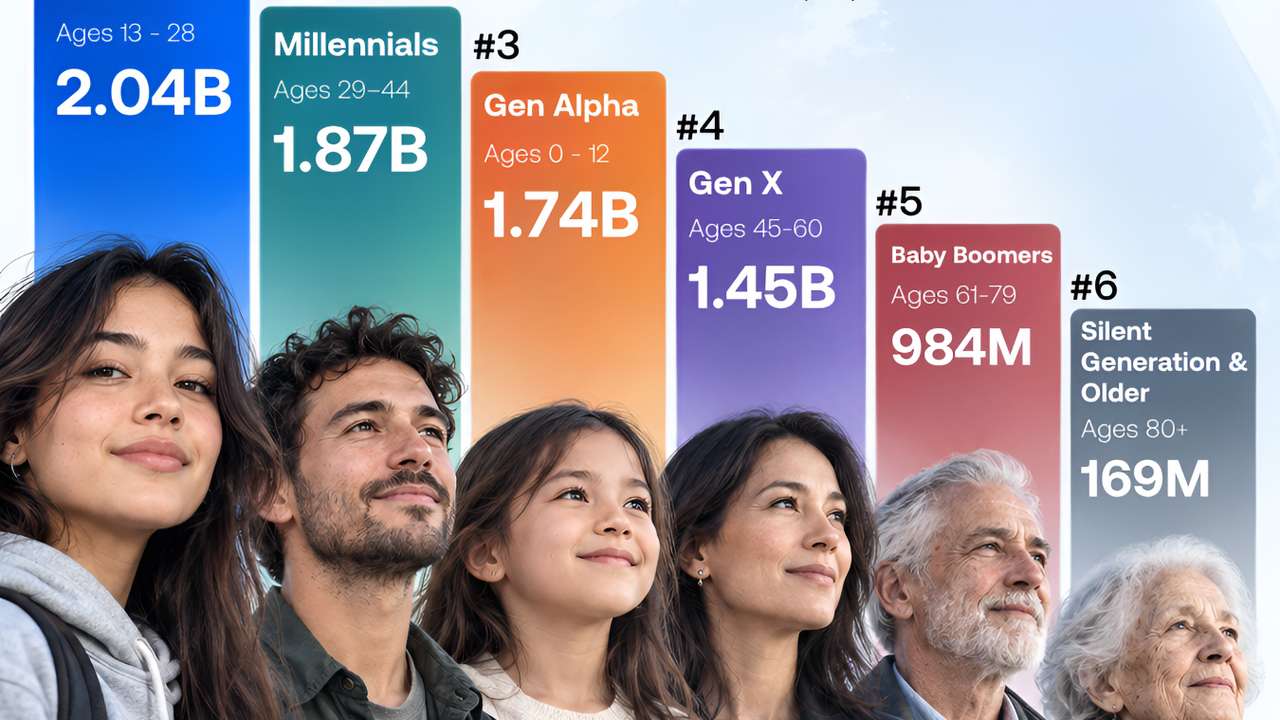
Generation Z is estimated to be the world's largest generation, with about 2.04 billion people, highlighting how strongly younger generations now shape the world's population, workforce and consumer markets.
Main points
- Gen Z accounts for nearly a quarter of humanity
- Millennials are the second-largest generation
- Nearly 62% of the world is under 40
Generation Z is estimated to be the world's largest generation, with about 2.04 billion people, highlighting how strongly younger generations now shape the world's population, workforce and consumer markets.
World Visualized estimates, based on an October 2025 global population of 8.25 billion, put Gen Z — defined in the graphic as people born from 1997 to 2012 — at 24.8% of humanity. Millennials, born from 1981 to 1996, follow at 1.87 billion, or 22.6%.
Gen Alpha, defined here as those born between 2013 and 2025, is estimated at 1.74 billion people, or 21.1%. Gen X accounts for 1.45 billion, Baby Boomers 984 million and people born before 1946 about 169 million.
Together, the figures suggest that nearly 62% of the world's population was under 40 in 2025.
RECOMMENDED FOR YOU

Argentina takes Britain to International Court, demands halt to Falklands oil project
DataReportal, drawing on the United Nations' World Population Prospects, put the global population at 8.25 billion in October 2025, up about 69 million, or 0.8%, from a year earlier. The world had passed eight billion people in November 2022.
A generation with growing economic influence
The size of Gen Z is increasingly important as more of the generation enters adulthood and the workforce.
Deloitte's 2025 survey of more than 23,000 Gen Z and millennial respondents across 44 countries found younger workers placing strong emphasis on financial security, meaningful work, well-being and opportunities to learn new skills. Nearly half of Gen Z respondents said they did not feel financially secure.
Technology is another major part of that shift. Deloitte found that 74% of Gen Z respondents expected generative AI to affect how they work within a year, while many were focusing on both technical and softer skills to prepare for changing workplaces.
Gen Z's influence will continue to grow as younger members enter higher education and employment and older members move further into their careers.
This story is written and edited by the Global South World team, you can contact us here.