German, Mandarin and Spanish lead demand for bilingual jobs worldwide

German, Mandarin and Spanish are among the most sought-after languages for bilingual jobs worldwide, as employers increasingly prioritise multilingual workers in a more interconnected global economy, according to the Preply Language Skills for Jobs Report 2024.
German, Mandarin and Spanish are among the most sought-after languages for bilingual jobs worldwide, as employers increasingly prioritise multilingual workers in a more interconnected global economy, according to the Preply Language Skills for Jobs Report 2024.
The report highlights how language demand varies across countries depending on trade relationships, migration patterns, tourism and international business ties.
In the United States, Spanish remains the most in-demand second language for bilingual jobs, reflecting the country’s large Hispanic population and deep economic links with Latin America. In Canada, Australia and New Zealand, Mandarin emerged as one of the leading foreign languages employers seek, driven largely by trade and commercial connections with China.
Across much of Europe, German ranked among the most in-demand foreign languages outside German-speaking countries. Preply’s analysis found strong demand for German-language skills in countries including France, Italy, Spain, Poland and the Netherlands.
RECOMMENDED FOR YOU
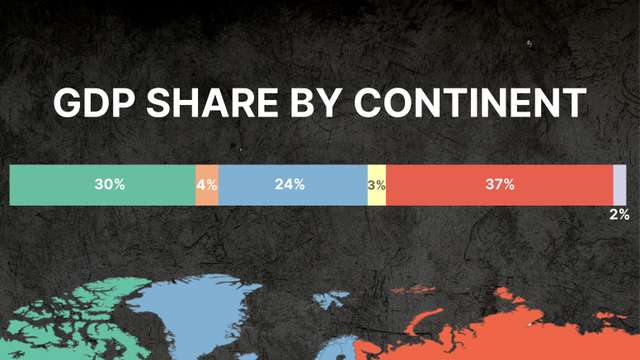
Asia produces the largest share of global GDP
France and Germany maintain close economic ties within the European Union, helping explain why French remains highly valued in Germany while German-language skills are widely sought across neighbouring economies.
In Asia, Preply’s analysis found Japanese was among the most requested foreign languages in countries such as Austria and Singapore, reflecting business and investment links with Japan’s manufacturing and technology sectors.
Brazil showed strong demand for Spanish speakers, while Mexico demonstrated growing interest in Portuguese-language skills, highlighting increasing commercial integration between Latin America’s two largest economies.
The findings come as employers increasingly view multilingualism as a competitive advantage in industries including finance, technology, tourism, logistics and customer support.
Preply said demand for bilingual job postings has increased in recent years as companies seek workers capable of navigating international markets and culturally diverse customer bases.
The report also reflects broader labour-market trends toward multilingual hiring, particularly among multinational companies operating across borders. Within Europe, cross-border trade inside the EU single market continues to strengthen demand for employees with multiple language skills.
Mandarin’s continued prominence reflects China’s position as one of the world’s largest trading partners despite slowing economic growth and rising geopolitical tensions with Western countries.
Meanwhile, Spanish continues to grow in importance as a business language because of demographic growth across the Americas and expanding digital markets.
RECOMMENDED FOR YOU
Argentina equals Germany's record with fourth FIFA World Cup final defeat
The report suggests that communication skills and international adaptability are becoming increasingly valuable alongside technical qualifications in the modern workforce.
What the data highlights is that language is no longer viewed solely as a cultural asset. Increasingly, multilingual ability is becoming an economic skill closely tied to employability, international business and career mobility in the global labour market.
This story is written and edited by the Global South World team, you can contact us here.