Hormuz disruption and Saudi pipeline shutdown put Middle East oil routes under pressure
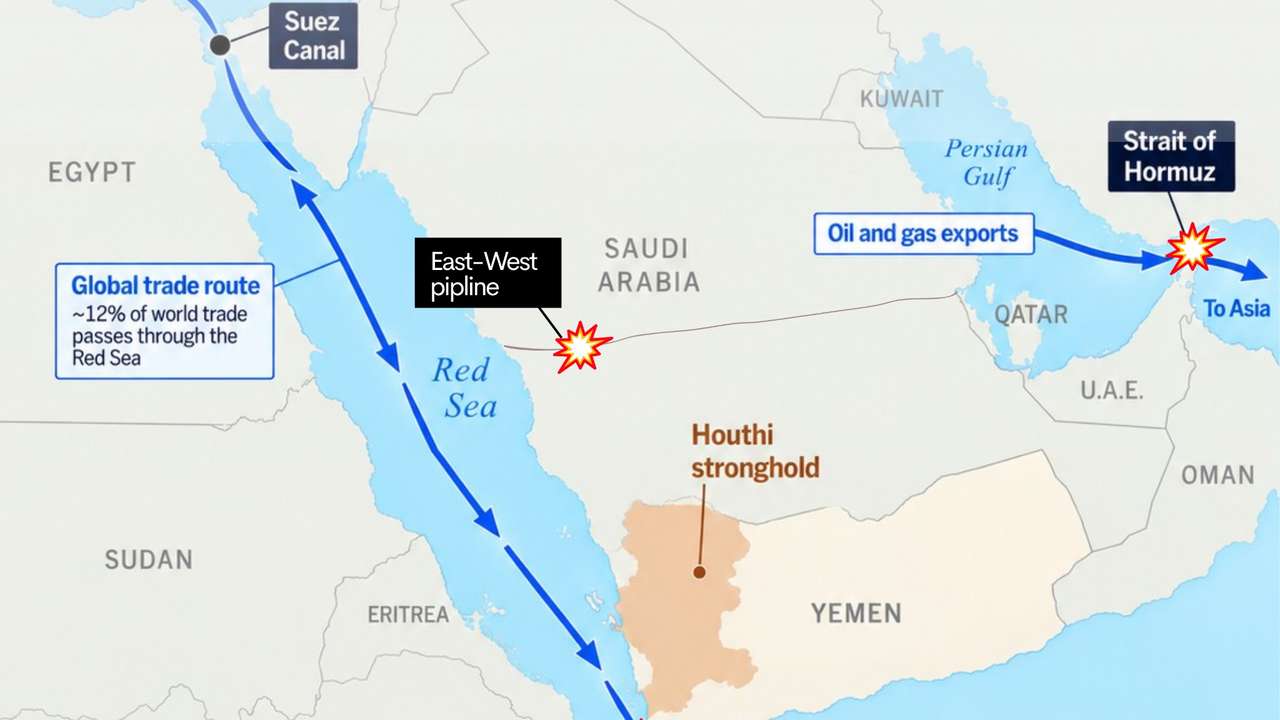
Two of the Middle East’s most important shipping routes are under mounting pressure, while the shutdown of a major Saudi oil pipeline has reduced options for moving crude around the disrupted Strait of Hormuz.
Key points
- Hormuz oil flows have fallen sharply
- Saudi Arabia has shut its East-West pipeline
- Red Sea shipping faces growing security risks
Two of the Middle East’s most important shipping routes are under mounting pressure, while the shutdown of a major Saudi oil pipeline has reduced options for moving crude around the disrupted Strait of Hormuz.
Saudi Arabia temporarily shut its 1,200-km East-West pipeline after drone attacks damaged the route in September. The pipeline links oil-producing areas in the east with the Red Sea port of Yanbu and had become increasingly important as tanker traffic through Hormuz fell. Saudi Arabia said the closure was a precautionary measure.
The pipeline can carry as much as 7 million barrels of crude a day, although it had been transporting about 4 million to 5 million barrels a day earlier in the conflict before flows fell. Its closure removes one of Saudi Arabia’s main ways of bypassing Hormuz.
Hormuz remains a major pressure point
The Strait of Hormuz, which connects the Persian Gulf with the Gulf of Oman and Arabian Sea, is one of the world's most important energy chokepoints.
RECOMMENDED FOR YOU

3,000 athletes are in Kyrgyzstan for the World Nomad Games — But this sport could steal the show
Before the current disruption, more than 20 million barrels of oil a day regularly moved through the strait. US Energy Information Administration data show flows fell from 21.6 million barrels a day in the fourth quarter of 2025 to just 4.9 million barrels a day in the second quarter of 2026.
That matters because Saudi Arabia, Iraq, Kuwait, Qatar, Bahrain and the United Arab Emirates rely on Gulf export routes, although some have pipelines that can bypass Hormuz.
Red Sea route also under pressure
Sending Saudi crude west through the East-West pipeline normally provides an alternative. Oil arriving at Yanbu can travel north towards the Suez Canal and Mediterranean or south through the Bab al-Mandeb Strait towards Asian markets.
But the southern route is also facing security problems. Houthi activity around Yemen and attacks on shipping have made parts of the Red Sea more dangerous, pushing some vessels onto the much longer journey around Africa's Cape of Good Hope.
The pressure has increased in recent weeks. Ship traffic through Bab al-Mandeb fell sharply after Houthi forces expanded their control around strategically important areas near the strait, adding to concerns over shipping costs, insurance and the risk of further attacks.
The EIA said Saudi exports from Yanbu were already down by about half in August from July and that the kingdom had increased shipments north through the Suez Canal, a longer and more expensive option for oil destined for Asia.
Why the two chokepoints matter
Hormuz and Bab al-Mandeb sit on opposite sides of the Arabian Peninsula, making them crucial to the movement of Middle Eastern energy. Disruption at one can sometimes be managed by redirecting oil through pipelines and alternative shipping routes. Pressure on both at the same time makes that much harder.
Saudi Arabia is not completely cut off from world markets, and the Suez Canal, existing inventories and routes around Africa provide alternatives. But those options can take longer and cost more, increasing the risk of higher freight, insurance and ultimately energy costs if disruptions persist.
RECOMMENDED FOR YOU

How a $317 million cocaine bust led to Liberia's former vice president's arrest
This story is written and edited by the Global South World team, you can contact us here.