Iranian missiles and drones target Gulf States and Israel as the UAE records the highest number of launches
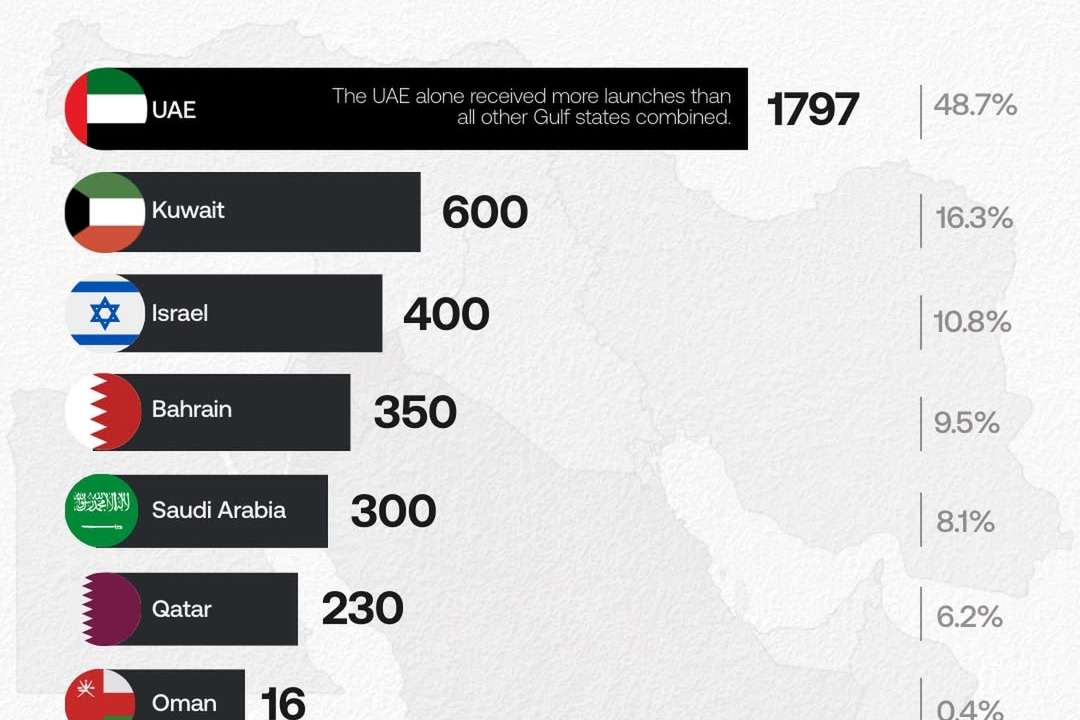
Iran has launched thousands of missiles and drones toward Gulf countries and Israel in recent years, with the United Arab Emirates receiving nearly half of the total strikes recorded across the region, according to data compiled by the Foundation for Defence of Democracies (FDD) and Modern Diplomacy Azerbaijan (Modern Az).
Iran has launched thousands of missiles and drones toward Gulf countries and Israel in recent years, with the United Arab Emirates receiving nearly half of the total strikes recorded across the region, according to data compiled by the Foundation for Defence of Democracies (FDD) and Modern Diplomacy Azerbaijan (Modern Az).
The data estimates 3,693 missile and drone launches attributed to Iran targeting countries across the Gulf and Israel. The figures highlight the growing reach of Iran’s regional military posture and the uneven distribution of attacks among neighbouring states.
The United Arab Emirates recorded the highest number of launches, with 1,797 missiles and drones, accounting for 48.7% of the total. Analysts say this reflects the UAE’s strategic role in regional security dynamics and its involvement in conflicts where Iranian-backed forces have been active.
“The UAE was the country most affected by Iran's retaliatory attacks,” the data indicates.
RECOMMENDED FOR YOU

Israelis rally against Netanyahu government ahead of October election
Regional breakdown of launches
According to the dataset:
- United Arab Emirates: 1,797 launches (48.7%)
- Kuwait: 600 launches (16.3%)
- Israel: 400 launches (10.8%)
- Bahrain: 350 launches (9.5%)
- Saudi Arabia: 300 launches (8.1%)
- Qatar: 230 launches (6.2%)
- Oman: 16 launches (0.4%)
Iran’s growing reliance on drone warfare and missile technology is believed to have reshaped the strategic landscape in the Middle East. The use of relatively low-cost drones alongside ballistic and cruise missiles allows Tehran and allied groups to project power across long distances while maintaining a degree of deniability.
Many of the attacks counted in the data are believed to involve Iran-backed militias or proxy groups operating in conflict zones such as Yemen, Iraq and Syria.
Saudi Arabia and the UAE have previously reported repeated drone and missile interceptions, particularly linked to Houthi forces in Yemen, who Western governments say receive support and technology from Iran.