Italy hosts three of the Mediterranean's most populous islands
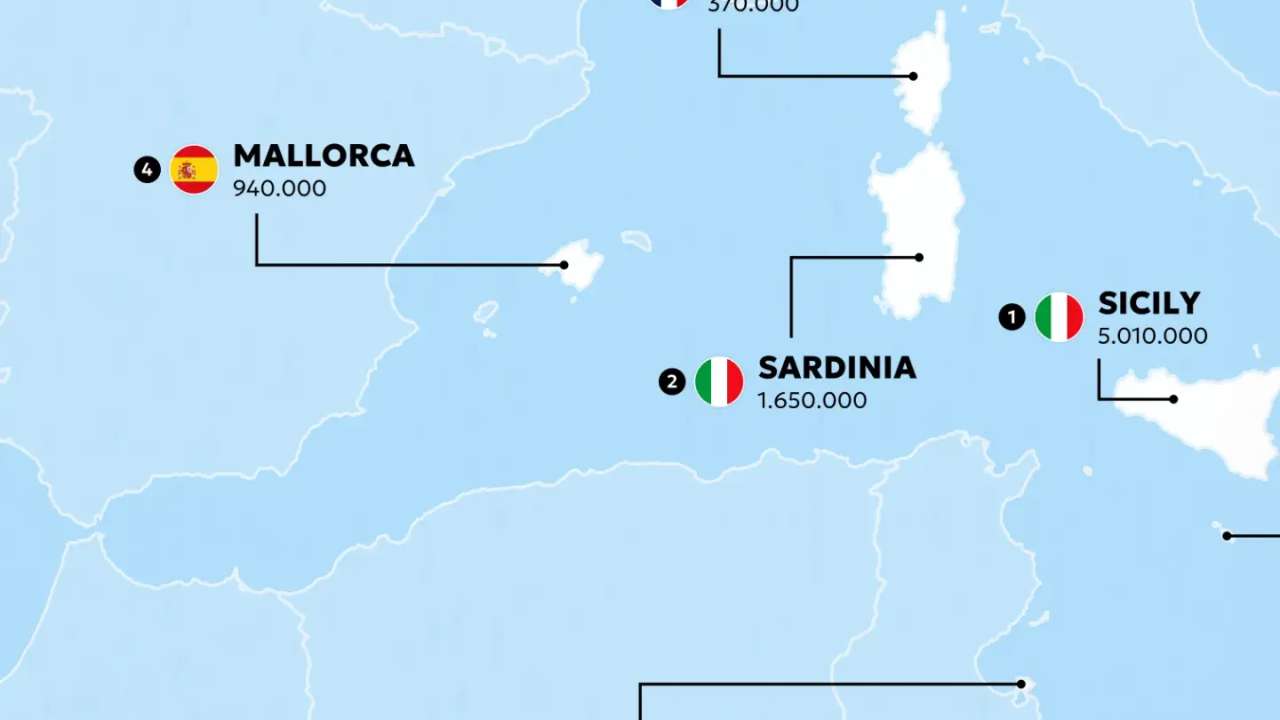
Sicily is home to more than 5 million people, making it the most populous island in the Mediterranean, while Italy accounts for three of the region's 10 largest islands by population, according to the latest official demographic estimates.
Key Points
- Sicily is the Mediterranean's most populous island
- Italy has three of the region's 10 largest islands
- Cyprus ranks third among Mediterranean islands by population
Sicily is home to more than 5 million people, making it the most populous island in the Mediterranean, while Italy accounts for three of the region's 10 largest islands by population, according to the latest official demographic estimates.
With a population of approximately 5.01 million, Sicily ranks well ahead of Sardinia, which has about 1.65 million residents. Cyprus, an independent island nation in the eastern Mediterranean, is third with around 1.39 million inhabitants.
Spain's Mallorca follows with roughly 940,000 residents, while the Greek island of Crete ranks fifth at about 620,000. Malta, Europe's smallest EU member state, has around 480,000 people living across its main island.
The remainder of the top 10 includes Corsica in France (370,000), Euboea in Greece (190,000), Djerba in Tunisia (180,000) and Rhodes in Greece (120,000).
RECOMMENDED FOR YOU
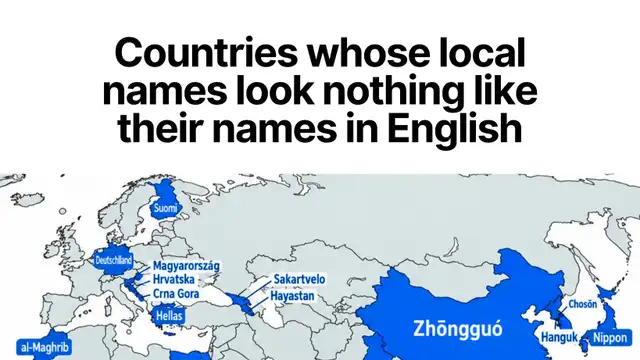
From Suomi to Zhongguo, why some countries have completely different names at home
The Mediterranean, covering about 2.5 million square kilometres, is bordered by 22 countries across Europe, Asia and Africa. Throughout history, its islands have served as strategic centres for trade, migration and military power, linking three continents through one of the world's busiest maritime regions.
Sicily's large population reflects its size and historical role as a crossroads of Mediterranean civilisation. Covering about 25,700 square kilometres, it is the Mediterranean's largest island by area and has been shaped by successive Greek, Roman, Arab, Norman and Spanish influences. Today, Palermo and Catania remain among southern Italy's largest urban centres.
Sardinia, Italy's second-largest island, is known for its mountainous interior and scattered settlements, while Cyprus combines one of the eastern Mediterranean's largest populations with a strategic location at the crossroads of Europe and the Middle East. The island has remained politically divided since 1974 between the Republic of Cyprus and the Turkish-controlled north.
Mallorca, Crete, Malta and Rhodes have become major tourism destinations, collectively attracting tens of millions of visitors each year. Despite their relatively modest resident populations, their seasonal populations rise sharply during the summer as international tourism peaks.
Population rankings among Mediterranean islands have remained relatively stable in recent decades, although demographic trends vary. Larger islands such as Sicily and Sardinia face ageing populations and lower birth rates, while Cyprus and Malta have recorded stronger growth, partly driven by immigration.
The figures are based on the latest estimates published by national statistical offices, Eurostat, the United Nations Population Division, and official government demographic agencies.
This story is written and edited by the Global South World team, you can contact us here.