Japan leads housing vacancy ranking as millions of homes remain empty worldwide
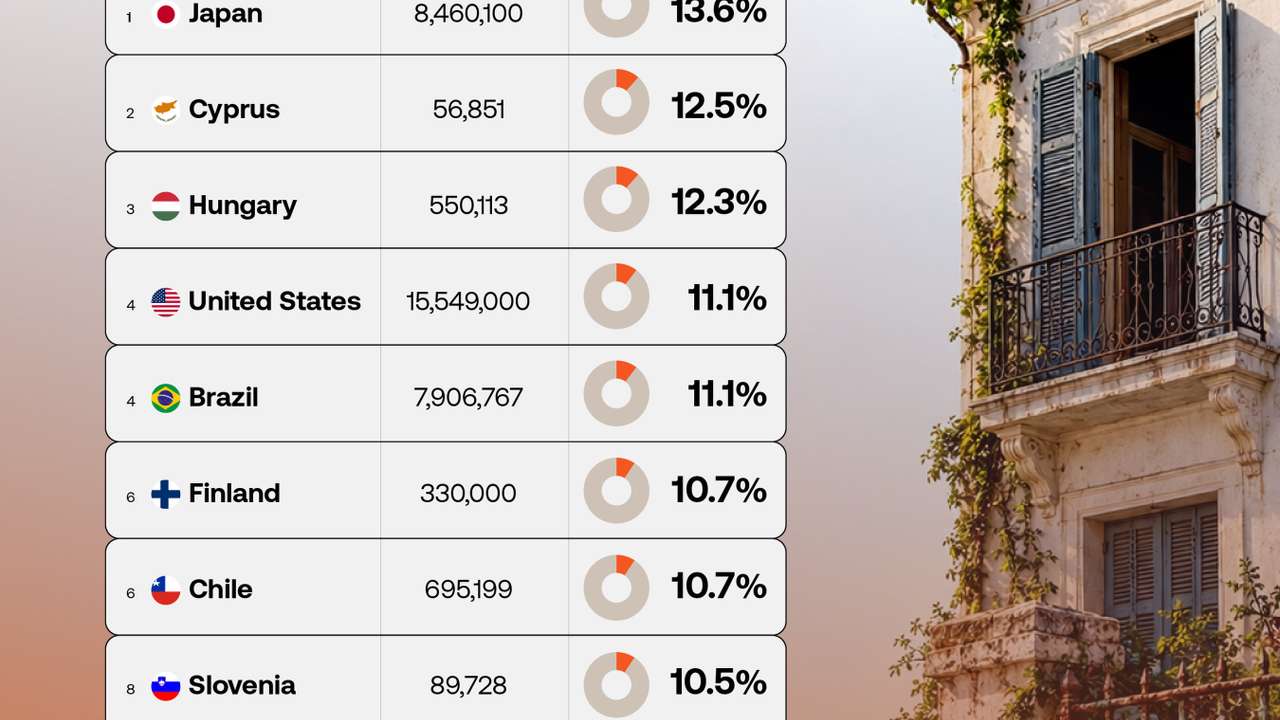
Japan recorded 8.46 million vacant homes, 13.6% of its housing stock, according to a World Visualised ranking based on OECD housing data.
Main points
- Japan recorded 8.46 million vacant homes, representing 13.6% of its housing stock.
- The US had approximately 15.5 million vacant properties in the ranking.
- OECD warns that different national definitions complicate housing vacancy comparisons.
Japan recorded 8.46 million vacant homes, 13.6% of its housing stock, according to a World Visualised ranking based on OECD housing data.
Cyprus followed with a vacancy rate of 12.5%, while Hungary recorded 12.3%. The United States and Brazil each had rates of 11.1%, although the US had the largest number of empty properties among the countries shown, at approximately 15.5 million.
Finland and Chile both recorded vacancy rates of 10.7%, followed by Slovenia at 10.5%, Australia at 9.8% and Ireland at 9.1%.
The figures highlight a housing problem: millions of properties remain unoccupied even as households struggle to find affordable accommodation.
RECOMMENDED FOR YOU
Europe's rainfall divide: Norway's coast receives over 3,000 mm while parts of Spain remain dry
Japan's large number of vacant homes is partly linked to its ageing population, declining population in rural communities and properties left behind after owners die or move away.
However, the ranking does not reflect a single year. The OECD Affordable Housing Database combines national housing statistics collected in different periods, making direct comparisons difficult.
The OECD also distinguishes between vacant homes and properties used seasonally or as holiday accommodation. Some countries include second homes in their vacancy figures, while others exclude them. This means a vacant property is not necessarily abandoned or available for permanent occupation.
The issue has gained attention as governments look for ways to ease housing shortages. In a 2026 report, the OECD said vacant dwellings accounted for at least 7% of housing stock in 21 countries with available data, although definitions varied.
The organisation said bringing unused properties back into use could help increase housing supply, particularly in areas facing shortages. However, high renovation costs, unsuitable locations and ownership restrictions can make some vacant homes difficult to return to the market.
The findings underline a growing challenge for housing policymakers: increasing the number of available homes does not always require new construction, but existing empty properties may not be located where people need them.
This story is written and edited by the Global South World team, you can contact us here.