Kim Jong Un receives ambassadors from 10 countries in historic diplomatic shift
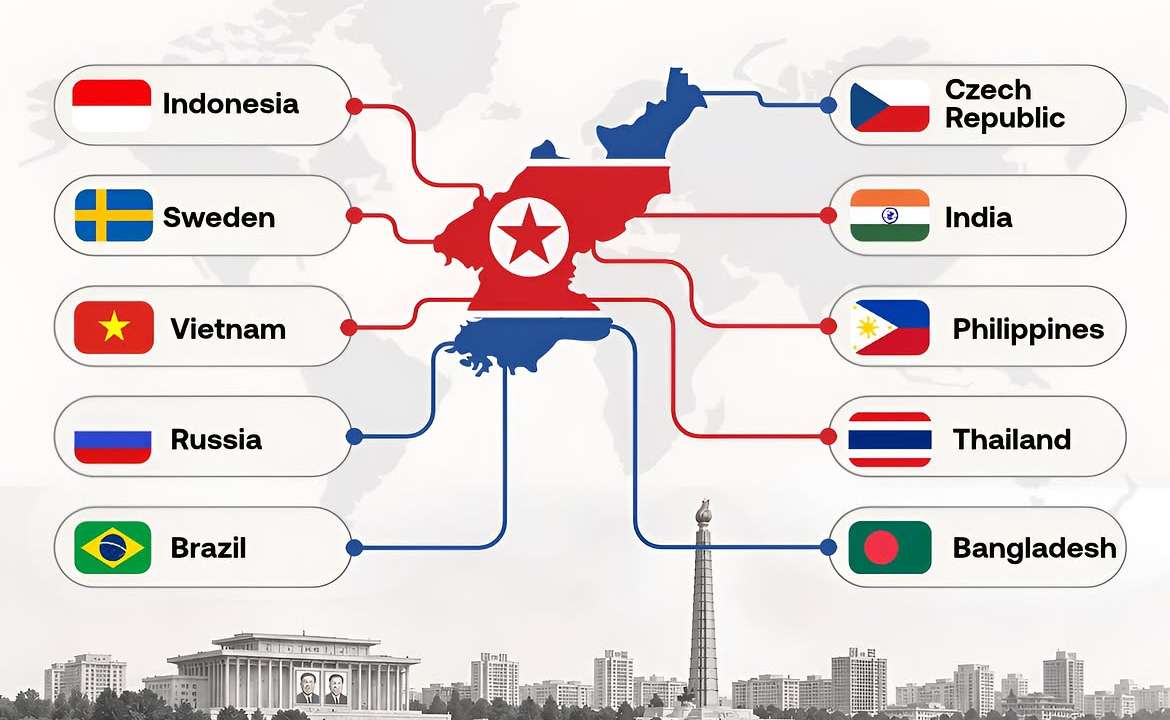
North Korean leader Kim Jong Un personally received diplomatic credentials from 10 newly appointed foreign ambassadors on November 22, marking a major change in the country's diplomatic practice after more than three decades.
Main points
- Kim personally received credentials from 10 ambassadors.
- The ceremony marks a diplomatic shift after 30 years.
- North Korea is seeking broader international engagement.
North Korean leader Kim Jong Un personally received diplomatic credentials from 10 newly appointed foreign ambassadors on November 22, marking a major change in the country's diplomatic practice after more than three decades.
The ceremony, held at the Workers' Party headquarters in Pyongyang, brought together representatives from Indonesia, Sweden, Vietnam, Russia, Brazil, the Czech Republic, India, the Philippines, Thailand and Bangladesh, the state-run Korean Central News Agency (KCNA) reported on November 23.
It was the first time Kim had formally received ambassadors' credentials since taking power in 2011.
The ceremony followed a constitutional amendment in March 2026 that transferred the authority to receive diplomatic credentials to the chairman of the State Affairs Commission, a position held by Kim. Previously, the responsibility belonged to a senior parliamentary official.
RECOMMENDED FOR YOU

Colombia expels 71 Venezuelans over alleged criminal activity, deportees protest treatment
During the ceremony, attended by Foreign Minister Choe Son Hui, Kim called for stronger international cooperation based on mutual respect, equality and shared interests.
“The DPRK neither pursues supremacy nor expansion,” Kim said, while defending North Korea's military buildup as necessary to protect its sovereignty and national security.
The participation of diplomats from Asia, Europe and South America suggests Pyongyang is seeking to broaden its international engagement beyond traditional allies such as Russia and Vietnam.
South Korea's Unification Ministry said the ceremony appeared intended to reinforce Kim's standing as head of state both domestically and internationally.
The development comes as North Korea continues to face international sanctions over its nuclear and ballistic missile programmes while strengthening its relationship with Russia.
The ceremony also followed unsuccessful efforts by US President Donald Trump to arrange a meeting with Kim during his recent visit to Asia.
While the event signals a change in North Korea's diplomatic approach, it does not necessarily indicate a shift in its nuclear policy or relations with Washington.
RECOMMENDED FOR YOU
'Why hasn't mommy come home?' - Families await news as Indonesia factory fire leaves several missing
This story is written and edited by the Global South World team, you can contact us here.