Latin America’s agricultural powerhouses drive global food supply
Latin America is quietly cementing its role as one of the world’s most important food suppliers, with a handful of countries driving production across everything from soybeans and beef to avocados and coffee. Fresh industry data and market forecasts show the region is not just keeping pace with global demand, but increasingly shaping it.
Latin America is quietly cementing its role as one of the world’s most important food suppliers, with a handful of countries driving production across everything from soybeans and beef to avocados and coffee. Fresh industry data and market forecasts show the region is not just keeping pace with global demand, but increasingly shaping it.
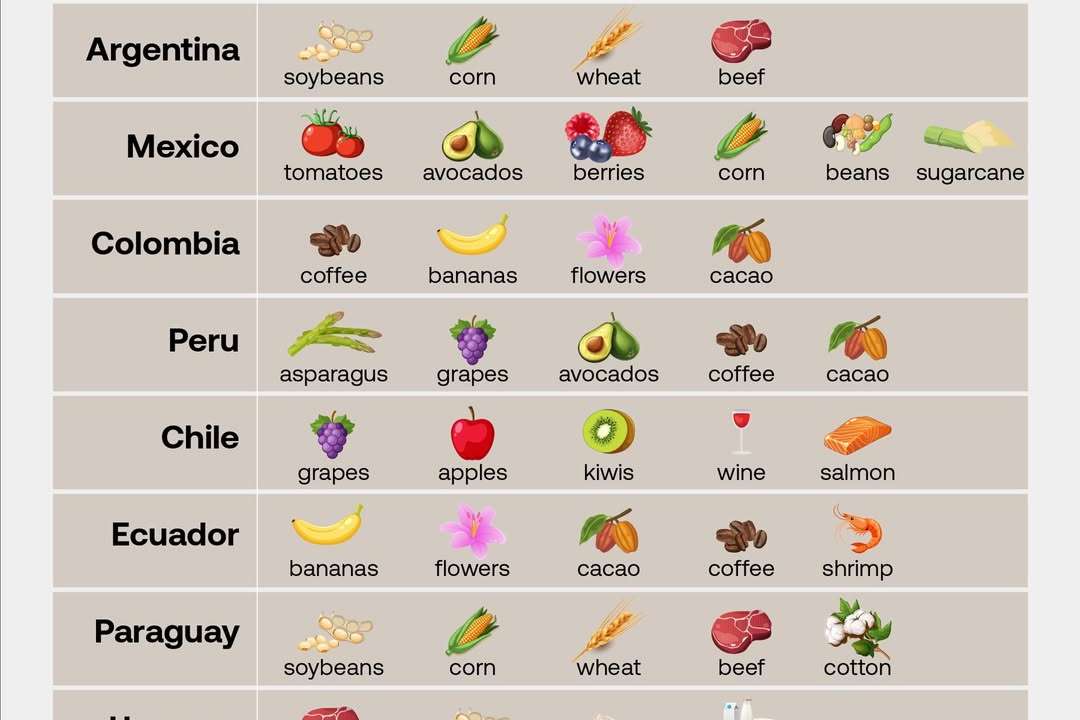
A regional breakdown of agricultural strengths shows Brazil at the forefront, producing major export crops including coffee, soybeans, corn, sugarcane and beef. Argentina follows closely, with strong output in soybeans, corn, wheat and beef, consolidating the Southern Cone’s role as a global breadbasket.
The trend reflects broader projections from Market Data Forecast, which estimates that Latin America’s agriculture market will continue to expand steadily, driven by rising global demand for food, biofuels and agricultural exports.
Brazil and Argentina anchor regional output
RECOMMENDED FOR YOU

More than 6 billion people are now online as global internet access reaches new high
Brazil remains the world’s largest producer of coffee and one of the top exporters of soybeans and beef, according to international trade data. Its scale and diversified production base have positioned it as a cornerstone of global food supply chains.
Argentina, meanwhile, plays a pivotal role in global grain markets. As one of the leading exporters of soymeal and corn, the country is a key supplier to both Asian and European markets.
Market Data Forecast notes that strong export demand, coupled with technological adoption in farming, is expected to sustain growth across these sectors in the coming years.
Diverse specialisations across the region
Beyond the largest economies, Latin America’s agricultural landscape is defined by specialisation.
Mexico has built a strong export profile in high-value crops such as avocados, tomatoes and berries, supported by proximity to the United States and favourable trade agreements. The country is now one of the world’s top avocado exporters.
Colombia and Ecuador dominate in tropical commodities. Colombia is globally recognised for its coffee and cut flowers, while Ecuador leads in banana exports and is a major player in shrimp farming.
Peru and Chile have emerged as key exporters of premium agricultural goods. Peru has expanded rapidly in avocados, grapes and asparagus, while Chile’s agricultural sector is anchored by fruit exports, wine production and a globally competitive salmon industry.
RECOMMENDED FOR YOU
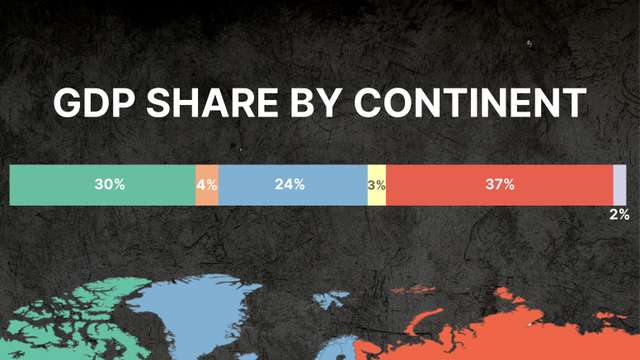
Asia produces the largest share of global GDP
According to Market Data Forecast, this diversification is helping the region reduce dependency on a narrow set of commodities, while tapping into higher-margin export markets.
Growing role in global food security
Latin America’s agricultural expansion comes at a time of increasing global concern over food security. The region accounts for a significant share of global exports in soybeans, maize, coffee and beef, making it essential to international supply chains.
Paraguay and Uruguay, though smaller in scale, contribute meaningfully through soybean production, beef exports and dairy products. Costa Rica, meanwhile, continues to supply global markets with coffee, bananas and pineapples.
Market Data Forecast highlights that favourable climate conditions, abundant land resources and increasing investment in agri-tech are strengthening the region’s competitive advantage.