LIVE: Magyar defeats Orbán as Hungary election marks break from years of controversial leadership
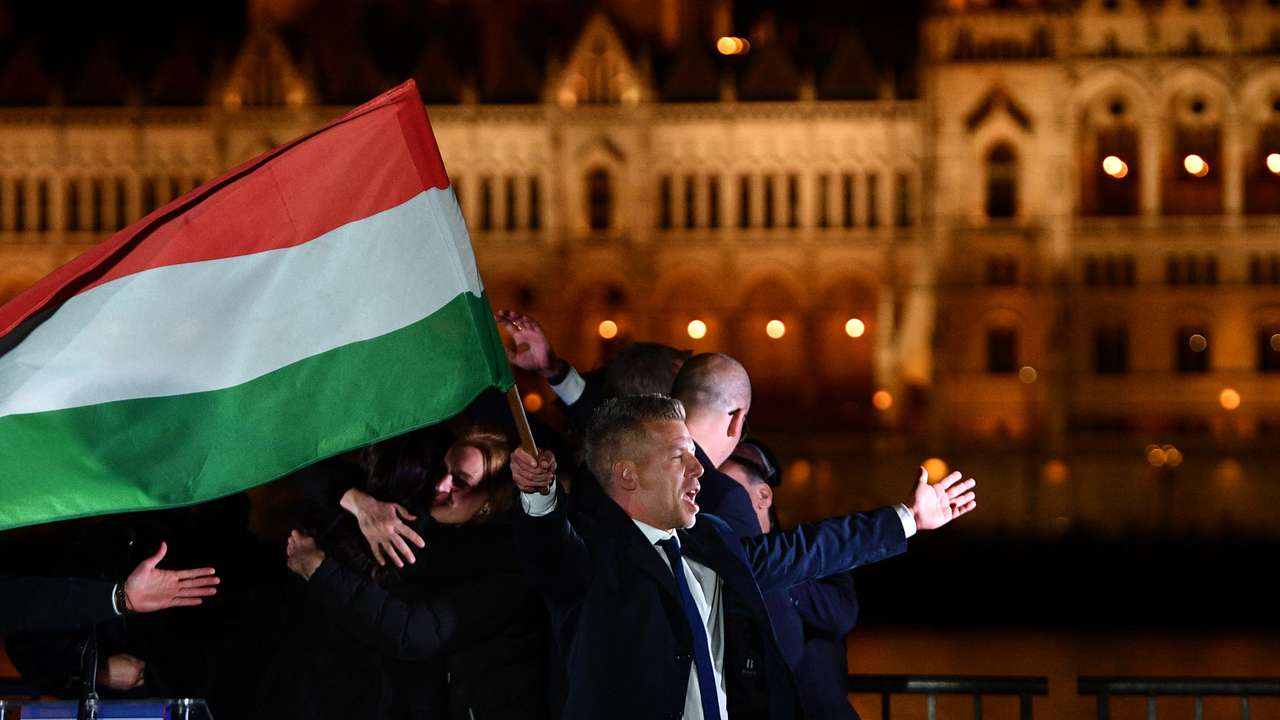
Hungarians are voting in a parliamentary election that is being closely watched across the European Union, the United States and Russia. It represents a high-stakes showdown between long-serving Prime Minister Viktor Orbán and his former ally turned challenger, Péter Magyar.
LIVE UPDATES
This is the end of our live coverage of the 2026 Hungarian parliamentary election. Follow all Global South World Channels for more updates.
01:43 GMT: After 16 years of Orbán, Hungary votes for change as Magyar vows return to Europe
RECOMMENDED FOR YOU
Six countries account for three-quarters of Europe’s unicorn startups
Hungarian Prime Minister Viktor Orbán has lost power after 16 years following a decisive election defeat, with more than 98% of votes counted in a result expected to have political implications beyond Hungary.
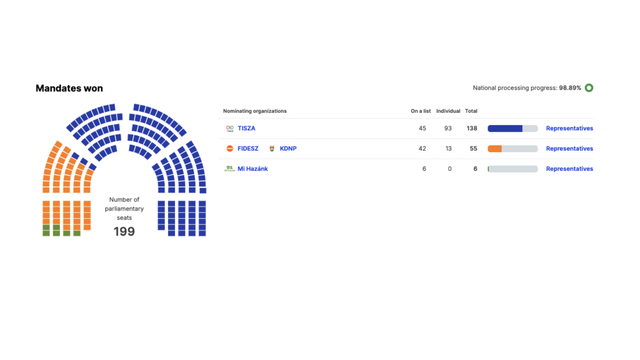
Near-final results from the National Election Office show that Orbán’s ruling Fidesz-KDNP alliance suffered a heavy loss in the 199-seat parliament, while opposition challenger Péter Magyar and his TISZA movement secured a commanding lead.
With 98.89% of the vote counted, TISZA won 138 seats, Fidesz-KDNP secured 55 seats, and Mi Hazánk obtained 6 seats.
In his speech to supporters, Magyar promised to return Hungary to the main fold of European politics, pledging a pro-European Union and pro-NATO direction for the country.
20:50 GMT: Hungary’s Prime Minister Viktor Orban has conceded defeat in key parliamentary elections, marking a significant political shift after 16 years in power. Orban lost to his rival, conservative Peter Magyar, a former government insider and political newcomer who has promised “system change.” The election outcome signals a challenge to Orban’s long-standing leadership in the central European country. “The election results, though not yet final, are clear and understandable; for us, they are painful but unambiguous. We have not been entrusted with the responsibility and opportunity to govern. I congratulated the winning party,” Orban said.
19:51 GMT: After 16 years in power, Hungarian Prime Minister Viktor Orbán is on course to lose by a wide margin in Sunday’s vote. With more than 53 % of the vote counted, his opponent Péter Magyar was projected to win 136 seats in the 199-seat parliament, while Orbán’s Fidesz party was on track to secure 56 seats. Magyar stated on his official social media account that Orbán had called to congratulate him.
17:43 GMT: Polling stations across Hungary have closed following the national parliament election held today. The National Election Office (NVI) is expected to begin the official vote count, with preliminary results scheduled to be released later tonight.
RECOMMENDED FOR YOU

Olympic flame arrives on African soil for first time as Senegal begins Dakar 2026 countdown
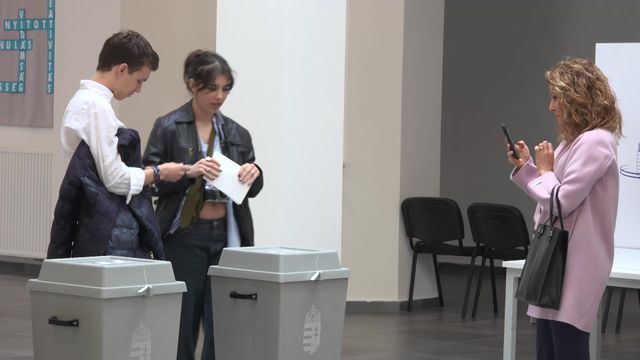
17:40 GMT: Voter turnout in Hungary’s national parliament election reached 77.80% by 18:30 (1630 GMT) in 2026, according to data from the National Election Office. The figure marks an increase compared to previous election years. In 2022, turnout at the same time stood at 67.80%, while in 2018 it was recorded at 68.13%. The data indicates a rise of 10 percentage points from 2022 to 2026, and a 9.67 percentage point increase from 2018 to 2026.
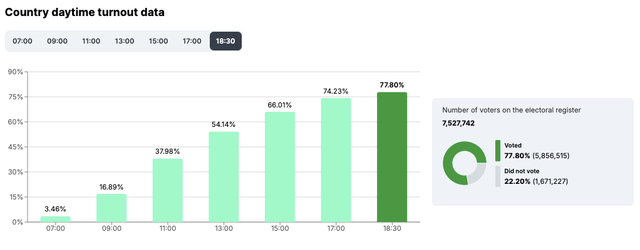
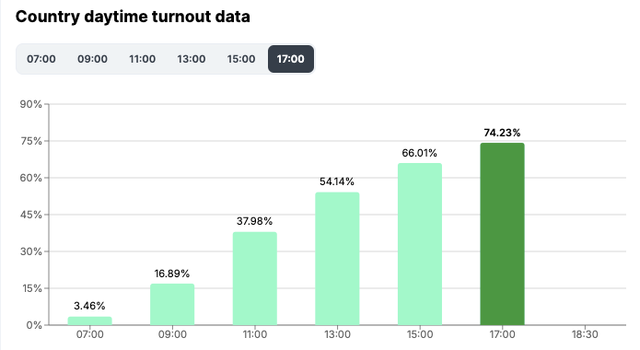
16:26 GMT: Less than an hour to go before polls close. Over 5.5 million voters had already cast their ballots as of 17:00 (1500 GMT). According to the National Election Office, the current voter turnout is at 74.23% of eligible voters, with 25.77% yet to vote.
14:42 GMT: Voters in Budapest expressed mixed views on Sunday as they queued outside polling stations for Hungary’s parliamentary elections, following a campaign marked by allegations of foreign interference.
"We have never encountered such a disgusting campaign before," one voter said.
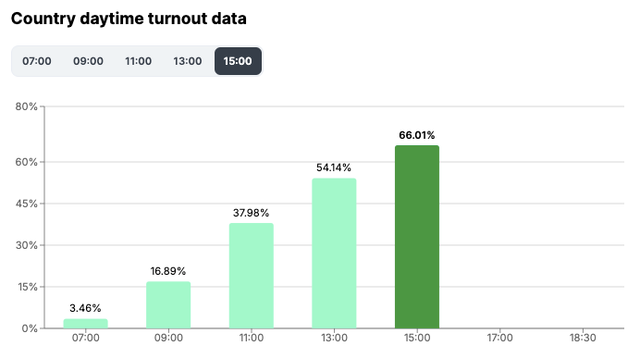
13:52 GMT: Less than 4 hours to go before polls close, and the voter turnout data remains high. According to the National Election Office, more than 4.9 million, representing 66.01% of eligible voters, had already cast their vote at 15:00 (1300 GMT).
RECOMMENDED FOR YOU
Israelis rally against Netanyahu government ahead of October election
13:02 GMT: Turnout in Hungary’s closely watched parliamentary election reached record levels by midday on Sunday, April 12, according to figures from the National Election Office.
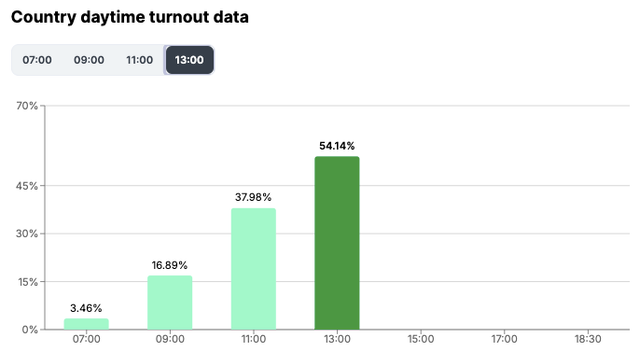
More than 4 million voters had cast their ballots by 13:00 (1100 GMT), representing 54.14% of eligible voters. Authorities reported that turnout hit 54% by noon, which is more than 14 percentage points higher than at the same stage in the 2022 election.
Opinion polls suggest that the Tisza party, led by pro-European conservative Peter Magyar, is performing ahead of Prime Minister Viktor Orban’s party. Magyar, a former government insider, has pledged a “system change,” and analysts say the high turnout could work in his favour.
11:33 GMT: 7 hours of voting done, 6 hours more until polls close in the pivotal Hungarian parliamentary elections. Voter turnout continues to remain high, according to the figures from the National Election Office, with over 4 million voters (54.14% of eligible voters) as at 13:00 (1100 GMT).
10:52 GMT: Magyar has described the country’s parliamentary election as a decisive moment for political change, positioning it as a choice on governance and public communication. After casting his vote, Magyar, who is the main rival of Prime Minister Viktor Orban, said the election could mark a turning point in Hungary’s political system. He stated that “today, there will be a change of system in Hungary.”
RECOMMENDED FOR YOU
Sovereignty dominates biggest ever BRICS summit in India
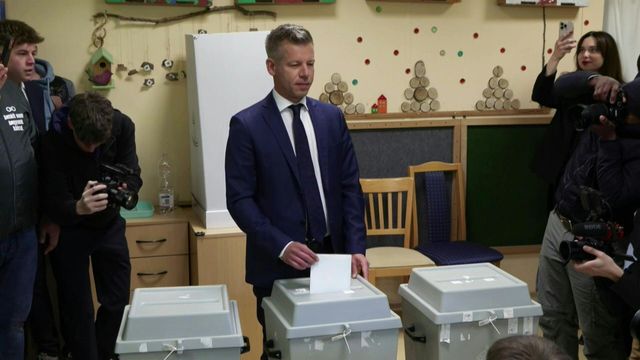
10:02 GMT: Peter Magyar, leader of the pro-European conservative TISZA party, has cast his ballot in Hungary’s closely watched parliamentary elections. The vote is being seen as a significant political moment that could bring an end to Prime Minister Viktor Orbán’s 16-year period in power. Magyar’s participation comes as voters decide whether to continue with the current leadership or support a shift in direction.
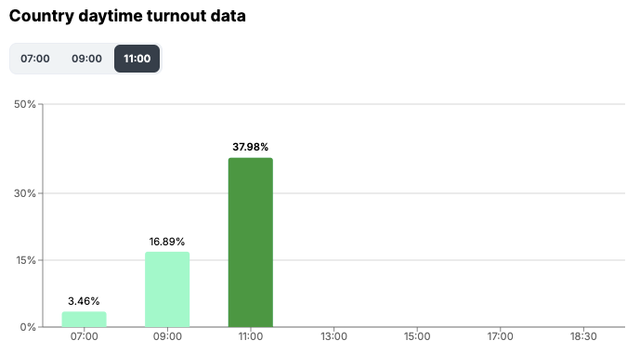
09:53 GMT: 5 hours since polls opened, recorded voter turnout as at 11:00 (0900 GMT) is 37.98%, representing over 2.8 million voters. The turnout so far from this year's vote stands higher than the last 4 elections.
09:27 GMT: Hungarian Prime Minister Viktor Orban spoke to journalists at a polling centre as voters went to the polls in Budapest for the parliamentary elections, outlining his position on Hungary’s relationship with the European Union and responding to a question about Ukraine.
He responded to reports that officials in Brussels could challenge the outcome if he secured victory, stating, “To deny? No, they have to accept the intention and the will and express the opinion of the people.”
“We are members of the European Union, and this is the right which belongs to the member states,” he added. “We firmly stand on the basis of the national rights and sovereignty.”
When asked whether he would consider ceding territory to Russia in a hypothetical peace deal if he were leading Ukraine, Orban replied, “I'm lucky enough not to be Zelensky.”
RECOMMENDED FOR YOU
U.S. gas prices surge since Iran war, with Iowa up nearly 70%
08:37 GMT: Orban cast his ballot on Sunday as he faces his most significant electoral challenge in more than ten years. Footage showed Orban arriving in a van alongside his wife, Anikó Lévai, entering a polling station surrounded by journalists, voting, and then leaving the premises.
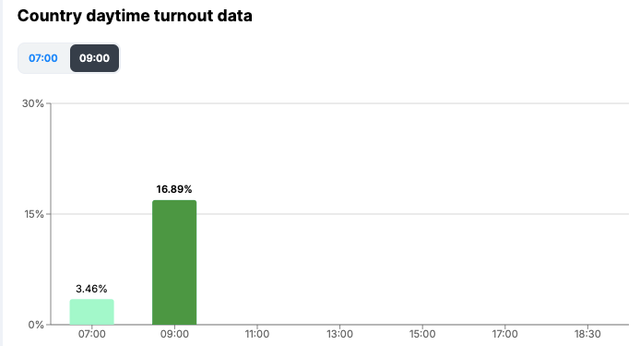
08:16 GMT: Voter turnout recorded as at 09:00 (0700 GMT) is 16.89%, representing 1,271,768 of registered voters, according to the National Election Office. Voting has been ongoing for over 3 hours since polls opened at 0400 GMT. The turnout so far has exceeded the last 4 elections
06:31 GMT: Over 2 hours since polls officially opened at 6 a.m. (0400 GMT) across the various voting centres in the country. The voting is expected to end at 7 p.m. (1700 GMT), with results expected later in the evening.
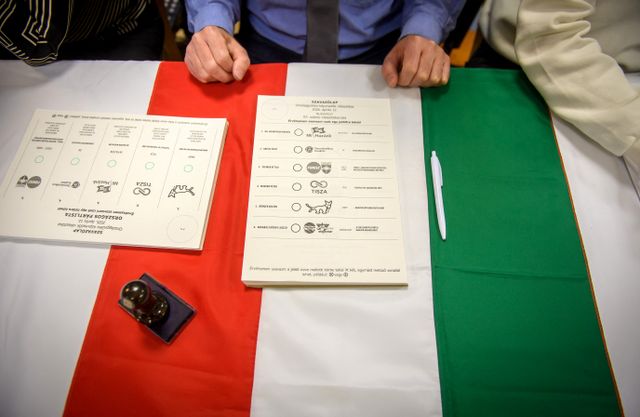
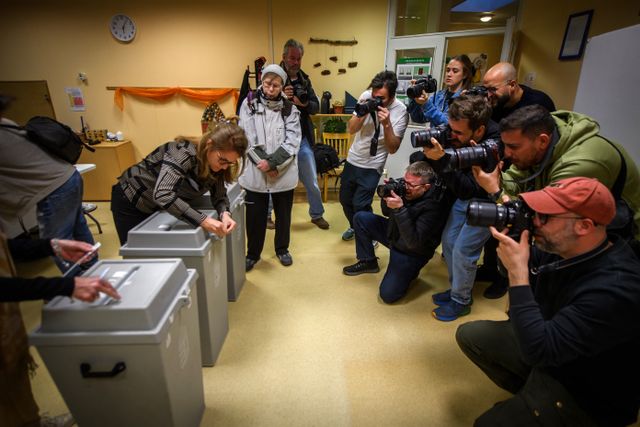
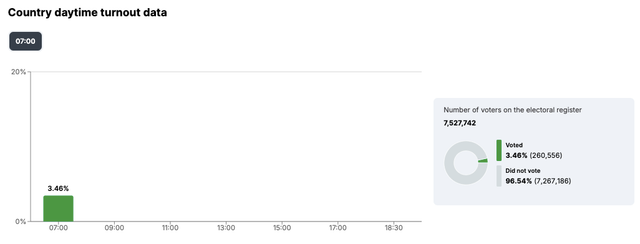
06:18 GMT: As at 07:00 local time, the voter turnout recorded was 3.46%, representing 260,556 of registered voters, according to the National Election Office.
06:02 GMT: US Vice President JD Vance accused the EU of interfering in Hungary’s elections, describing it as one of the most serious cases he has seen. Speaking at a joint press conference with Prime Minister Orban in Budapest on Tuesday, Vance said the EU had taken actions that negatively affected Hungary.
05:43 GMT: During a final campaign address in Budapest, Orban described the country’s election as a defining moment for national sovereignty, warning of foreign interference and outlining his government’s position on the Russia-Ukraine conflict.
RECOMMENDED FOR YOU

Why Tinubu wants his FBI and DEA files kept secret
He said Hungary would not support Ukraine with resources or military assistance. “We will not give our children to Ukraine, we will not give our money, and we will not give our weapons,” he said. “Hungary will remain an island of peace and will continue to be the safest country in Europe after the elections.”
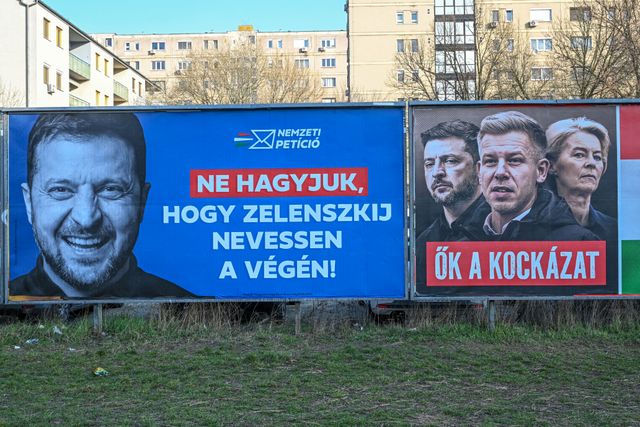
05:06 GMT: In the lead-up to the polls, the ruling Fidesz party saturated Hungarian streets with posters that frame the upcoming election as an existential choice between "war or peace" by depicting foreign leaders and the domestic opposition as menacing threats. Prominent billboards feature "harshly lit" and unflattering portraits of Ukrainian President Volodymyr Zelenskyy and European Commission President Ursula von der Leyen, portraying them as the faces of a "pro-war lobby" in Brussels intent on dragging Hungary into the conflict. At the same time, opposition leader Magyar is branded as an “agent of Brussels”.
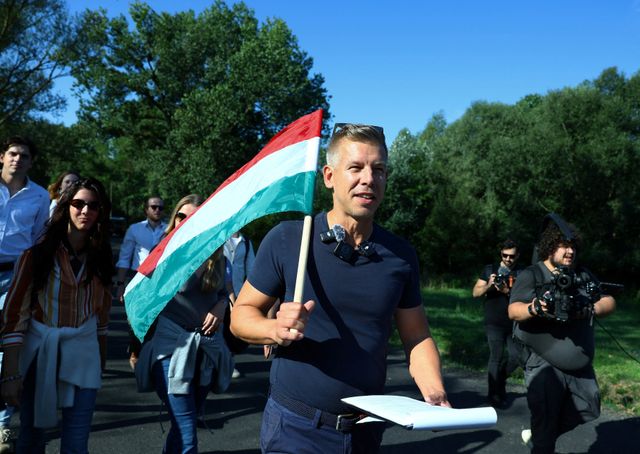
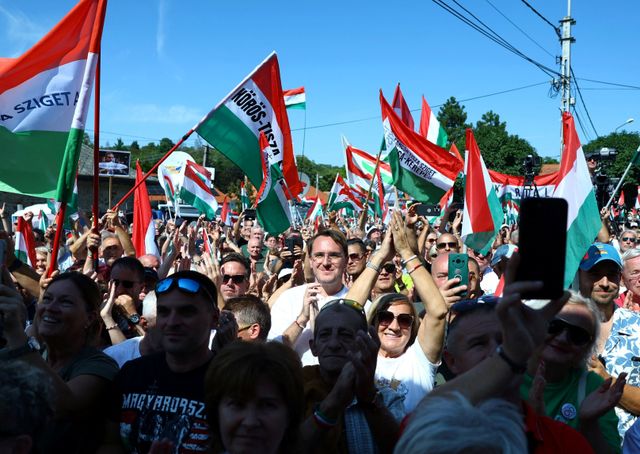
04:53 GMT: Magyar, 45, is not a typical opposition figure. He comes from Orbán’s inner circle and broke away after a corruption and pardon scandal. Since then, his Tisza Party has gained momentum. His focus is different. He talks about the economy, corruption, and the rule of law, what he calls everyday issues. He has also promised to unlock between €18 billion and €22.5 billion in frozen EU funds by restoring Hungary’s alignment with European standards. Unlike past challengers, Magyar connects with voters in rural areas through retail politics, and his right-leaning background makes him harder to dismiss. Read more
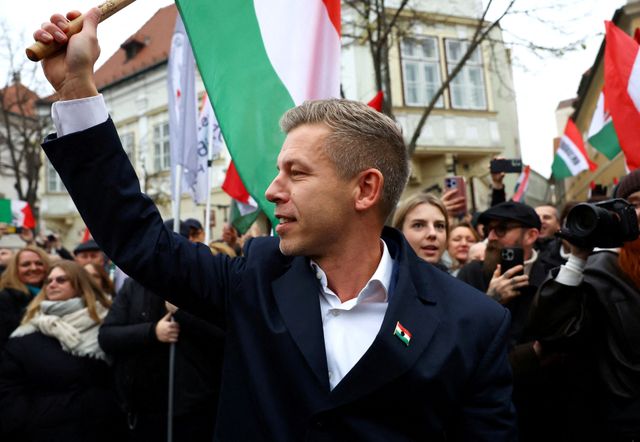
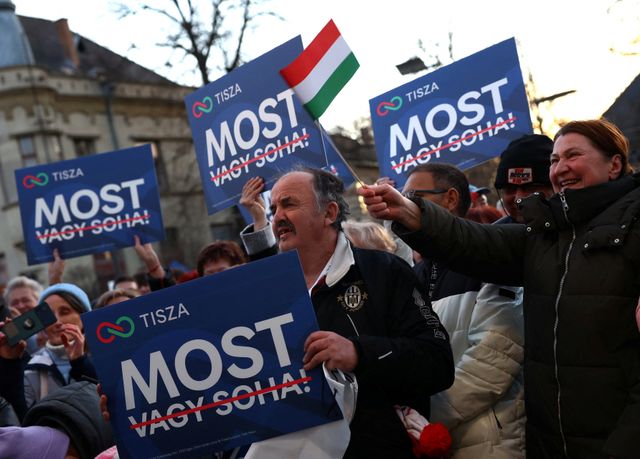
04:43 GMT: Ahead of Sunday's election, Prime Minister Orbán urged voters to back his ruling Fidesz party, warning that Hungary could lose key achievements on migration, energy protection and its confrontational stance toward Brussels if the opposition prevails.
04:29 GMT: Why Hungary's election could change more than just its government
RECOMMENDED FOR YOU
Honduras protesters denounce Asfura government and alleged US interference
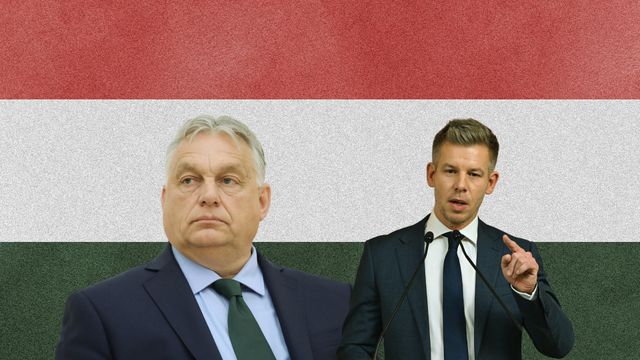
Hungary heads to the polls in what many are calling its most important election since the end of communism in 1989.
For the first time in 16 years, Prime Minister Viktor Orbán is facing a serious challenge not from the usual opposition but from someone who once stood beside him.
That challenger is Péter Magyar, a former Fidesz insider who now leads the Tisza (Respect and Freedom) Party. What looks like a domestic political contest is also being watched closely far beyond Hungary, with implications for the EU, the US, Russia, and Ukraine.
Orbán’s campaign has focused heavily on the idea of “war or peace.” He has positioned himself as Hungary’s protector, warning that “progressive forces” in the West and Ukraine are trying to pull the country into conflict. Read more
04:00 GMT: Polls open in Hungary
Polling stations open at 6 a.m. (0400 GMT) and close at 7 p.m. (1700 GMT), with results expected later in the evening. According to the National Election Office, there are over 8.1 million eligible voters.
RECOMMENDED FOR YOU
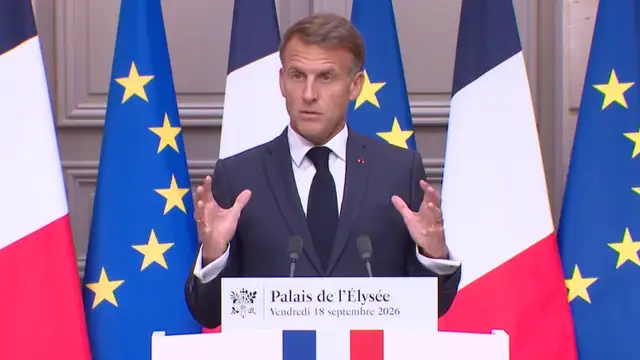
Macron warns Russian hybrid attack threat to Europe is 'real'
What to know about the election and possible outcomes
The election is being hailed as the most pivotal moment for the country since the collapse of communism in 1989. Opinion polls suggest that Prime Minister Viktor Orban and his nationalist Fidesz party could lose power after 16 years to the centre-right, pro-European Union Tisza party, led by former Orban loyalist Peter Magyar.
The Key Players
- Viktor Orbán (Fidesz): In power for 16 consecutive years, Orbán has transformed Hungary into an "illiberal democracy". He is a polarising figure who has consolidated control over 80% of the media and significantly weakened judicial independence.
- Péter Magyar (Tisza Party): A former Fidesz insider and diplomat, Magyar launched the Respect and Freedom (Tisza) Party after a high-profile corruption scandal involving a presidential pardon. He has surged in polls by focusing on corruption, the economy, and restoring ties with the EU.
- Minor parties: The far-right Mi Hazánk (Our Homeland) may act as a kingmaker, while the centre-left Democratic Coalition (DK) and the satirical MKKP also seek representation.
How the voting works
Exactly 8,114,688 registered voters will elect 199 members of parliament. Of these, 106 are chosen in single-member constituencies under a first-past-the-post system, while 93 are selected from national party and ethnic minority lists.
Since 2010, Orbán has rewritten election laws, including gerrymandering districts and making it easier for Hungarians living abroad to vote. Ethnic Hungarians living abroad have the right to citizenship and can vote on party lists by letter. According to National Election Office data, close to 500,000 such citizens have registered for the 2026 election, and most have traditionally supported Fidesz.
The Tisza Party may need to lead Fidesz by at least six percentage points nationally just to secure a simple majority. Voters with a registered Hungarian address must vote in person, either at polling stations in Hungary or at official representations abroad.
Parties must secure at least 5% of the vote to enter parliament.
What happens after the election
President Tamas Sulyok will convene the new parliament within 30 days of the election, likely in May.
Parliament elects the prime minister by a simple majority vote. The president proposes a candidate, usually from the winning party, and parliament votes on the nomination.
RECOMMENDED FOR YOU

Peru workers launch 72-hour strike over fuel prices, power cuts
If the proposed candidate is not elected, the president must submit a new proposal within 15 days. If parliament fails again to elect a prime minister, the president can dissolve parliament and call a new election.
Core campaign issues
- "War or peace": Orbán has centred his campaign on the fear of war, framing the election as a choice between Hungarian security and a "pro-war lobby" allegedly led by Volodymyr Zelensky and Ursula von der Leyen. Posters across Budapest depict these leaders as menacing figures.
- The economy and corruption: Magyar’s campaign focuses on "bread-and-butter" issues: high inflation, low wages (third lowest in the EU), and the €18 billion to €22.5 billion in EU funds currently frozen due to Hungary's rule-of-law violations.
- Sovereignty vs. integration: Orbán campaigns on defending "traditional values" against "Brussels," while Magyar promises to return Hungary to a pro-EU orientation.
International and geopolitical stakes
- Russia and Ukraine: Hungary is often seen as Moscow’s "mole" within the EU, with Orbán consistently blocking aid to Ukraine and refusing to end reliance on Russian energy. A change in government would likely ease Ukraine’s integration and remove obstacles to EU military support.
- European Union: The EU is watching closely, as Orbán's "spoiling tactics" and vetoes on the €1.8 trillion budget have frustrated leaders in Brussels. Some suggest the EU may eventually suspend Hungary's voting rights if democratic backsliding continues.
- United States: Orbán has strong ties with Donald Trump and JD Vance, while a bipartisan group of US Senators has introduced sanctions legislation to address Hungary's reliance on Russian energy.
Potential scenarios
- Tisza simple majority: Magyar would struggle to pass major reforms, as Fidesz loyalists are embedded in state institutions (like the Prosecutor General and Constitutional Court) that require a two-thirds majority to change.
- Fidesz victory: Orbán would likely double down on his "illiberal" path, potentially leading to further clashes with the EU and increased internal authoritarianism.
- The two-thirds "supermajority": If either party reaches 133 seats, they would have the power to rewrite the constitution and replace top officials at will.
- Political deadlock: If no party wins a majority, the far-right Mi Hazánk could become pivotal, though their involvement would likely lead to political stagnation.
This story is written and edited by the Global South World team, you can contact us here.
