Malaysia topped the Asia tourism rankings in 2025

Asia’s tourism landscape has undergone a notable reshuffle over the past decade, with Malaysia emerging as the region’s most visited destination in 2025, overtaking traditional heavyweights such as China and Thailand.
Asia’s tourism landscape has undergone a notable reshuffle over the past decade, with Malaysia emerging as the region’s most visited destination in 2025, overtaking traditional heavyweights such as China and Thailand.
In 2015, China led Asia’s tourism sector by a wide margin, attracting around 56.9 million international arrivals, according to data compiled by CEOWORLD Magazine. Thailand followed with 29.9 million visitors, while Hong Kong, Malaysia and Japan rounded out the top five.
At the time, China’s vast domestic infrastructure, cultural landmarks and major cities such as Beijing and Shanghai made it the region’s dominant tourism hub.
But a decade later, the picture looks very different.
RECOMMENDED FOR YOU
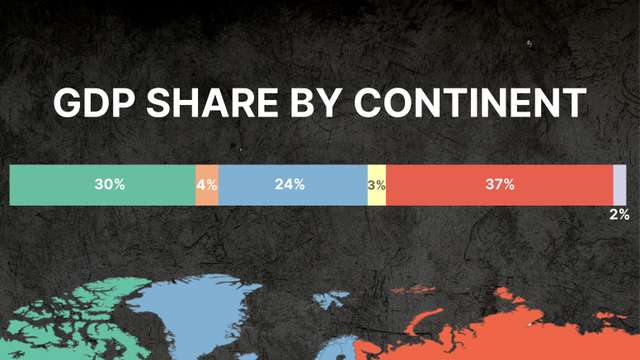
Asia produces the largest share of global GDP
By 2025, Malaysia took the top spot with approximately 28.2 million international arrivals, according to the Asia Golf Journey tourism report. Thailand remains a close second at 24.1 million, while emerging destinations such as Vietnam and Indonesia have climbed the rankings.
Vietnam, in particular, has surged to third place with 15.4 million visitors, reflecting strong growth driven by visa reforms, competitive pricing and expanding international flight connections.
Indonesia and Cambodia have also entered the top five, signalling a broader regional shift toward diverse, experience-driven travel.
Indonesia recorded about 10 million arrivals in 2025, boosted by destinations such as Bali and Jakarta, while Cambodia attracted just over 4 million tourists, supported by cultural tourism centred on Angkor Wat.
One of the factors that explains the changing rankings is that travel behaviour has evolved, with tourists increasingly seeking affordable, less crowded and culturally immersive destinations. Southeast Asia has capitalised on this trend, offering competitive pricing, simplified visa policies and aggressive tourism marketing.
At the same time, China’s inbound tourism recovery has been slower following pandemic-related restrictions, while Hong Kong’s visitor numbers have also faced structural changes.
Malaysia’s rise reflects a deliberate strategy to position itself as a regional tourism hub, combining infrastructure investment with targeted campaigns to attract international visitors.
The latest figures highlight how Asia’s tourism sector is becoming more competitive and decentralised.
RECOMMENDED FOR YOU

Argentina equals Germany's record with fourth FIFA World Cup final defeat
No single country now dominates the region in the way China did a decade ago. Instead, multiple destinations are sharing the spotlight, each leveraging unique strengths, from Thailand’s beaches to Vietnam’s rapid development.
This story is written and edited by the Global South World team, you can contact us here.