Nearly half the world now lives in cities as urban growth accelerates
https://www.instagram.com/p/DcTXcastRmb/
Main Points
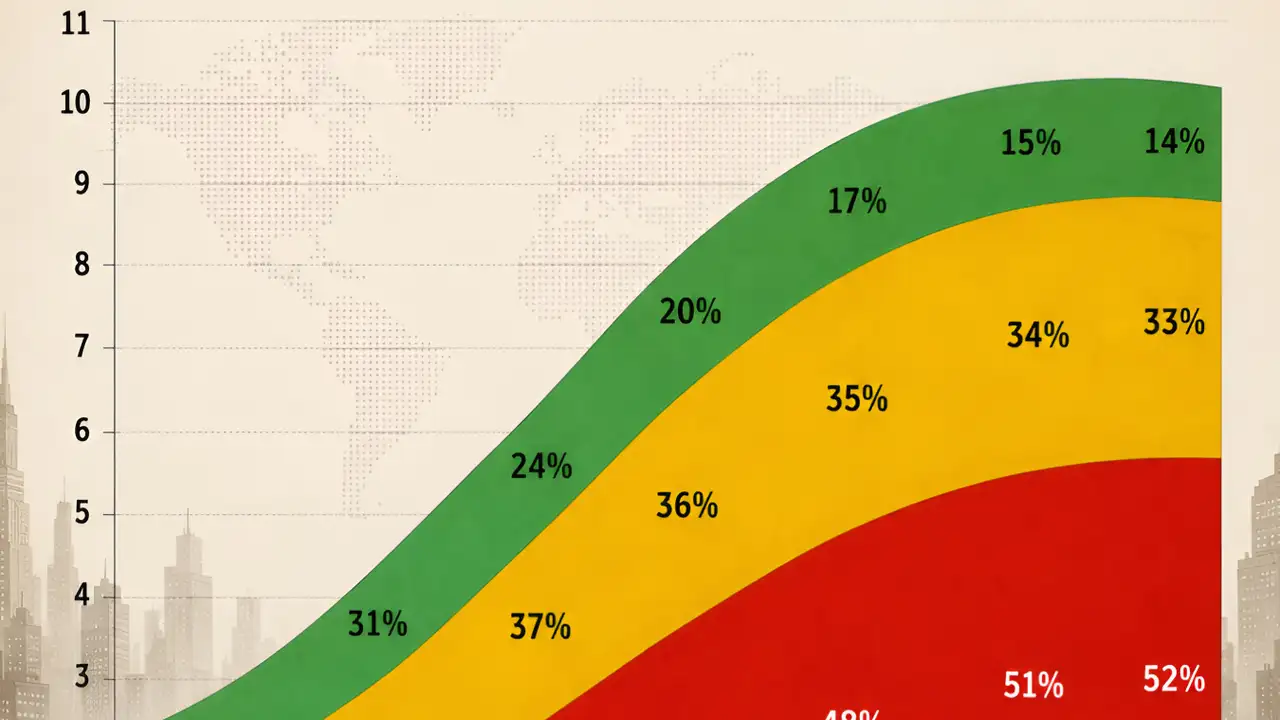
- 45% of the world lived in cities in 2025
- City residents have more than doubled as a share since 1950
- UN urbanisation projections currently end in 2050
Nearly half of the world's population now lives in cities, and that share is expected to keep rising as population growth becomes increasingly concentrated in urban areas, according to the United Nations' World Urbanisation Prospects 2025.
The UN estimates that 45% of the world's 8.2 billion people lived in cities in 2025, more than double the 20% recorded in 1950. Another large share lives in towns and semi-dense areas, leaving a shrinking proportion of the global population in rural areas.
The shift has been dramatic. In 1950, most people lived outside cities. Since then, the number of city residents has grown from roughly 500 million to about 3.7 billion as the global population expanded and settlements became larger and denser.
The UN expects the trend to continue. Two-thirds of global population growth between 2025 and 2050 is projected to occur in cities, while most of the remaining growth will take place in towns. Rural areas will account for an increasingly small share of the world's population.
RECOMMENDED FOR YOU
Asia produces the largest share of global GDP
The 2025 report uses a standardised system called the Degree of Urbanisation, which divides settlements into cities, towns and semi-dense areas, and rural areas. It uses population size, density, neighbouring settlements and satellite-based population data, making comparisons between countries more consistent.
There is one important problem with the graphic. The UN's World Urbanisation Prospects 2025 only provides projections to 2050, not 2100. The image's figures after 2050 therefore cannot be attributed directly to the UN's 2025 report. The UN dataset covers estimates from 1950 to 2025 and projections through 2050.
So while the graphic correctly captures the long-term move towards cities, its 2055–2100 projections need a different source if they are to be presented as verified figures.
This story is written and edited by the Global South World team, you can contact us here.