No change in Indo-Pacific stance under Trump presidency, Philippine envoy says
No change in Indo-Pacific stance under Trump presidency, Philippine envoy says
By Karen Lema
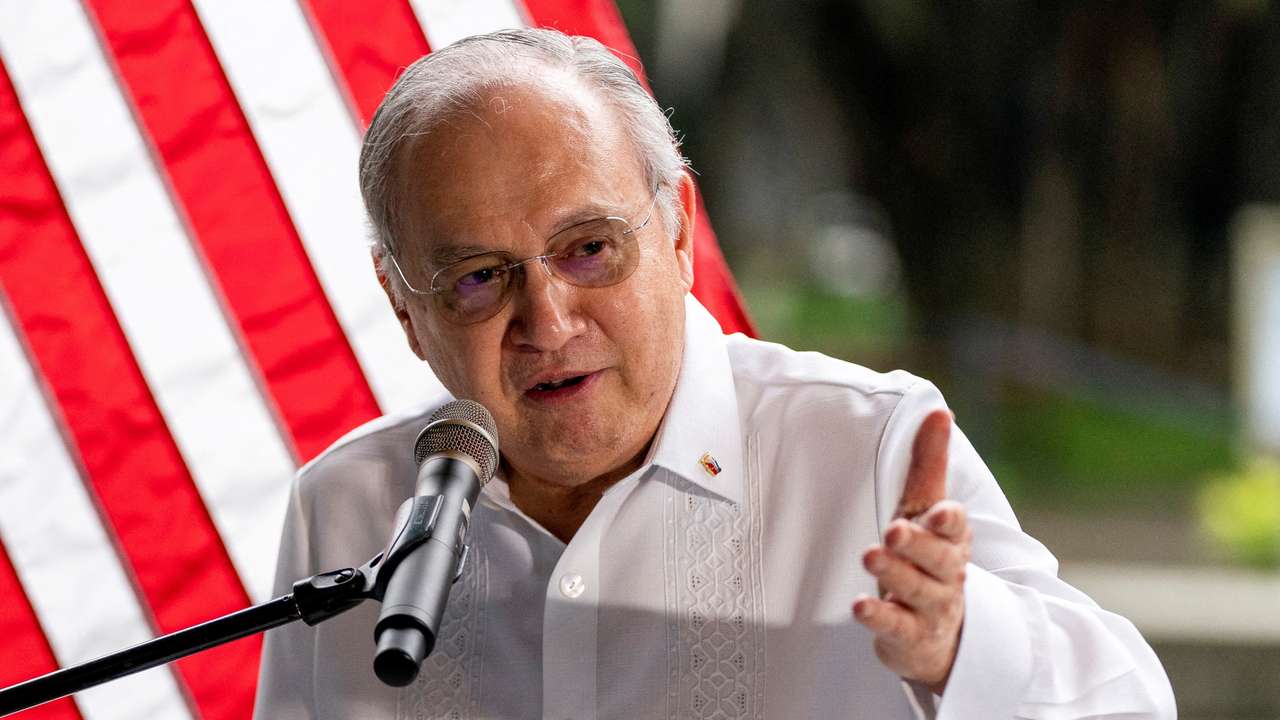
The United States' Indo-Pacific strategy is unlikely to change should Donald Trump win the presidential race in November, the Philippines' longtime ambassador to Washington said on Wednesday.
Jose Manuel Romualdez said in a speech he was in touch with one of Trump's close advisers, former national security adviser Robert O'Brien, who indicated to him the continuation of Washington's current stance in the region.
RECOMMENDED FOR YOU

Mahama sets 2030 deadline to end Ghana's raw mineral exports
"That is of course very consoling," Romualdez told a diplomatic gathering.
Security engagements between the Philippines and the United States have stepped up considerably under U.S. President Joe Biden and his Manila counterpart Ferdinand Marcos Jr, with both leaders keen to counter what they see as China's aggressive actions in the South China Sea and near Taiwan.
While the United States sees both the South China Sea issue and a potential Taiwan conflict as "serious concerns," Romualdez believed the "real flashpoint is the West Philippine Sea" given "all of these skirmishes happening there."
The West Philippine Sea is the term Manila uses to refer to that part of the South China Sea within its 200-nautical mile exclusive economic zone.
Under Marcos, the Philippines has nearly doubled the number of its bases accessible to U.S. forces. A 1951 Mutual Defence Treaty bound them to defend each other in the event of attack and Marcos last year succeeded in pushing Washington to make clear the extent of that security commitment.
Romualdez said it was possible there could be a major "accident" in the South China Sea that could lead to the treaty being invoked, but hoped that would never happen.
"That keeps a lot of us awake at night," he said.
The Philippines will not let up in asserting its maritime claims, Romualdez said, as tensions in the South China Sea continue to simmer, with Beijing vehemently opposed to what it considers incursions by Philippine vessels into areas it claims.
RECOMMENDED FOR YOU

19 killed, 25 injured in Kolkata Durga Puja crowd crush
Marcos said on Wednesday the Chinese navy's presence in the South China Sea is "worrisome" but will not deter his country from defending its maritime territory and protecting its fishermen.
The Philippine Coast Guard spotted the presence of Chinese navy vessels during last week's patrol mission by a fisheries bureau vessel at the contested Scarborough Shoal in the waterway, where a new floating barrier across its entrance was also captured by a satellite image taken by Maxar Technologies.
"The aggression that we are now facing is very real," Romualdez said, adding the Philippines hopes China, a major trading partner, will see the value of continuing economic activity between them while trying to peacefully resolve their issues.
"We have a lot of exports to China, but all those exports can be at peril because occasionally we hear negative things," Romualdez said.
This article was produced by Reuters news agency. It has not been edited by Global South World.