How a movie about a cow changed Iran's film industry forever
A deadly cinema fire in 1978 helped fuel a revolution that would overthrow Iran’s monarchy. Just a year later, the country’s new Islamic government considered banning cinema altogether. But an unlikely film about a man who believed he was a cow helped change that decision.
On August 19, 1978, Cinema Rex in Abadan, Iran, was set ablaze during a screening of The Deer. Hundreds of moviegoers were trapped inside, with approximately 470 people reportedly killed. The tragedy intensified public anger against Shah Mohammad Reza Pahlavi. Many initially blamed his secret police, SAVAK, although subsequent investigations implicated religiously motivated arsonists. The fire became a powerful symbol of the unrest that culminated in the 1979 Iranian Revolution.
But the revolution brought a new threat to Iranian cinema. Under Ayatollah Ruhollah Khomeini, the Islamic Republic viewed much of the existing film industry as morally corrupt. Cinemas faced widespread closures, and filmmakers feared their industry could disappear entirely.
Then came "The Cow". A movie directed by Dariush Mehrjui in 1969, the surreal drama follows a villager whose beloved cow dies, leaving him so devastated that he begins believing he is the animal. After Khomeini watched the film on television, he reportedly praised its moral and educational qualities. This single endorsement helped establish that cinema itself was not inherently incompatible with Islamic values.
RECOMMENDED FOR YOU

Six countries account for three-quarters of Europe’s unicorn startups
Iranian film making survived, but it was forced to operate under strict new censorship codes enforced by the Ministry of Culture and Islamic Guidance. The restrictions were unyielding. Women on screen were required to wear the hijab at all times even in domestic scenes where characters were sleeping or alone with family. Physical contact between unrelated men and women was strictly forbidden; onscreen couples could not touch, hold hands, or embrace. Furthermore, any direct criticism of government or religious authorities was strictly outlawed.
Rather than abandon film making, directors developed brilliant, creative ways to navigate these restrictions. Ironically, the regime itself helped fuel this creativity. In 1983, the government established the Farabi Cinema Foundation to fund a new "pure," anti-Hollywood national cinema. Independent directors used this state funding, equipment, and infrastructure to craft deeply artistic independent masterpieces.
To bypass the censors, filmmakers mastered a style known as "poetic realism." The legendary director Abbas Kiarostame pioneered this movement, frequently telling profound stories through the innocent perspective of children. By focusing on simple, everyday human struggles, Kiarostami and his peers created globally acclaimed films that completely bypassed political or religious censorship. To depict romance without physical contact, directors relied on heavy symbolism, intense lingering glances, or couples communicating through mirrors to represent distance.
Yet, censorship and persecution have never truly stopped, transforming modern Iranian film making into a high-stakes underground resistance. When director Jafar Panahi was placed under house arrest and banned from making movies, he famously shot "This is Not a Film" on an iPhone and smuggled the documentary out of Iran on a flash drive hidden inside a cake to screen at the Cannes Film Festival. More recently, director Mohammad Rasoulof shot his acclaimed drama "The Seed of the Sacred Fig" in total secrecy using hidden locations and walkie-talkies to avoid police raids, before ultimately fleeing the country on foot over the mountains to attend its international premiere.
Iranian cinema's history reveals an extraordinary contradiction, that the very restrictions designed to control filmmakers also inspired some of the world's most inventive and resilient storytelling.
Click here for previous episodes
ISSN 2978-4891
RECOMMENDED FOR YOU
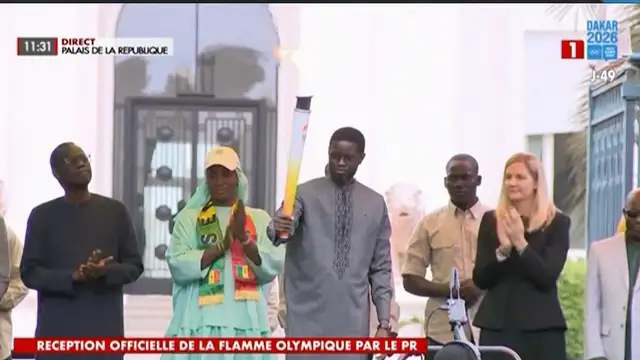
Olympic flame arrives on African soil for first time as Senegal begins Dakar 2026 countdown
This story is written and edited by the Global South World team, you can contact us here.
