Norway leads global electric vehicle adoption as cities race to electrify transport
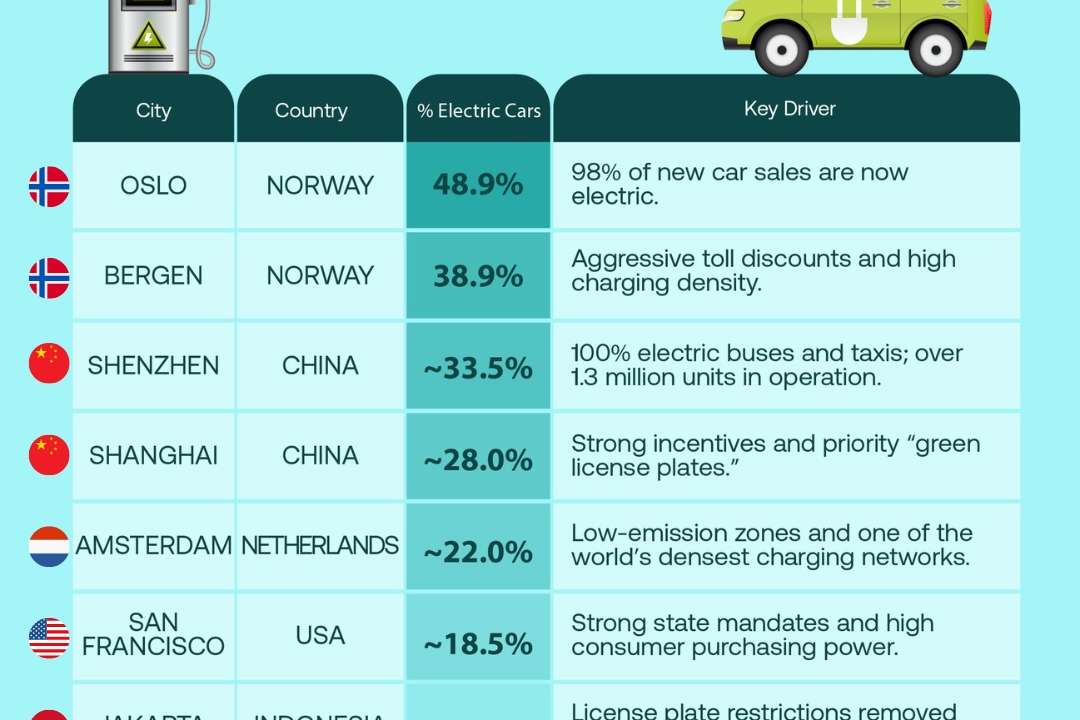
Cities across the world are accelerating the shift to electric vehicles (EVs), with Norway’s capital, Oslo, emerging as the global leader, as governments deploy aggressive incentives and infrastructure investments to cut emissions.
Cities worldwide are picking up speed in the move towards electric vehicles, with Oslo standing out at the forefront as governments push incentives and invest heavily in infrastructure to curb emissions.
Data from World Visualized places the Norwegian capital at the top, with 48.9% of cars being electric, followed by Bergen at 38.9%, highlighting the country’s clear advantage in adoption rates.
This position reflects a sustained national strategy. Electric cars make up roughly 82% of new vehicle sales in Norway, a figure that continues to edge higher, supported by tax reliefs, lower road charges and an extensive charging network, according to the Norwegian Road Federation.
Buyers benefit from exemptions on purchase taxes and VAT, often making electric models more affordable than petrol alternatives. Additional advantages, including access to bus lanes and reduced parking and toll costs, further strengthen their appeal.
RECOMMENDED FOR YOU

More than 6 billion people are now online as global internet access reaches new high
Chinese cities are also making significant strides, though with a different model focused on scale and public transport.
Shenzhen, with roughly 33.5% of cars electric, has electrified its entire bus fleet and taxi system, more than 16,000 buses and over 20,000 taxis, making it the first city in the world to do so, according to the International Energy Agency (IEA).
Shanghai follows with around 28%, supported by strong subsidies and a policy that prioritises EV buyers through easier access to licence plates, which are otherwise costly and restricted.
China is now the world’s largest EV market, accounting for nearly 60% of global electric car sales in 2023, the IEA said.
Elsewhere in Europe, Amsterdam stands out with about 22% EV share, supported by one of the densest charging networks globally and strict low-emission zones that discourage petrol and diesel vehicles.
The Netherlands has consistently ranked among the top countries for EV infrastructure, with more than 100,000 public charging points nationwide, according to government data.
In the United States, San Francisco leads major cities with roughly 18.5% of cars being electric, reflecting California’s aggressive climate policies and high consumer purchasing power.
California alone accounts for nearly 40% of all EV sales in the U.S., driven by state mandates requiring a transition to zero-emission vehicles by 2035, according to the California Energy Commission.
RECOMMENDED FOR YOU
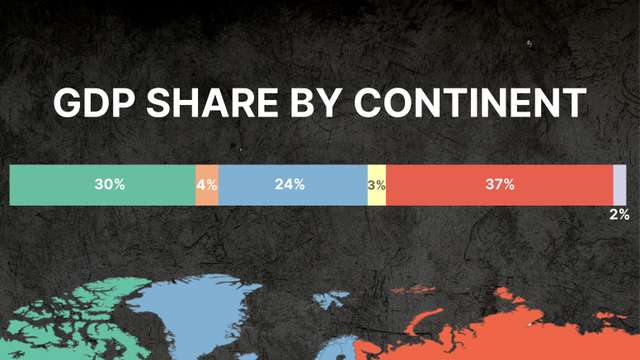
Asia produces the largest share of global GDP
However, nationwide adoption remains uneven due to infrastructure gaps and varying state-level policies.
On the other hand, Jakarta’s EV share remains low at around 2.4%, highlighting the challenges faced by emerging economies.
Indonesia has introduced incentives, including reduced value-added tax and regulatory support for domestic EV production, as part of a broader strategy to build a regional electric vehicle hub.
President Prabowo Subianto has signalled ambitions to accelerate the transition, though analysts say infrastructure and affordability remain key barriers.