Nuclear leads EU power mix as renewables surge and fossil fuels decline
Nuclear energy remains the single largest source of electricity in the European Union, but rapid growth in wind and solar is reshaping the bloc’s energy mix, marking a decisive shift toward low-carbon power, according to recent industry and institutional data.
Nuclear energy remains the single largest source of electricity in the European Union. Still, rapid growth in wind and solar is reshaping the bloc’s energy mix, marking a decisive shift toward low-carbon power, according to recent industry and institutional data.
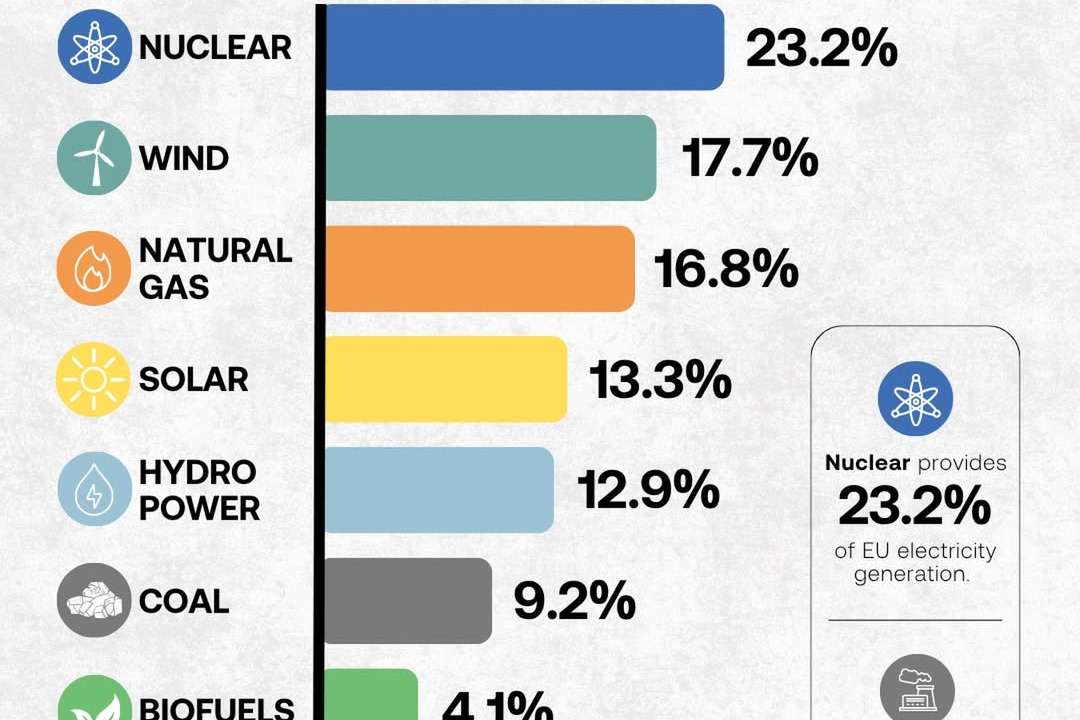
In 2025, nuclear accounted for roughly 23% of EU electricity generation, ahead of wind at about 18% and natural gas at around 17%, based on data compiled by energy analysts and platforms tracking Europe’s power system.
Combined, low-carbon sources, including nuclear, wind, solar and hydropower, now make up the majority of electricity generation across the EU.
This reflects a broader structural shift. According to Ember and European energy data, wind and solar together generated more electricity than fossil fuels in 2025 for the first time, a milestone widely seen as a turning point in Europe’s energy transition.
RECOMMENDED FOR YOU
From Suomi to Zhongguo, why some countries have completely different names at home
Solar alone contributed roughly 13% of electricity generation, while wind accounted for close to 17%, supported by sustained investment and policy backing across the bloc.
Despite the growth of renewables, fossil fuels still play a significant role.
Natural gas, coal and oil together accounted for roughly 27% of EU electricity generation, underlining the bloc’s continued reliance on dispatchable power sources to stabilise grids during periods of low renewable output.
Gas remains particularly important for its flexibility, though analysts warn that Europe’s electricity prices remain closely tied to gas markets, exposing the system to geopolitical volatility.
Coal, once a dominant source of European power, has continued its long-term decline, falling below 10% of the electricity mix in recent data.
Renewable energy has expanded rapidly in recent years.
According to Eurostat and industry reports, renewables accounted for around 47% of EU electricity generation in 2024, up sharply from previous years, driven largely by wind and solar expansion.
In 2025, that momentum continued, with record solar installations and strong wind output contributing to further gains.
RECOMMENDED FOR YOU

Hungary's Magyar calls for stronger military amid European uncertainty
The International Energy Agency (IEA) notes that renewables are now the fastest-growing sources of electricity globally, with solar leading growth and accounting for a significant share of new energy supply.