Ragweed spreads across Europe as highly allergenic plant poses growing health risk
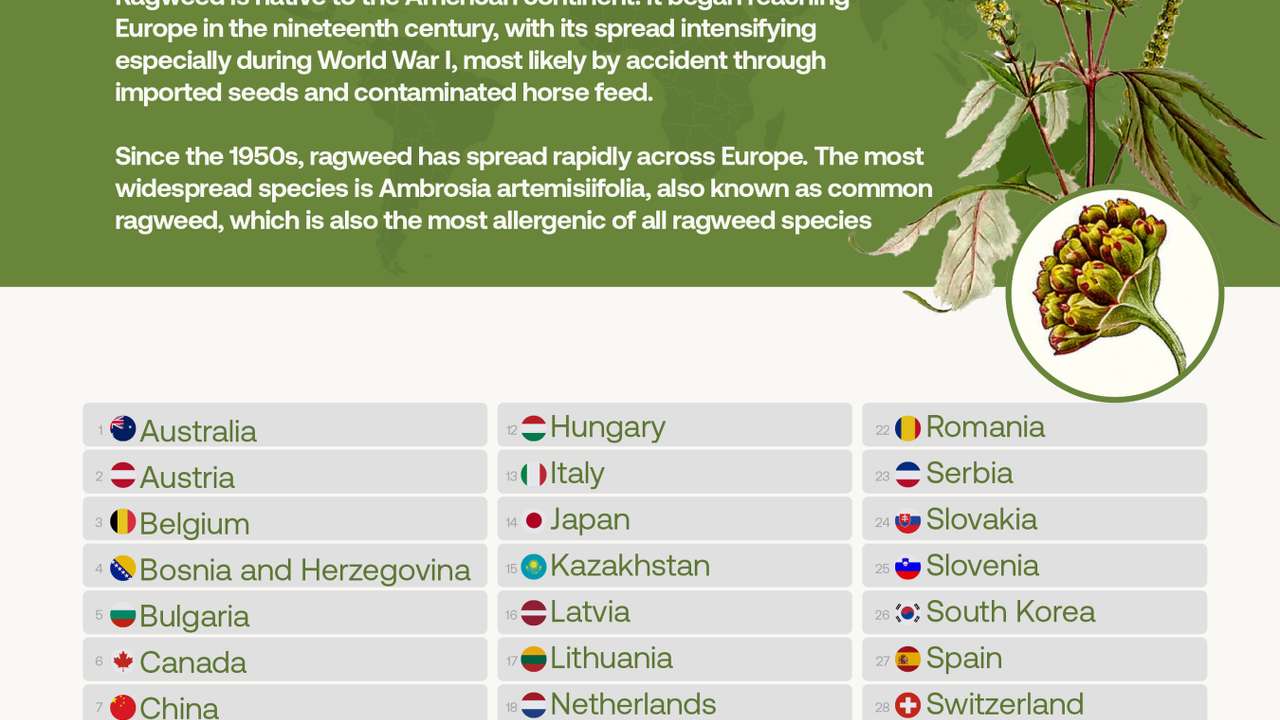
Common ragweed, a highly allergenic plant native to North America, has spread across large parts of Europe and other regions, creating growing problems for public health and agriculture.
Main points
- Common ragweed has spread far beyond the Americas
- Its pollen can trigger severe allergies and asthma
- Central and southeastern Europe are major hotspots
Common ragweed, a highly allergenic plant native to North America, has spread across large parts of Europe and other regions, creating growing problems for public health and agriculture.
The International Ragweed Society says common ragweed (Ambrosia artemisiifolia) is now the most widespread ragweed species in Europe. Major invasion hotspots include the Pannonian region around Hungary, Croatia, Slovakia, Romania and Austria, while substantial populations are also found in Serbia, Italy, Ukraine and parts of France.
The plant is also present much farther afield. The society says ragweed species have been recorded across temperate and tropical Asia, Africa, South America, Australia and Pacific islands, in addition to their native North America.
Why ragweed is a problem
The biggest concern is its pollen. Common ragweed releases large amounts of wind-borne pollen in late summer and early autumn, which can travel long distances. It is a major cause of seasonal allergies and can trigger more serious reactions, including pollen-induced asthma.
RECOMMENDED FOR YOU

'Investing in women is the greatest business': Catalina Escobar on breaking Colombia’s cycles of poverty
This can extend the allergy season because ragweed flowers relatively late in the year, affecting some people after the main spring and early-summer pollen seasons have passed.
Ragweed is also an agricultural problem. It can invade fields, roadsides and disturbed land, compete with crops and reduce yields. Its ability to produce large numbers of seeds makes established populations difficult to eliminate.
Its European spread accelerated substantially during the second half of the 20th century. The International Ragweed Society points to changes in farming, urbanisation and international trade in seeds and grain as important factors helping it spread.
Climate change could worsen the problem. The society says warmer conditions can allow ragweed to establish itself in new areas. At the same time, higher carbon dioxide levels and longer growing seasons may increase the amount and allergenic effects of its pollen.
This story is written and edited by the Global South World team, you can contact us here.