Romania and Slovakia lead Europe's homeownership rankings
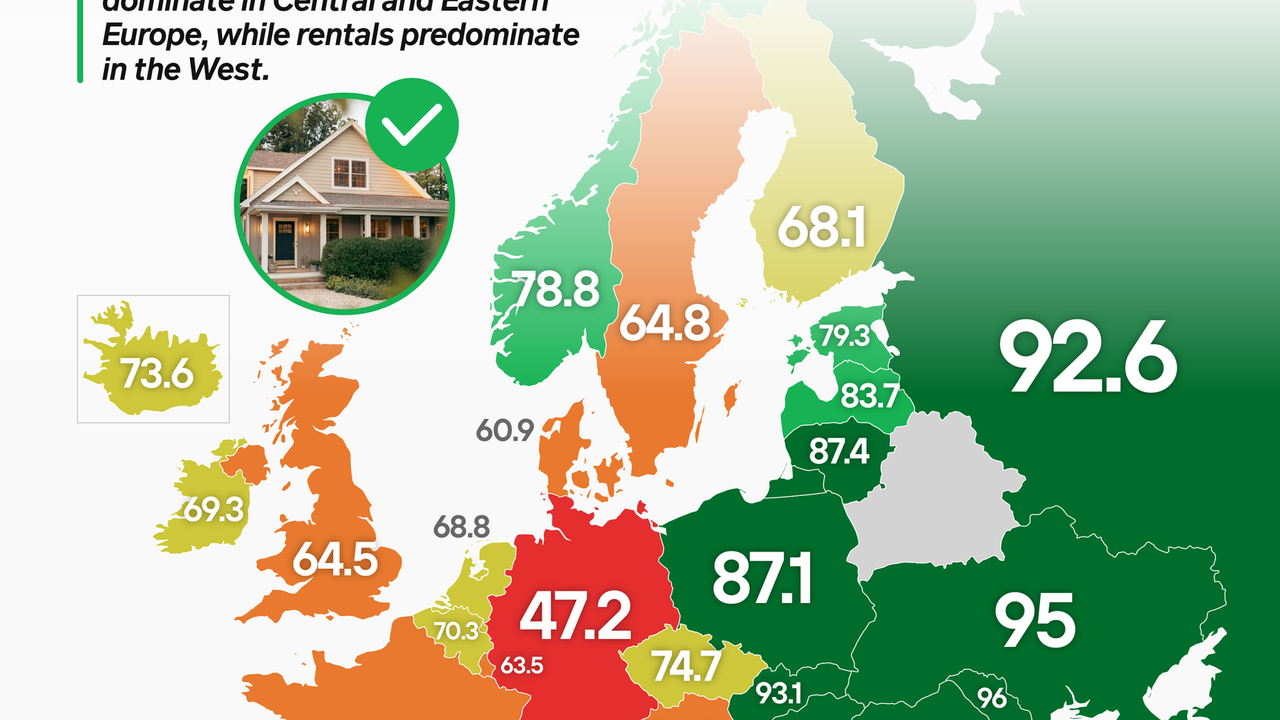
More than 95% of people own their homes in Romania and Slovakia, while Germany has Europe's lowest homeownership rate at 47.2%, highlighting a sharp divide between Central and Eastern Europe and much of Western Europe, according to the latest Eurostat housing data.
Key Points
- Romania leads Europe in homeownership
- Germany has Europe's lowest homeownership rate
- Eastern Europe owns while Western Europe rents more
More than 95% of people own their homes in Romania and Slovakia, while Germany has Europe's lowest homeownership rate at 47.2%, highlighting a sharp divide between Central and Eastern Europe and much of Western Europe, according to the latest Eurostat housing data.
Romania tops the European rankings with 95.0% of residents living in owner-occupied homes, closely followed by Slovakia (94.3%), Croatia (93.1%), Lithuania (92.6%), Hungary (91.6%) and Slovenia (91.0%).
High ownership rates also extend across Eastern Europe, including Poland (87.1%), Bulgaria (86.0%), Latvia (87.4%), Estonia (83.7%) and Czechia (74.7%).
On the contrary, renting is far more common in several Western European economies. Germany records the continent's lowest homeownership rate at 47.2%, meaning a majority of households rent their homes. Switzerland follows at 42.0%, while Austria (54.5%), Türkiye (56.9%), France (61.2%), Denmark (60.9%) and the United Kingdom (64.5%) also report comparatively lower ownership rates.
RECOMMENDED FOR YOU
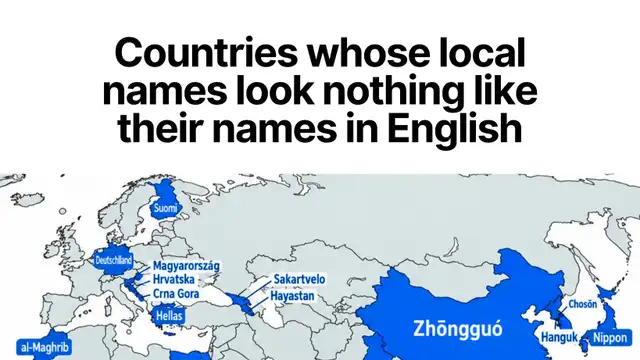
From Suomi to Zhongguo, why some countries have completely different names at home
Southern Europe generally records higher levels of ownership. Spain stands at 73.7%, Portugal at 75.9%, Italy at around 75%, and Greece at 69.7%, reflecting long-standing cultural preferences for homeownership and high levels of inherited property.
According to Eurostat, the gap between East and West is rooted largely in the political and economic transformations that followed the collapse of communist governments in Central and Eastern Europe. During the 1990s, many countries sold large stocks of state-owned housing to tenants at heavily discounted prices, rapidly increasing owner occupation.
Germany followed a different path. A large, well-regulated rental market, strong tenant protections, long-term lease security and relatively stable rent controls have made renting a common and socially accepted choice. Similar conditions exist in Switzerland and Austria, where institutional landlords play a larger role in the housing market than in much of Eastern Europe.
Housing affordability, mortgage availability, demographics and taxation also influence ownership rates. In recent years, rising interest rates and higher house prices have made first-time home purchases more difficult across much of Europe, although ownership patterns remain broadly unchanged.
Eurostat notes that homeownership does not necessarily indicate greater household wealth, as housing quality, mortgage debt and property values vary significantly between countries. Nevertheless, the figures illustrate how historical housing policies continue to shape where Europeans buy and where they rent.
This story is written and edited by the Global South World team, you can contact us here.