'Slava Ukraini': How Europe says 'Glory to Ukraine' in different languages
The phrase “Slava Ukraini”, which translates to “Glory to Ukraine,” has been widely used across Europe and beyond as a message of support for Ukraine since Russia’s full-scale invasion in 2022.
The phrase “Slava Ukraini”, which translates to “Glory to Ukraine,” has been widely used across Europe and beyond as a message of support for Ukraine since Russia’s full-scale invasion in 2022.
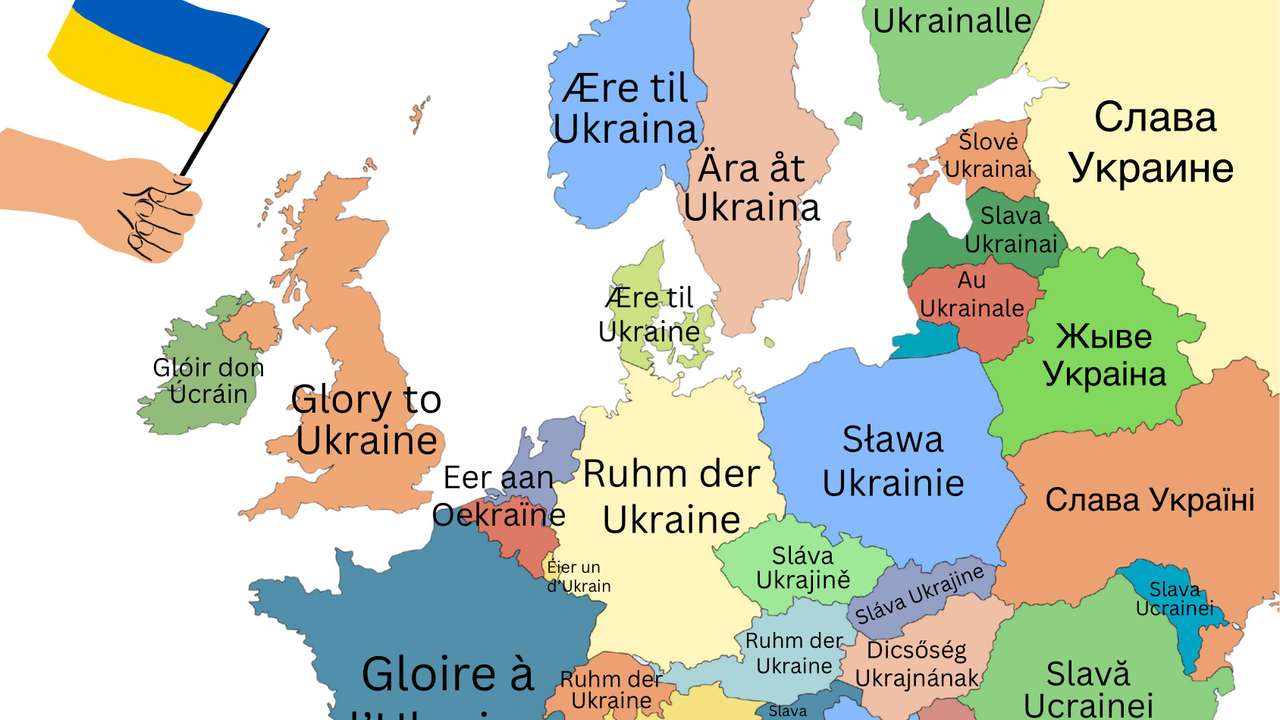
Now recognised internationally as a symbol of Ukrainian resistance and solidarity, the slogan appears in many linguistic forms across the continent, including “Glory to Ukraine” in English, “Gloire à l’Ukraine” in French, “Gloria all’Ucraina” in Italian, and “Sláva Ukrajině” in Czech.
“Slava Ukraini” is a Ukrainian national salute meaning “Glory to Ukraine.” It is typically answered with the response “Heroyam Slava,” meaning “Glory to the heroes.”
According to the Britannica, the phrase has been used in Ukrainian nationalist movements since the early 20th century and gained wider popularity during Ukraine’s struggle for independence in the early 1900s.
RECOMMENDED FOR YOU

More than 6 billion people are now online as global internet access reaches new high
In modern times, it became a widely recognised national slogan following Ukraine’s 2014 Revolution of Dignity, when protesters used it during demonstrations supporting democratic reforms and closer ties with Europe.
Since Russia invaded Ukraine in February 2022, the phrase has spread globally as a symbol of solidarity with Ukrainians.
The above map illustrates how countries across Europe have adapted the phrase into their own languages.
Examples include:
- France: Gloire à l’Ukraine
- Germany: Ruhm der Ukraine
- Italy: Gloria all’Ucraina
- Poland: Sława Ukrainie
- Spain: Gloria a Ucrania
- Romania: Slavă Ucrainei
In Nordic countries, the phrase appears as “Ære til Ukraina” in Norwegian and “Kunnia Ukrainalle” in Finnish.
The widespread translations reflect the strong political and cultural support many European countries have expressed for Ukraine since the war began.
The phrase has appeared at protests, political speeches, sporting events and social media campaigns across Europe.
Several international leaders have publicly used the slogan when expressing support for Ukraine. European Commission President Ursula von der Leyen has ended speeches with “Slava Ukraini,” including remarks at the Ukraine Recovery Conference in Berlin in 2024, where she concluded by saying: “Slava Ukraini. And long live Europe.”
RECOMMENDED FOR YOU
Asia produces the largest share of global GDP
Other political figures who have used the phrase include former UK Prime Minister Boris Johnson, former New Zealand Prime Minister Jacinda Ardern, Dutch Prime Minister Mark Rutte, and former US House Speaker Nancy Pelosi, who have referenced the slogan in speeches or public statements supporting Ukraine during the war.
The phrase has also become widely used by public figures beyond politics. Ukrainian athletes such as Oleksandr Usyk, Andriy Shevchenko, and Elina Svitolina frequently repeat the slogan in interviews and public appearances, while demonstrations around the world have adopted it as a chant of solidarity with Ukraine.
This story is written and edited by the Global South World team, you can contact us here.