South Korea's Lee says Middle East situation is "very urgent"
- #Americas
- #Asia
- #Pacific
- #Conflicts
- #War
- #Peace
- #Defense
- #Diplomacy
- #Foreign Policy
- #East Asia
- #Europe
- #Middle East and Africa
- #Emerging Market Countries
- #Middle East
- #North America
- #Nuclear Armaments
- #Nuclear Proliferation
- #government
- #Politics
- #South-East Asia
- #South-West Asia
- #Gulf
- #Elections
- #Voting
- #Presidential Elections
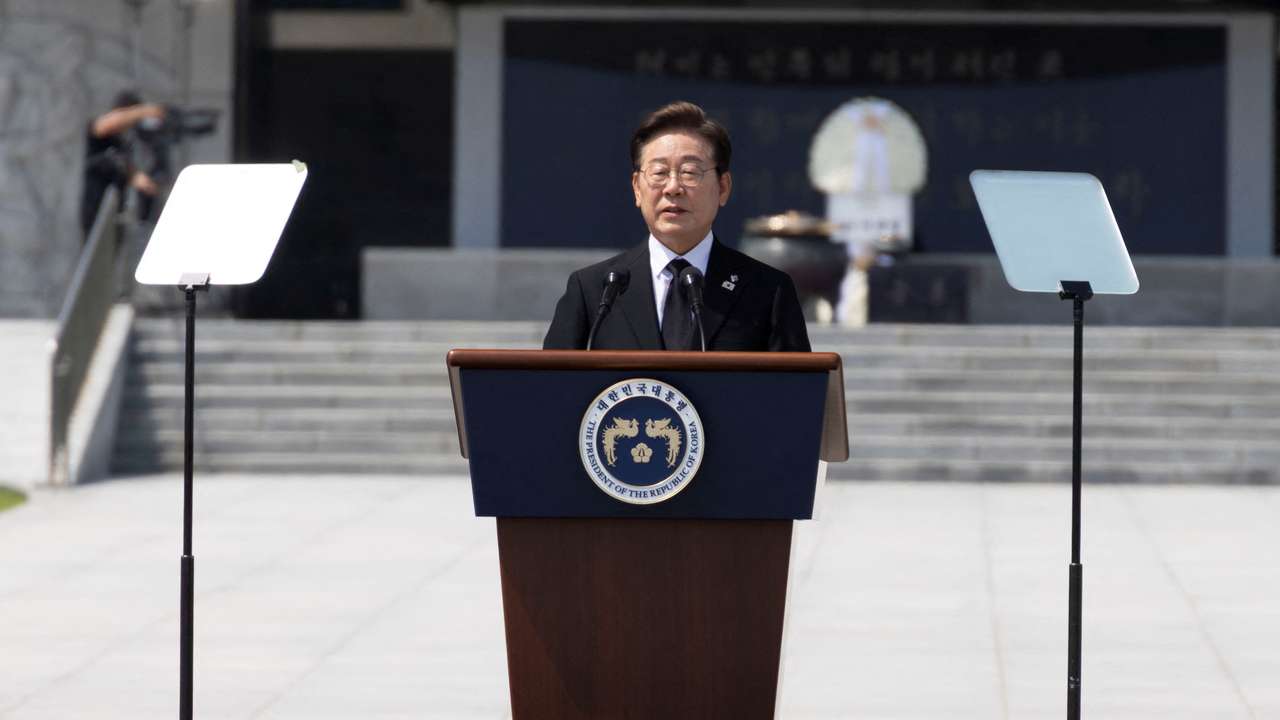
South Korean President Lee Jae Myung said on Monday that the situation in the Middle East was "very urgent" and financial markets were becoming unstable due to increasing uncertainty.
Lee also called on his senior aides to prepare additional measures that could be incorporated into an extra budget already proposed if needed.
Major share indexes slipped in Asia on Monday and oil prices briefly hit five-month highs as investors anxiously waited to see if Iran would retaliate against U.S. attacks on its nuclear sites, with resulting risks to global activity and inflation.
"First of all, the situation in the Middle East is very urgent. I think that all ministries, including the presidential office, should prepare an emergency response system to promptly handle," Lee told his senior secretaries.
RECOMMENDED FOR YOU
Six countries account for three-quarters of Europe’s unicorn startups
The president expressed concern that rising oil prices could lead to higher inflation that would take a toll on people's livelihoods.
Earlier on Monday, a vice industry minister flagged concerns over the potential impact on the country's trade from the recent U.S. strikes on Iran.
South Korea is Asia's fourth-largest economy and depends heavily on exports.
Seoul has deepened its reliance on crude oil imports from the Middle East, which accounted for 72% of the country's total crude imports in 2023.
Market participants are bracing for further oil price hikes amid fears that an Iranian retaliation may include the closure of the Strait of Hormuz, through which roughly a fifth of global crude supply flows.
Lee had decided not to attend a NATO summit this week due to what his office described as uncertainties caused by the Middle East situation.
This article was produced by Reuters news agency. It has not been edited by Global South World.