Southern Europe is nearly 30 years older than Central Africa as global age gap widens
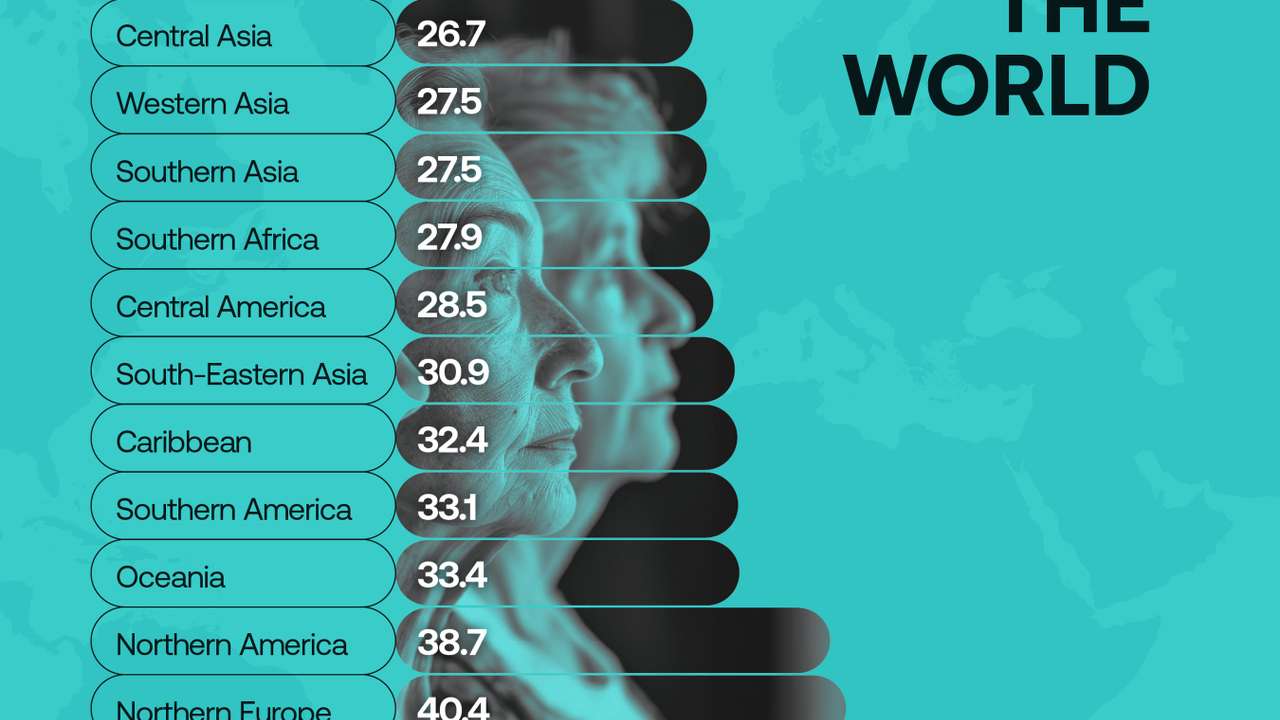
The typical person in Southern Europe is almost 30 years older than someone in Central Africa, highlighting a sharp demographic divide between the world's oldest and youngest populations.
Main points
- Southern Europe has the highest regional median age at 46.4 years.
- Middle Africa has the lowest at 16.4 years.
- The global median age stands at 30.9 years.
The typical person in Southern Europe is almost 30 years older than someone in Central Africa, highlighting a sharp demographic divide between the world's oldest and youngest populations.
Figures in the infographic show Southern Europe's median age at 46.4 years, compared with 16.4 years in Middle Africa. The global median stands at 30.9 years.
Median age divides a population into two halves: one younger and one older. It is different from average life expectancy and does not measure how long people are expected to live.
Europe has the oldest populations
European regions dominate the older end of the rankings. Western Europe has a median age of 43.6 years, followed by Eastern Europe at 41.3 and Northern Europe at 40.4.
RECOMMENDED FOR YOU

Africa must unite to gain greater influence within BRICS, analyst says
Eastern Asia also has an older population, with a median age of 41 years, reflecting decades of falling birth rates and longer life expectancy in countries such as Japan, South Korea and China.
Northern America stands at 38.7 years, while Southern America and Oceania have younger populations, at 33.1 and 33.4 years respectively.
Africa remains the youngest region
The youngest populations are concentrated in Africa. Central Africa has the lowest median age at 16.4 years, followed by Western Africa at 18.2 and Eastern Africa at 18.3.
Northern Africa is older at 24.9 years, while Southern Africa has a median age of 27.9.
Outside Africa, Central Asia has a median age of 26.7 years, while Southern Asia and Western Asia both stand at 27.5. South-Eastern Asia matches the global median of 30.9 years.
The differences largely reflect fertility rates, life expectancy and migration. Many African countries continue to have relatively high birth rates, while much of Europe and East Asia face ageing populations and fewer births.
These trends have major economic consequences. Younger populations create growing demand for schools, jobs and housing, while older societies face increasing pressure on healthcare, pensions and the working-age population.
The figures show how countries are entering different demographic futures, with some preparing for millions of young people to join the workforce and others struggling to support a growing elderly population.
RECOMMENDED FOR YOU
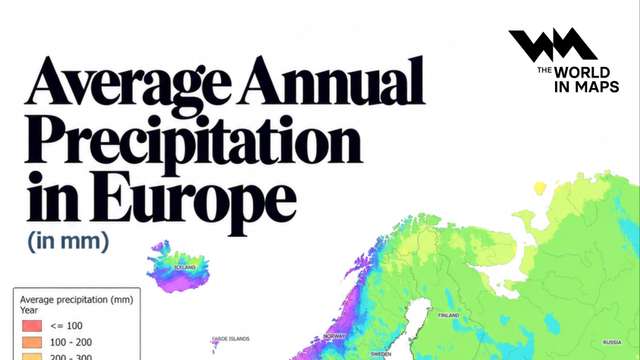
Europe's rainfall divide: Norway's coast receives over 3,000 mm while parts of Spain remain dry
This story is written and edited by the Global South World team, you can contact us here.