The real impact of World War I
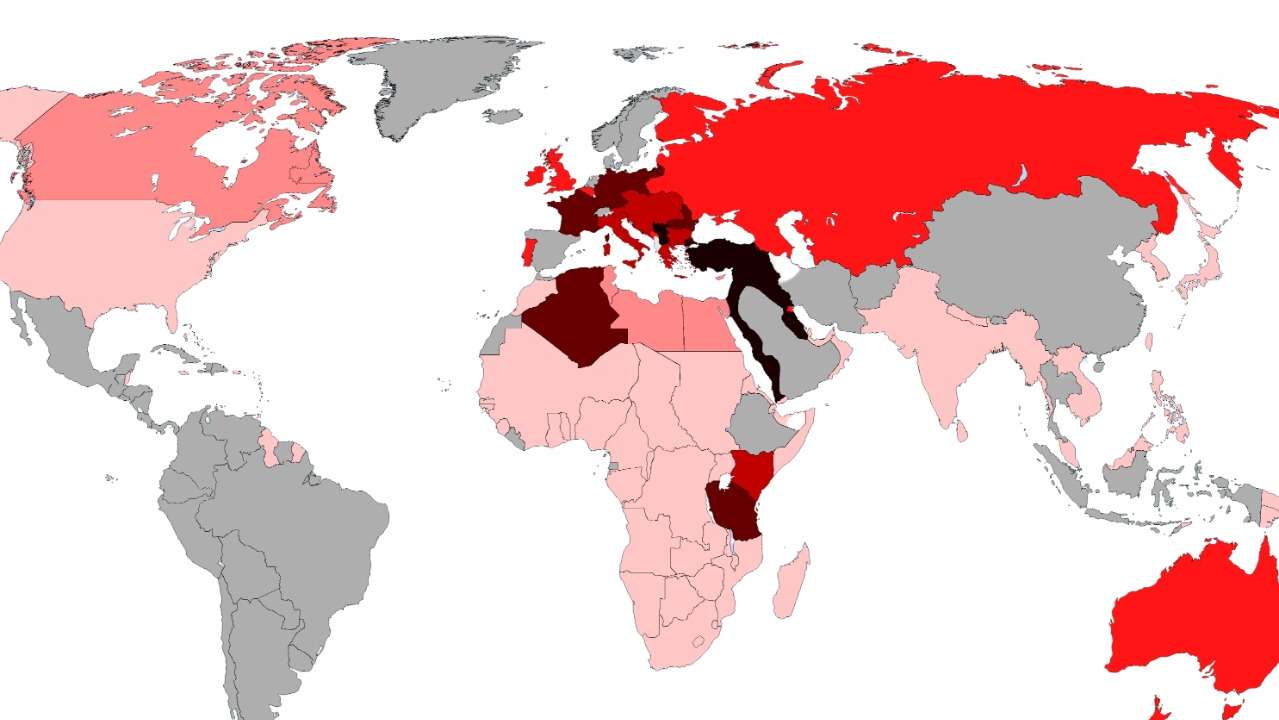
Historians estimate that World War I claimed between 15 and 22 million lives globally, with around 9 to 11 million military personnel and an additional 6 to 13 million civilians. But when the death toll is compared to a country’s total population, the impact becomes deep-rooted.
Historians estimate that World War I claimed between 15 and 22 million lives globally, with around 9 to 11 million military personnel and an additional 6 to 13 million civilians. But when the death toll is compared to a country’s total population, the impact becomes deep-rooted.
For instance, Serbia is believed to have lost between 16% and 27.8% of its population during the war, placing it among the hardest-hit nations in proportional terms.
Meanwhile, Western European nations such as France lost around 4.3% to 4.4% of their populations.
These figures help explain why social and political life across Europe and beyond was permanently transformed: a generation of young men lost, entire communities disrupted, and the demographic shock rippling into post-war unrest and reconstruction.
RECOMMENDED FOR YOU
From Suomi to Zhongguo, why some countries have completely different names at home
For smaller states or those deeply entangled in fighting, the losses were especially devastating.
In today’s global context, the map also resonates with how we understand modern conflict and its ripple effects. As the world watches ongoing conflicts, whether in parts of Africa, Eurasia or the Middle East, the notion that war doesn’t just kill those who fight but also destabilises societies remains painfully relevant.
Furthermore, remembrance efforts continue to highlight the war’s legacy. In northern France, for example, dozens of remains of WWI soldiers are still being discovered each year, an enduring testament to how the conflict’s footprint remains in the landscape.
The remains of a World War I soldier unearthed during construction work in France were laid to rest on Wednesday, June 12, 2025. Serjeant Henry Ashton from Derbyshire, who lost his life at the age of 44 in 1917 during an operation near Lens, received a dignified burial more than a century after his passing.
"It has been a privilege to identify Sjt Ashton, and to be able to organise this burial service for him. When you consider the half a million men still missing from the First and Second World Wars, every one we can identify feels like an achievement," Alexia Clark, the UK's Ministry of Defence's War Detective, said.