US expecting foreign actors to question validity of election

US expecting foreign actors to question validity of election
By Michael Martina, Andrew Goudsward, Christopher Bing
U.S. adversaries are preparing to stoke uncertainty about the validity of the Nov. 5 presidential election results after polls close, anticipating a contested vote, a senior U.S. intelligence official said on Monday.
In a briefing to reporters on the election influence activities of Russia, China, Iran and Cuba, U.S. intelligence officials said "foreign influence actors" would likely work to sow doubt about the results.
RECOMMENDED FOR YOU

New Asia Forum: Indonesia to set out progress on sustainable AI data centres
Russia and Iran have already sought to sway U.S. voters during this year's presidential campaign while China has sought to influence several down-ballot races, including congressional campaigns, according to U.S. intelligence agencies.
Foreign actors would likely seek to use the uncertainty of a contested election to undermine trust in the integrity of the election and election processes and exacerbate divisions among Americans, according to the U.S. intelligence official.
Russia sought to encourage the U.S. public to oppose pro-Ukrainian policies, while actors linked to China's government were focused on "tens" of down-ballot races.
The U.S. intelligence official said Beijing is seeking to influence congressional races with candidates regardless of their party affiliation, perceived by Beijing to threaten its core interests, especially in relation to Taiwan. The official did not provide an assessment of what impact the efforts might have.
U.S. support for Taiwan, the democratic island Beijing claims as its territory, is a longstanding source of friction in U.S.-China relations.
Liu Pengyu, the spokesperson for China's embassy in Washington, called the claims "groundless speculation."
"China is not interested in the U.S. congressional election, and we have no intention and will not interfere in it," Liu said.
The intelligence community had not yet observed Iran seeking to influence state or congressional races, but did assess its aim was to push voters toward supporting Vice President Kamala Harris, the Democratic Party's presidential candidate. That view had not changed since September, when U.S. officials also said Russia sought to denigrate Harris in favor of her Republican rival, former President Donald Trump.
RECOMMENDED FOR YOU
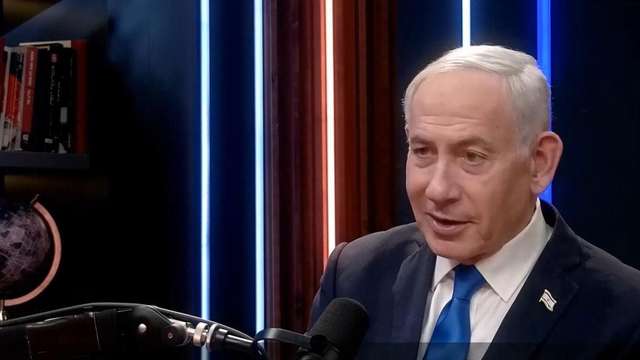
‘Hamas could reach Paris’ - Netanyahu warns Macron amid France protests
Countries would seek to "launder their narratives" through witting and unwitting American voices and stoke divisions in society on issues such as immigration, abortion, and gender rights, the official said.
Cuba was also likely targeting Latino and Spanish-speaking voters on social media with an aim to promote candidates it thought would be favorable to its interests.
Intelligence officials said they had delivered three times the number of "defensive briefings" to candidates, campaigns and election officials about influence operations compared to prior election cycles, including on efforts by Russia, China and Iran.
But they said U.S. voting systems and election workers were the most prepared they have ever been.
An official with the Cybersecurity and Infrastructure Security Agency said the U.S. has election infrastructure that is "more secure than any prior election cycle, and we do believe the election community is more prepared for the incidents that may arise than any prior cycle."
This article was produced by Reuters news agency. It has not been edited by Global South World.