UN rejects bid to remove LGBTQ+ protections from human rights resolution
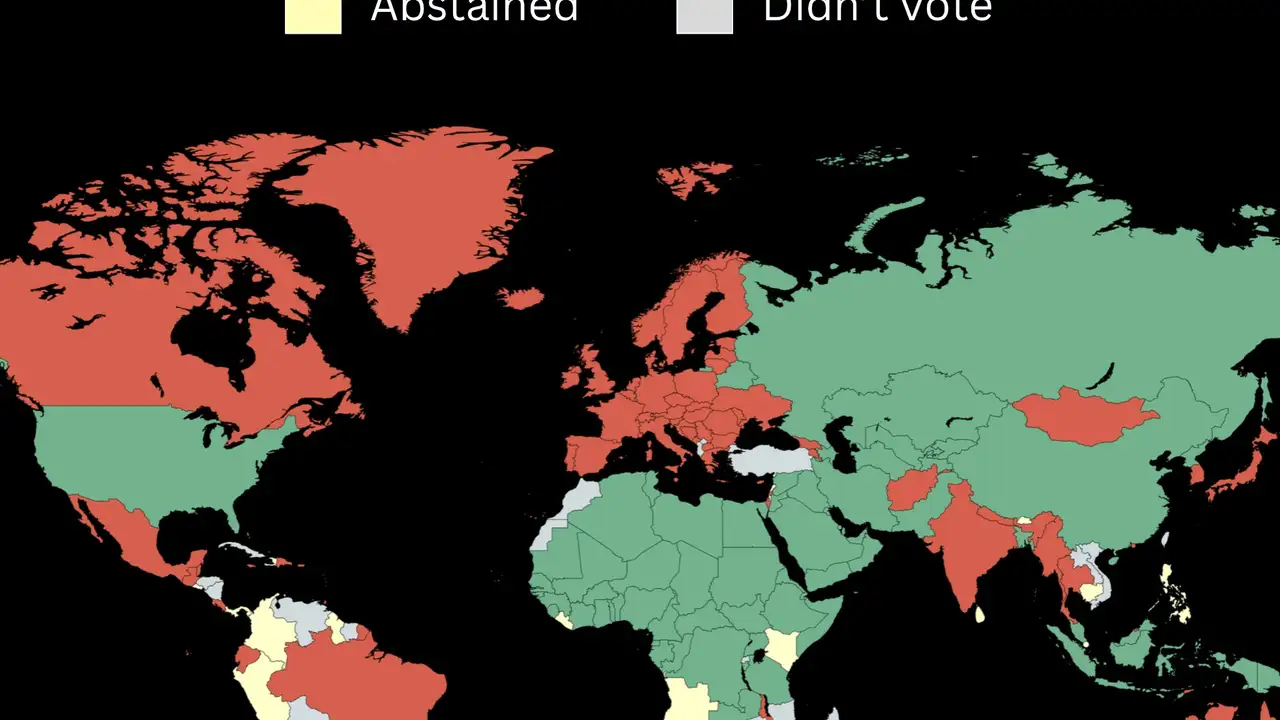
The United Nations has narrowly rejected an attempt to remove references to sexual orientation and gender identity from a human rights resolution on unlawful killings, after the United States joined 68 other countries in supporting the change.
Key points
- The UN rejected the amendment by 74 votes to 69.
- The US, Ghana and Nigeria supported removing the LGBTQ+ references.
- The wider human rights resolution passed with the protections retained.
The United Nations has narrowly rejected an attempt to remove references to sexual orientation and gender identity from a human rights resolution on unlawful killings, after the United States joined 68 other countries in supporting the change.
The UN General Assembly's Third Committee voted on November 13, 2026, to reject the Egypt-led amendment by 74 votes to 69, with 24 abstentions and 26 countries not voting.
The proposed amendment targeted a resolution on extrajudicial, summary or arbitrary executions, which calls on governments to investigate unlawful killings and hold those responsible accountable.
The resolution identifies groups particularly vulnerable to targeted killings, including religious and ethnic minorities, refugees, migrants and people targeted because of their sexual orientation or gender identity.
RECOMMENDED FOR YOU
Argentina leads Brazil 11–5 in Ballon d'Or titles as Messi dominates South American football
Egypt, supported by several members of the Organisation of Islamic Cooperation, proposed removing the explicit references to sexual orientation and gender identity and replacing them with broader language covering people at heightened risk of unlawful killings.
The United States, Ghana, Nigeria and Uganda were among the countries supporting the amendment. Russia and several other African and Asian countries also backed the proposed change.
Most European Union countries, alongside Canada, Australia and several Latin American nations, opposed the amendment.
The vote marked a significant shift in the US position. Washington had previously supported retaining the language, which first appeared in the resolution in 2002 for sexual orientation and was expanded to include gender identity in 2012.
The European Union argued that removing the references would send the wrong message about protecting vulnerable groups, stressing that everyone has an equal right to protection against unlawful killings.
Despite the disagreement, the committee subsequently approved the wider resolution by 131 votes to none, with 47 abstentions and 15 countries not voting. The references to sexual orientation and gender identity remained in the text.
However, the narrow margin raised concerns among human rights organisations. A similar amendment was rejected by 78 votes to 47 in 2024, indicating that support for removing the language has increased.
Outright International, an LGBTQ+ rights organisation, warned that removing explicit references could make violence against LGBTQ+ people less visible in international human rights monitoring.
RECOMMENDED FOR YOU
Pope Leo XIV defends traditional gender roles amid cultural shifts in Peru
The resolution is expected to proceed to the full UN General Assembly for consideration in December, where governments could again challenge the wording.
Although the committee rejected the amendment, the result highlights growing divisions over LGBTQ+ protections within the United Nations.
This story is written and edited by the Global South World team, you can contact us here.