U.S., UK lead global race for international students
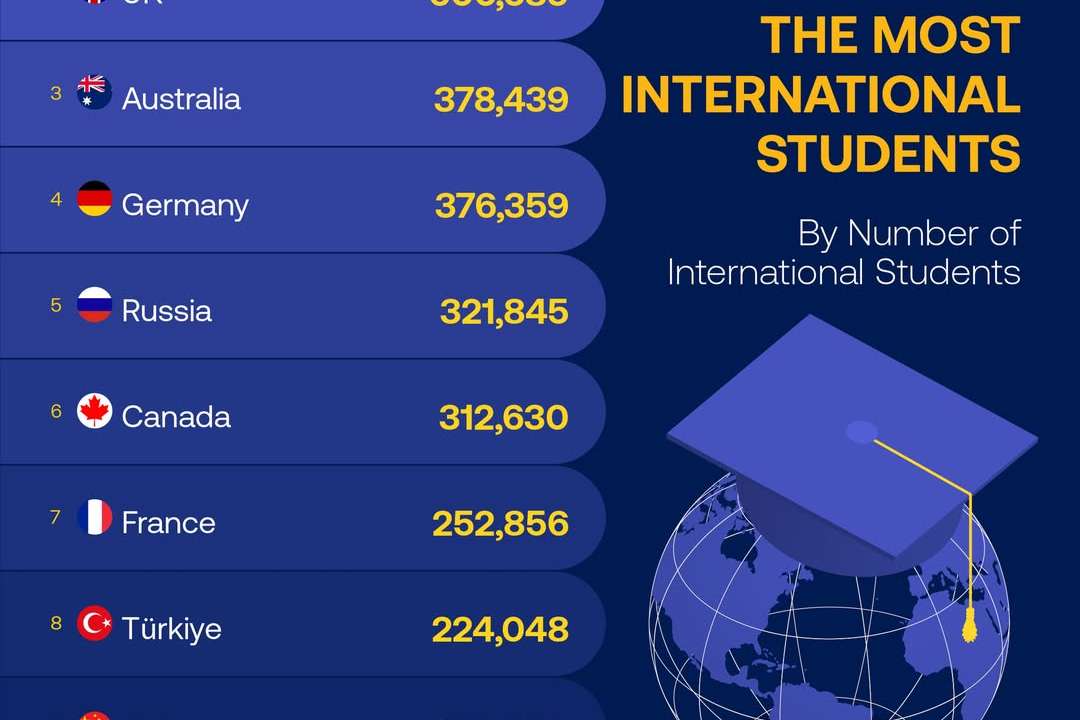
The United States remains the world's leading destination for international students, hosting more than 833,000 learners from abroad, while the United Kingdom holds second place with over 600,000, highlighting the continued dominance of English-speaking countries in global higher education.
Main Points
- The United States hosts the world's largest international student population.
- The United Kingdom ranks second with more than 600,000 international students.
- Australia and Germany remain leading destinations for global education.
The United States remains the world's leading destination for international students, hosting more than 833,000 learners from abroad, while the United Kingdom holds second place with over 600,000, highlighting the continued dominance of English-speaking countries in global higher education.
Data compiled from UNESCO, national education agencies, and international rankings organisations show that the U.S., UK, Australia and Germany continue to attract hundreds of thousands of foreign students annually, benefiting from globally recognised universities, research opportunities and post-study employment pathways.
According to the figures, the United States hosts approximately 833,204 international students, ahead of the United Kingdom with 600,589. Australia ranks third with 378,439 students, narrowly ahead of Germany's 376,359. Russia, Canada, France, Türkiye, China and Japan complete the top ten.
The rankings reflect broader trends identified by UNESCO and QS World University Rankings, which consistently place American, British and Australian institutions among the world's most sought-after universities. Countries with strong research ecosystems, internationally recognised degrees and favourable visa policies continue to attract the largest share of globally mobile students.
RECOMMENDED FOR YOU

NVIDIA’s AI boom sends data-centre revenue above $75 billion
International education has become a major economic sector. In countries such as Australia, Canada, the United Kingdom and the United States, foreign students contribute billions of dollars annually through tuition fees, housing, transportation and consumer spending. Business Day and other economic analysts have noted that international students increasingly represent both an educational and economic asset, supporting universities and local economies alike.
Germany's strong position reflects its reputation for high-quality education and low or no tuition fees at many public universities. Meanwhile, Türkiye, China and Japan have expanded scholarship programmes and international partnerships as they seek to strengthen their roles as regional education hubs.
UNESCO estimates that the number of students pursuing education outside their home countries has grown significantly over the past two decades, driven by globalisation, rising demand for skilled labour and increasing international academic collaboration.
As competition for global talent intensifies, governments and universities are investing heavily in recruitment, research funding and student support services, making international education an increasingly important component of national economic and innovation strategies.
For now, the United States and the United Kingdom remain the world's leading destinations, but emerging education hubs across Europe and Asia are steadily reshaping the global student landscape.
This story is written and edited by the Global South World team, you can contact us here.