Why China calls Japan the 'Land of the Rising Sun'
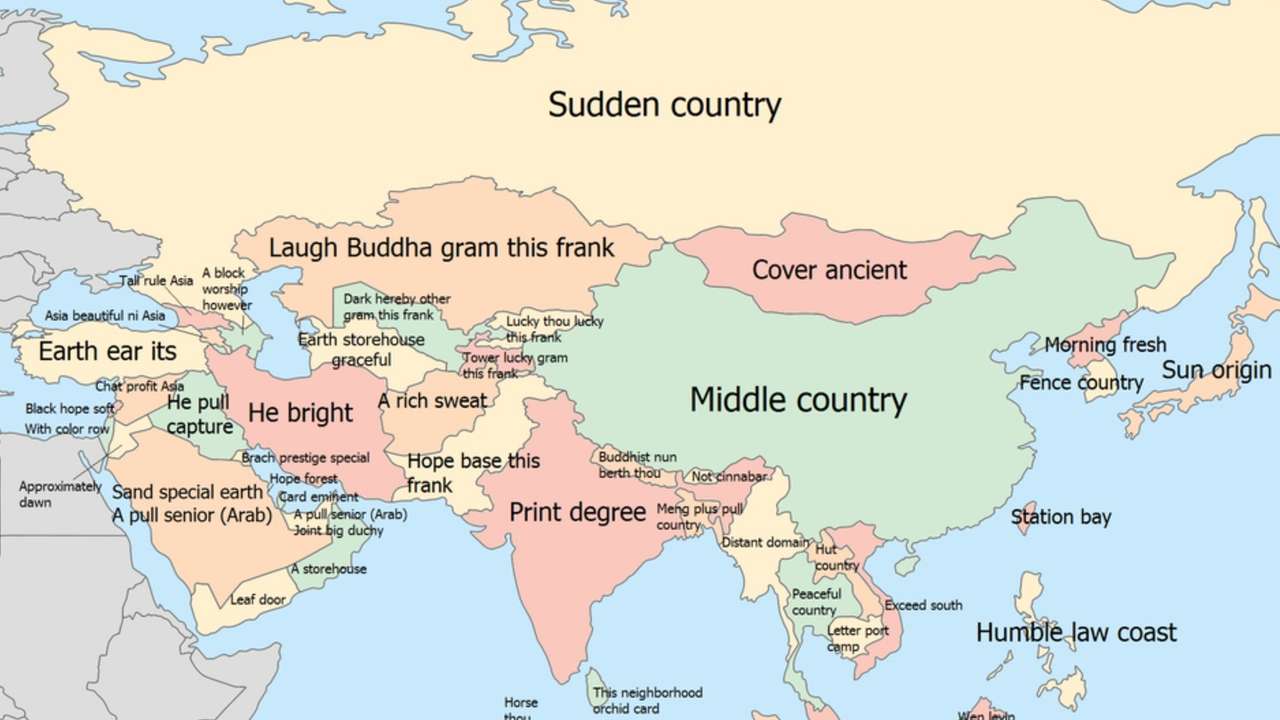
The Chinese names for many Asian countries are more than simple translations. They often preserve centuries-old meanings, phonetic adaptations and historical perceptions, offering a glimpse into how China understood its neighbours through geography, diplomacy and language.
The modern Chinese names of countries are typically written using Hanzi (Chinese characters). Some names describe a country's location or identity, while many others are phonetic transliterations, where characters were chosen primarily for their pronunciation rather than their literal meanings. As a result, translating each character individually can produce unusual phrases that do not reflect the country's actual name or origin.
One of the best-known examples is China itself. The country's official Chinese name Zhōngguó literally means "Middle Country" or "Central State." The term dates back more than 2,000 years and originally referred to the central kingdoms of ancient China before becoming the modern name of the People's Republic of China.
Japan's Chinese name, Rìběn, translates literally as "Sun Origin" or "Origin of the Sun." The name reflects Japan's position east of China, where the sun appears to rise. It gave rise to the widely known expression "Land of the Rising Sun," a description that has been associated with Japan since at least the Tang Dynasty.
South Korea is known in Chinese as Hánguó, meaning "Han Country," a reference to the ancient Samhan confederacies that existed on the Korean Peninsula rather than China's Han dynasty.
RECOMMENDED FOR YOU

More than 6 billion people are now online as global internet access reaches new high
Several names preserve historical kingdoms. Mongolia (Měnggǔ) is a phonetic rendering of "Mongol," while Vietnam (Yuènán) literally means "South of Yue," reflecting the ancient Yue peoples who once inhabited parts of southern China and northern Vietnam. The name was officially adopted by Emperor Gia Long in the early 19th century.
Some country names appear unusual when translated word for word because the characters were selected mainly for their sound. For example, India (Yìndù) is a phonetic adaptation derived from the Sanskrit Sindhu through Persian and other intermediary languages. Likewise, Indonesia (Yìndùníxīyà) and Malaysia (Mǎláixīyà) are transliterations whose individual characters have little connection to the countries themselves.
Other names combine sound with meaning. Russia (Éluósī) is largely phonetic, while Thailand (Tàiguó) includes the character 泰, meaning "peaceful" or "great," combined with 国, meaning "country."
According to linguists, Chinese country names have evolved over centuries as diplomacy, trade and contact with neighbouring civilisations expanded. While many modern names were standardised during the late Qing dynasty and the early 20th century, they continue to reflect layers of history stretching back to ancient Chinese records.
This story is written and edited by the Global South World team, you can contact us here.