6 women innovators who are transforming Africa’s agricultural future with technology

Women innovators are largely overlooked in Africa’s agricultural future, but their contributions are building the next generation of farming solutions.
Across the continent, women contribute significantly to agricultural production and food systems, yet they continue to face major barriers when they attempt to move from being farmers and producers into technology founders, entrepreneurs and industry leaders.
The imbalance is evident in the rapidly growing Agritech sector, where women-led companies receive a fraction of the available investment compared to their male-led counterparts. While agriculture remains one of Africa’s most important economic sectors, women entrepreneurs working in farming and technology often struggle with limited access to capital, networks and visibility.
But behind the funding gap are stories of women quietly reshaping the continent’s food systems through innovations such as artificial intelligence tools that advise farmers, creating digital platforms that connect livestock owners to veterinary services, developing climate-smart farming businesses and using technology to address food insecurity and climate change.
Here are some of the women changing the future of African agriculture.
RECOMMENDED FOR YOU
Six countries account for three-quarters of Europe’s unicorn startups
Priscillah Wakarera, CEO of Rhea Soil (Kenya)

In Kenya, soil scientist Priscillah Wakarera is addressing poor soil health, a challenge that has quietly undermined agricultural productivity for decades.
As founder and CEO of Rhea Soil, Wakarera developed technology that combines IoT sensors, machine learning and local agricultural knowledge to make soil testing faster, cheaper and accessible to farmers.
She was inspired after seeing how traditional soil testing methods discouraged farmers.
“We collected over 100 soil samples, expecting results in two weeks. It took three months. Farmers found it so tedious that they didn’t want to do it again. That’s when I knew there had to be a better way,” she explained in an interview.
Her portable soil-testing devices can reduce analysis time from weeks to minutes, allowing farmers to receive immediate recommendations while working on their farms.
The company has expanded across Kenya, reaching thousands of farmers through agronomist networks and has also tested its solutions in Tanzania and Rwanda.
Wakarera has also created an AI-powered WhatsApp chatbot that acts as a virtual agronomist, providing farmers with agricultural advice in multiple languages.
“Farmers can just send a simple ‘hi’ to get started,” she said, explaining that the chatbot can support farmers with crop advice, pest identification and nutrient recommendations.
RECOMMENDED FOR YOU

Burkina Faso to stop importing armoured vehicles, Traore says
Her innovation has moved artificial intelligence from laboratories to become a practical tool in the hands of rural farmers.
Dorcas Lukwesa, Founder of Mobile Aquaponics (Zambia)
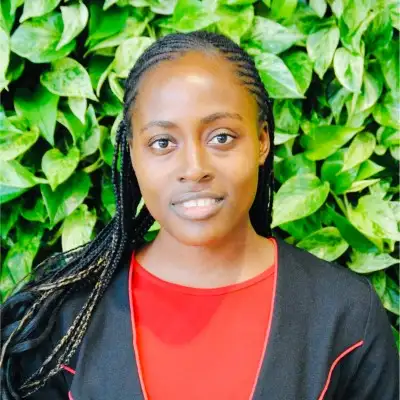
Dorcas Lukwesa is the founder of Mobile Aquaponics, a social venture dedicated to providing a resilient response to climate change through an innovative farming technique called aquaponics.
Aquaponics is the cultivation of fish and vegetables in a constructed, recirculating ecosystem which utilizes naturally occurring bacterial cycles to convert fish waste to plant nutrients.
This system uses 90% less water than traditional farming. It is 70% more productive, does not require soil, does not have weeds, has fewer pests and can be built at any scale, anywhere in the world.
“I’ve experienced first-hand the impact of climate change, causing unpredictable weather, not having enough food to sustain us when droughts or flooding destroyed our crops,” she said in an interview and advised farmers to look towards food sustainability.
“One thing I have learned that has really stuck with me: every action towards food security should always be accompanied by sustainability. We might be solving hunger today, but actually causing famine for tomorrow,” she said.
Martha Fanny Gaisie, CEO of Healthy Choice Agro Consult (Ghana)

The founder and CEO of Healthy Choice Agro Consult, Martha Fanny Gaisie, turned to mushroom farming after witnessing how climate change was affecting rural livelihoods.
For her, mushroom farming became a climate-smart alternative as her business uses waste sawdust from wood mills as compost, while the leftover mushroom substrate is transformed into organic fertiliser.
RECOMMENDED FOR YOU
Sheinbaum rings historic bell as thousands fill Zocalo for Mexican Independence Day
“Over recent years, the weather has become more unpredictable. The wells dry up after an extended drought. We also have bushfires that can burn someone’s whole farm. Mushrooms are a climate-smart crop because there is no need to cut down trees or burn crops. They grow in an enclosed area,” she told CAMFED in an interview.
Beyond production, she has used her business to create jobs, train women and support youth empowerment through her foundation.
Peninah Wanja, Founder of DigiCow (Kenya)

Peninah Wanja is an agricultural extension officer in Kenya who identified a problem with milk production and decided to solve it.
Growing up in Kenya, she watched her mother struggle to get enough milk from the family cow despite investing time and effort into caring for it.
“Despite all her effort, the cow produced only two cups of milk a day. That experience stayed with me. When you look at the statistics, one extension officer serves close to 4,000 farmers. That means most farmers are left to figure things out on their own,” Wanja told Mercy Corps AgriFin.
That gap led her to create DigiCow Africa Limited, a digital platform helping dairy farmers improve productivity through data. The DigiCow app allows farmers to track milk production, breeding cycles, animal health and access veterinary services.
To overcome barriers, including low digital literacy, the company introduced voice-based advisory services and tools that allow animal health workers to collect farm data on behalf of farmers.
Today, DigiCow supports hundreds of thousands of farmers across Kenya, connecting them with extension officers, veterinarians and agricultural service providers.
RECOMMENDED FOR YOU

Sovereignty dominates biggest ever BRICS summit in India
“People didn’t think a woman could build a tech company that works with vets and farmers. But I knew if I built something that truly solved farmers’ problems, the results would speak louder than the bias,” she touched on perceptions about women in technology.
Forget Shareka, CEO of Chashi Foods (Zimbabwe)
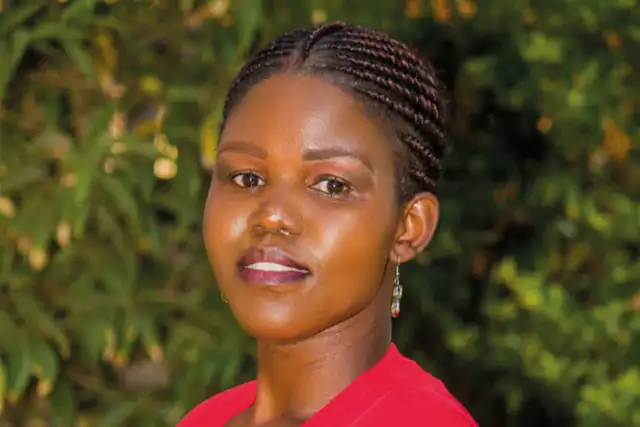
Forget Shareka is addressing post-harvest losses, a major challenge facing African agriculture.
Through Chashi Foods, she transforms surplus fruits and vegetables into dried products, helping farmers reduce waste and increase income.
“Many rural African communities end up losing a large portion of their hard-won harvests because of a lack of cold storage facilities and post-harvesting processing. When the produce perishes, it is not only to the detriment of farmers and families, but also to the environment because the crops emit methane as they decompose,” she told CAMFED.
Her company dries tomatoes, apples, bananas, pawpaw, pineapples, herbs and spices. For her, reducing food waste is both an economic and environmental mission.
Olivia Kipo, Founder of Kobaa Farms (Ghana)

Olivia Kipo founded Kobaa Farms to tackle food shortages caused by seasonal farming challenges in Ghana.
Kipo noticed that many farmers depended heavily on rainfall, leaving communities vulnerable during dry seasons. She decided to use irrigation systems and water conservation methods to produce vegetables throughout the year.
“Many of the farms in northern Ghana do not harvest produce outside the rainy season. This means vegetables become more expensive as they have to be transported from the south. It also means there are fewer job opportunities,” she said in an interview.
RECOMMENDED FOR YOU
U.S. gas prices surge since Iran war, with Iowa up nearly 70%
She supplies hotels, restaurants and households while creating opportunities for local employment.
This story is written and edited by the Global South World team, you can contact us here.