Ageing populations deepen across Europe and Japan
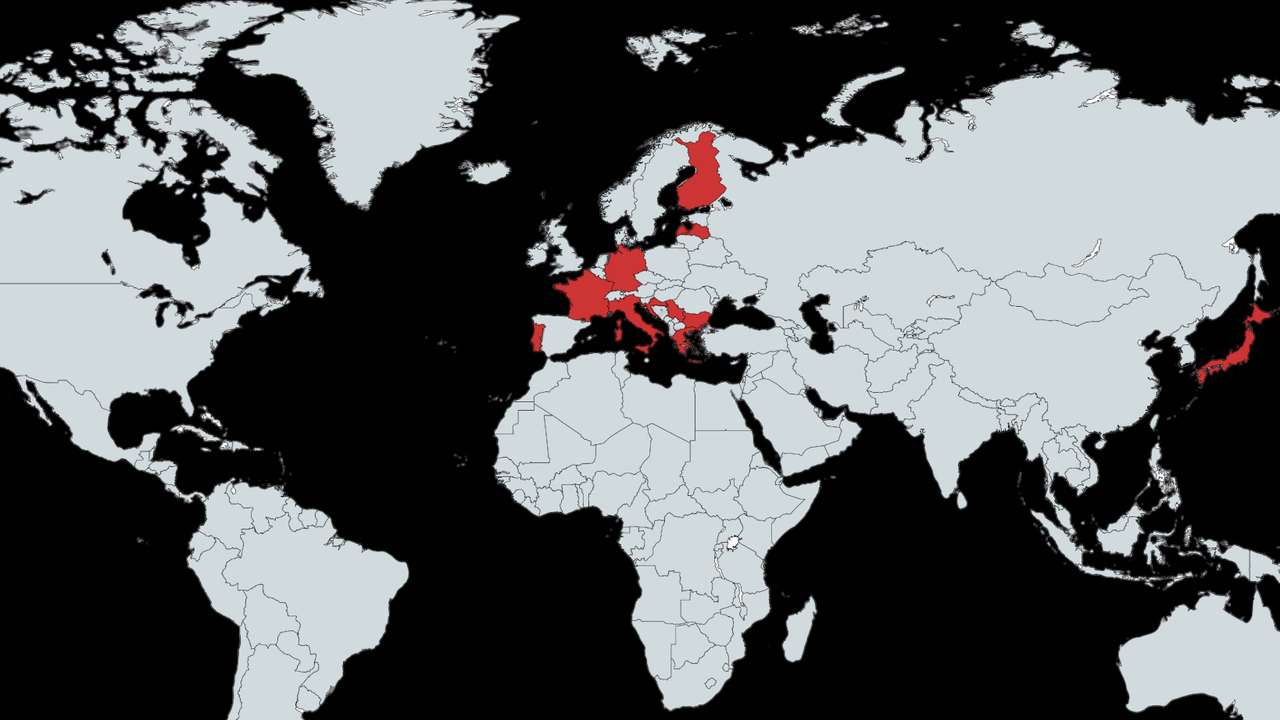
More than one in five people are already aged 65 or older in a growing group of advanced economies, concentrated heavily in Europe and East Asia, as falling birth rates and longer life expectancy accelerate a demographic shift with consequences for labour markets, pensions and healthcare systems.
Key Points
- Over-65s exceed 20% in several countries
- Europe dominates the ageing population map
- Japan stands out as Asia’s ageing leader
More than one in five people are already aged 65 or older in a growing group of advanced economies, concentrated heavily in Europe and East Asia, as falling birth rates and longer life expectancy accelerate a demographic shift with consequences for labour markets, pensions and healthcare systems.
According to the United Nations Population Division, people aged 65 and over now make up more than 20% of the population in several countries, with Europe dominating the list and Japan standing out in Asia.
The trend reflects what the United Nations describes as an inevitable outcome of the demographic transition. Declining fertility combined with longer life expectancy progressively increases the share of older people in national populations.
Japan remains the clearest example of the shift.
RECOMMENDED FOR YOU
Canada and Mexico are the closest foreign countries to most of the United States
People aged 65 and over numbered 36.24 million in 2024, accounting for a record 29.3% of Japan's population, according to the country's Statistics Bureau. At the same time, children under 15 represented just 11.2%.
Japan's total population fell by 550,000 to 123.8 million in 2024, marking its 14th consecutive annual decline. Official Japanese statistics, drawing on UN comparisons, have identified Japan as having the world's highest proportion of people aged 65 and over among 200 countries and territories.
The ageing trend is already reshaping employment. Japan had 9.14 million workers aged 65 and above in 2023, accounting for 13.5% of all employed people, according to the Statistics Bureau.
Europe represents the largest geographical concentration of countries where at least one-fifth of residents are 65 or older.
The trend is not new. Eurostat reported that 20.6% of the European Union's population was already aged 65 or above in 2020, up three percentage points from 2010. Italy stood at 23.2%, while Greece and Finland were each at 22.3%, Portugal at 22.1%, Germany at 21.8% and Bulgaria at 21.6%.
More recent UN analysis confirms that the demographic shift is continuing. France and Sweden are among countries where more than 20% of residents were aged 65 or older in 2024.
The ageing of Europe and Japan is closely connected to another demographic milestone. The UN says populations in 63 countries and areas, representing 28% of the world's population in 2024, had already reached their population peak. The group includes Germany, Japan, China and Russia.
Two demographic forces are pushing populations towards older age structures.
RECOMMENDED FOR YOU

Countries in the world with no income tax
Fertility has dropped below the roughly 2.1 births per woman required for long-term population replacement without migration in more than half of the world's 235 countries and areas, according to the UN. Meanwhile, global life expectancy recovered to 73.3 years in 2024, after falling during the COVID-19 pandemic.
Those trends mean ageing will extend far beyond the countries currently highlighted on the map.
By the late 2070s, the UN projects that the global population aged 65 and above will outnumber children under 18. People aged 80 and above are expected to outnumber infants under one as early as the mid-2030s.
This story is written and edited by the Global South World team, you can contact us here.