Australia relies on Middle East and Southeast Asia for essential fertiliser
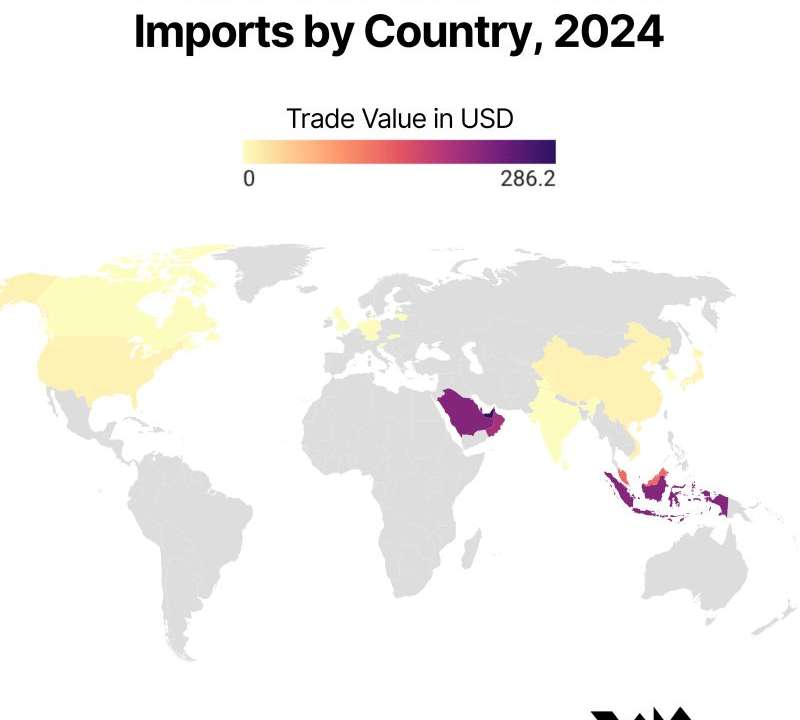
Australia sourced much of its imported urea from the Middle East and Southeast Asia in 2024, with Saudi Arabia and Indonesia emerging as its largest suppliers, according to World Integrated Trade Solution (WITS) trade data.
Key Points
- Saudi Arabia leads Australia's urea imports in 2024
- Australia relies heavily on imported urea for agriculture
- Middle Eastern and Southeast Asian suppliers dominate Australia's urea trade
Australia sourced much of its imported urea from the Middle East and Southeast Asia in 2024, with Saudi Arabia and Indonesia emerging as its largest suppliers, according to World Integrated Trade Solution (WITS) trade data.
The map highlights Australia's dependence on imported urea, a nitrogen-rich fertiliser widely used to boost crop yields and also an essential ingredient in AdBlue, the diesel exhaust fluid required by many heavy vehicles to reduce emissions.
Saudi Arabia was Australia's largest individual supplier by trade value in 2024, exporting more than US$221 million worth of urea to Australia, according to WITS data based on UN Comtrade statistics. Indonesia also ranked among the country's biggest suppliers, alongside the United Arab Emirates, Oman, China and several other trading partners.
Australia imported around US$1.45 billion worth of urea from all countries in 2024, making it one of the world's five largest urea importers by value behind Brazil, the European Union, India and the United States.
RECOMMENDED FOR YOU
Asia produces the largest share of global GDP
Urea is the world's most widely used nitrogen fertiliser because it contains about 46% nitrogen, making it highly effective for crops including wheat, barley, canola, cotton and sugarcane. Australia imports most of its nitrogen fertiliser requirements despite being a major agricultural exporter, as domestic production has not kept pace with demand.
The country's reliance on overseas suppliers has become increasingly important during periods of global disruption. Supply chains have faced pressure in recent years from geopolitical tensions, shipping disruptions and export restrictions by some producing countries, leading to higher fertiliser prices and renewed discussions about Australia's fertiliser security.
Australia is pursuing greater domestic production capacity through new fertiliser projects, but imported urea is expected to remain a key component of the country's agricultural supply chain for the foreseeable future.