Brazil leads world in renewable freshwater resources
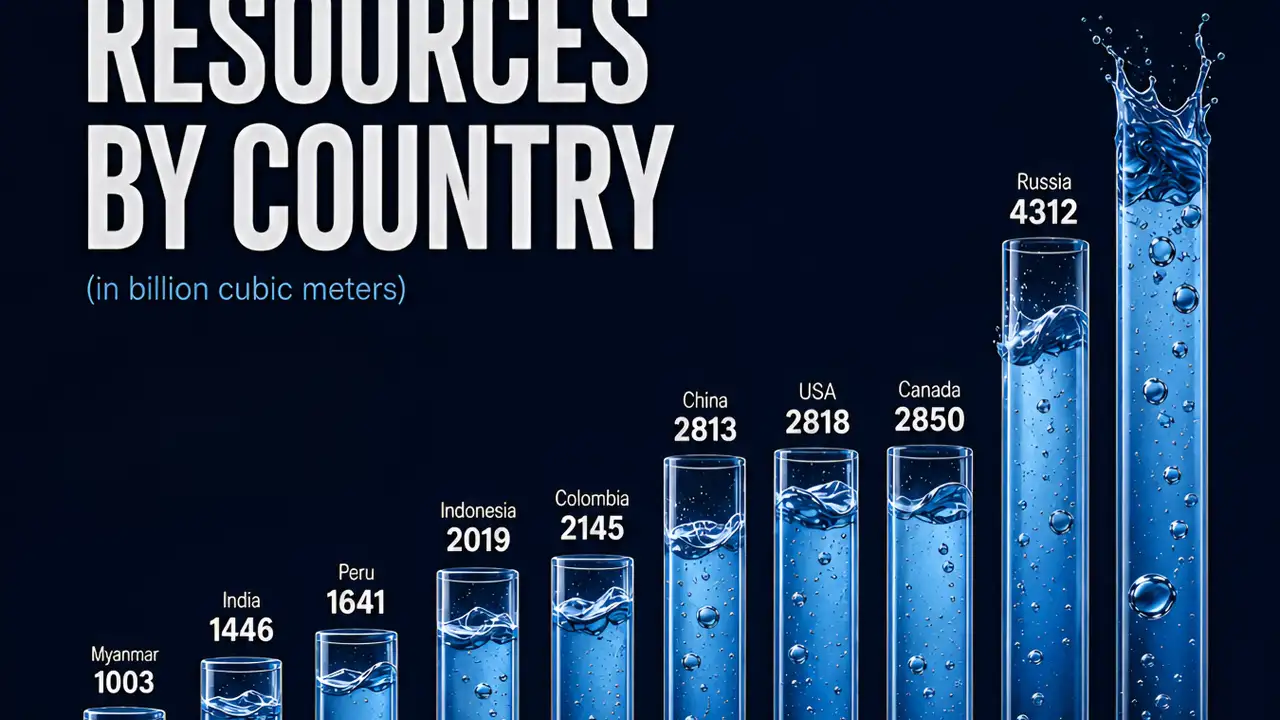
Brazil has the world’s largest volume of renewable internal freshwater resources, with an estimated 5,661 billion cubic metres, according to World Bank data, underscoring the extraordinary concentration of naturally replenished water supplies in a relatively small group of countries.
Key Points
- Brazil leads with 5.66 trillion cubic metres of renewable freshwater
- Russia ranks second while Canada places third
- Freshwater abundance does not guarantee water security
Brazil has the world’s largest volume of renewable internal freshwater resources, with an estimated 5,661 billion cubic metres, according to World Bank data, underscoring the extraordinary concentration of naturally replenished water supplies in a relatively small group of countries.
Russia ranks second with 4,312 billion cubic metres, while Canada has 2,850 billion cubic metres. The United States follows with 2,818 billion cubic metres, narrowly ahead of China at 2,813 billion cubic metres, according to figures presented in the graphic.
The World Bank’s World Development Indicators define renewable internal freshwater resources as water generated within a country through internal river flows and groundwater replenished by rainfall. The underlying data come from the UN Food and Agriculture Organization’s AQUASTAT database. The World Bank series currently covers data through 2022.
Brazil’s estimated 5,661 billion cubic metres puts it about 1,349 billion cubic metres ahead of Russia, a gap equivalent to nearly half of Canada’s entire renewable internal freshwater resource base.
RECOMMENDED FOR YOU
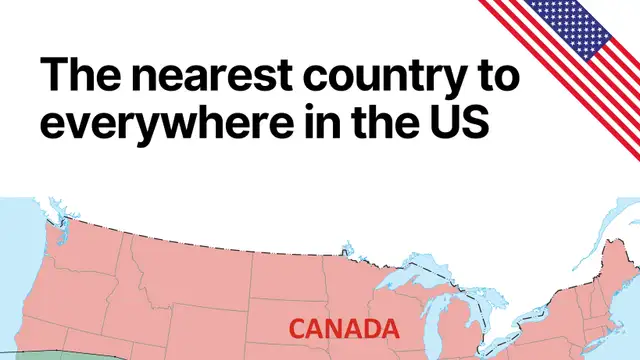
Canada and Mexico are the closest foreign countries to most of the United States
The country’s position is closely tied to its extensive river systems and heavy rainfall, particularly across the Amazon basin. Importantly, however, the World Bank indicator measures renewable flows generated within national borders, rather than the amount of water stored in lakes, reservoirs or underground at a particular moment.
Among the 10 countries shown in the graphic, the ranking is Brazil at 5,661 billion cubic metres, Russia at 4,312 billion, Canada at 2,850 billion, the United States at 2,818 billion and China at 2,813 billion.
Colombia follows with 2,145 billion cubic metres, ahead of Indonesia at 2,019 billion, Peru at 1,641 billion, India at 1,446 billion and Myanmar at 1,003 billion.
The difference between China and the United States is particularly small, at just 5 billion cubic metres, while Brazil has roughly twice China’s volume.
This story is written and edited by the Global South World team, you can contact us here.