Tunisia Roundup: Saïed demands procurement overhaul, parliament advances water and energy bills and fuel strike looms

Saïed calls for sweeping overhaul of public procurement laws to tackle corruption and project delays
Tunisian President Kaïs Saïed has called for a comprehensive revision of the country's public procurement legislation, saying outdated rules have contributed to corruption, irregularities and prolonged delays in government projects. The president made the call during a meeting at Carthage Palace on Monday, November 2, with Salah Zouari, Minister of Equipment and Housing, who is also serving as acting Minister of Industry, Mines and Energy. According to a statement from the presidency reported by the Tunis Afrique Presse (TAP) news agency on November 3, Saïed said the proposed changes should cover all sectors of the economy, rather than being restricted to public infrastructure. He argued that the existing legal framework was no longer suited to the country's needs, particularly in relation to the time required to award contracts and complete projects. Saïed cited cases of public works that had missed their completion deadlines, alongside allegations of fraud and corruption in procurement procedures. He also raised concerns about roads that remained unfinished or had developed serious defects shortly after being handed over to the authorities. The meeting examined several infrastructure projects, including a road linking Tunisia and Algeria, which officials said was nearing completion. Discussions also covered other road construction projects across the country, some of which have experienced significant delays. Another major project under consideration is a bridge connecting the island of Djerba to mainland Tunisia.
Saïed vows zero tolerance for misuse of public money as criminal reconciliation reforms advance
President Kaïs Saïed has pledged that the Tunisian state will pursue the recovery of public money allegedly misappropriated through corruption, insisting that no amount belonging to the Tunisian people should be surrendered. Saïed made the remarks during a meeting at Carthage Palace on Monday, November 2, with Ali Abbès, president of the National Commission for Criminal Reconciliation. The meeting focused on the commission's work and the implementation of recent changes to Tunisia's criminal reconciliation framework. According to the presidency, Saïed declared: "There will be neither tolerance nor concession over a single millime." The millime is the smallest subdivision of the Tunisian dinar, and the president used the expression to underline his determination to recover public funds. The discussion followed the introduction of Decree-Law No. 2 of 2026, dated September 30, 2026, which amended Decree-Law No. 13 of March 20, 2022, governing criminal reconciliation and the allocation of recovered proceeds. The criminal reconciliation mechanism was introduced as part of Saïed's effort to recover funds from individuals and businesses accused of financial wrongdoing. The framework is intended to allow certain financial cases to be resolved through reconciliation arrangements involving the recovery of money for the state, subject to the applicable legal procedures.
Parliament sends nine water and energy financing bills for urgent review
Tunisia's parliament has referred nine draft laws to its Finance and Budget Committee for urgent examination, seeking approval for international financing and guarantee agreements supporting major water and energy projects. The decision was taken on Monday, November 2, during the first meeting of the Bureau of the Assembly of Representatives of the People for the 2026–2027 parliamentary session. The meeting was chaired by parliamentary speaker Ibrahim Bouderbala at the Bardo Palace in Tunis. The nine bills concern agreements with international financial institutions, including the African Development Bank (AfDB), Islamic Development Bank, European Bank for Reconstruction and Development (EBRD), European Investment Bank (EIB), French Development Agency (AFD) and Maghreb Bank for Investment and Foreign Trade. A significant proportion of the proposed financing is intended to strengthen drinking-water infrastructure in Greater Tunis. Bill No. 64/2026 seeks approval for a guarantee agreement signed on September 22, 2026, between Tunisia and the African Development Bank. It concerns a loan to the National Water Distribution Utility, SONEDE, for a project to improve the technical performance and energy efficiency of Greater Tunis's drinking-water network. Bill No. 65/2026 concerns a financing agreement concluded on May 10, 2026, with the Islamic Development Bank. The funds would provide additional financing for the Saïda and Kalaa Kebira dams and associated water-transfer infrastructure.
Tunisia sets November 9 and 10 for first parliamentary debates on 2027 budget
Tunisia's parliament has scheduled its first plenary debates on the 2027 state budget for November 9 and 10, beginning the formal parliamentary examination of the government's spending and economic plans for the coming year. The timetable was approved unanimously by the Bureau of the Assembly of Representatives of the People during its meeting on November 2, chaired by parliamentary speaker Ibrahim Bouderbala. The sessions will bring together members of the Assembly of Representatives of the People and the National Council of Regions and Districts. According to the parliamentary bureau, the first two days will focus on the draft state budget and the government's 2027 economic balance plan, alongside a statement from the head of government. The discussions will then move to the budgets of individual ministries and other public bodies. These detailed examinations are scheduled to take place between November 10 and 25, allowing lawmakers to question ministers and review proposed allocations. The parliamentary bureau also examined how the sessions would be organised, including speaking times for legislators and the time allocated for government responses. Following those debates, lawmakers will examine the 2027 Finance Bill, which sets out the fiscal measures required to implement the budget.
RECOMMENDED FOR YOU
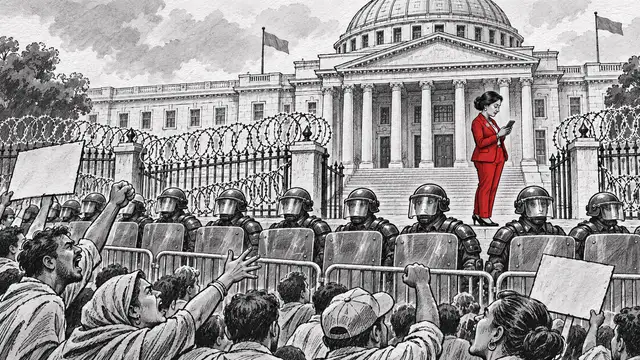
The democracy paradox: Why we want freedom but admire unchecked power — Opinion
UGTT announces three-day fuel transport strike over unimplemented 2019 agreement
Tunisia's main trade union federation, the Tunisian General Labour Union (UGTT), has issued a strike notice covering fuel transport companies nationwide for November 23, 24 and 25, 2026. The planned industrial action follows a dispute over the failure to implement a labour agreement signed more than seven years ago. In a notice issued on Monday, November 2, the UGTT's private-sector division said workers in fuel transport companies would take part in a three-day sector-wide strike unless the outstanding dispute was resolved. The union said the proposed action was prompted by the non-implementation of an agreement concluded on May 2, 2019. According to the UGTT, the failure to apply the agreement has affected workers' professional and social rights. The union called on the relevant authorities and parties to intervene urgently and find a negotiated solution before the planned strike dates. The notice covers fuel transport companies across all Tunisian governorates, meaning the action could affect the movement of petroleum products throughout the country if it proceeds. Fuel transport companies play an important role in supplying service stations, businesses and other consumers that depend on regular deliveries. A prolonged disruption to distribution could therefore affect fuel availability, although the union has not announced that deliveries have already been suspended.
This story is written and edited by the Global South World team, you can contact us here.