Where can you legally change your gender?
Key points
- Twenty-three UN member states allow legal gender recognition through self-identification.
- Some countries still require medical diagnoses, surgery or sterilisation.
- Legal gender recognition remains unavailable or restricted in several countries.
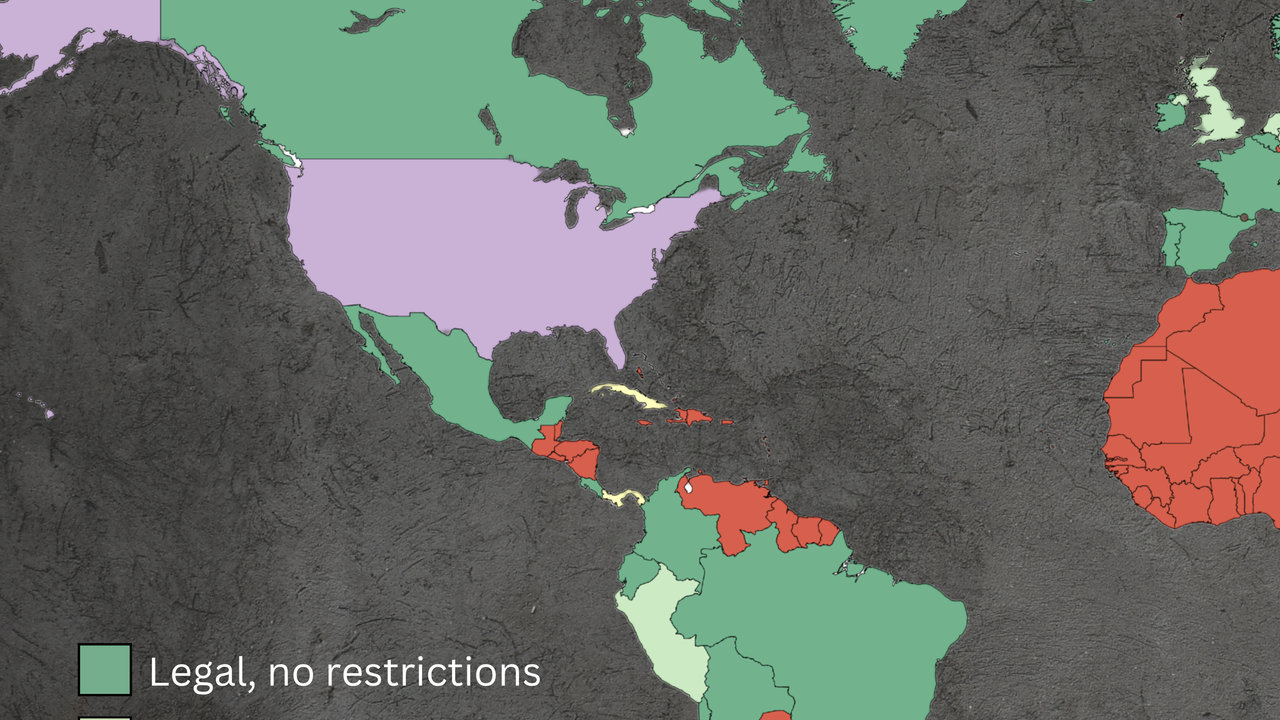
People can legally change their gender on official documents in many countries, but the process varies widely, with some governments allowing self-identification while others require medical approval or prohibit the change altogether.
Laws governing gender recognition differ sharply across the world, leaving transgender people facing different requirements depending on where they live.
According to ILGA World's legal database, updated in October 2026, 23 United Nations member states recognise legal gender changes based on self-identification. At least 21 countries require a medical diagnosis, while at least 17 require surgery or sterilisation.
Argentina was among the earliest countries to introduce a self-identification system. Its 2012 Gender Identity Law allows people to change their registered gender without undergoing surgery or obtaining a medical diagnosis.
RECOMMENDED FOR YOU
‘Why would you need courage to speak the truth?’ Nobel Peace Prize winner Navi Pillay asks
Several European countries, including Spain, Germany, Denmark and Norway, also allow legal gender recognition based on self-determination, although age limits and administrative procedures differ.
Elsewhere, the process remains more restrictive. Some countries require medical assessments or surgical procedures before official documents can be amended.
In the United States, requirements vary by state and by document. State-issued birth certificates and driving licences follow different rules, while federal passports are governed separately. Australia also has different procedures across its states and territories.
Russia and Hungary are among countries where legal restrictions prevent gender-marker changes. Across parts of Africa and Asia, legal recognition remains unavailable or subject to significant medical and administrative requirements.
The rules are also changing. In 2026, Czechia removed surgical and hormonal treatment requirements from its legal gender recognition process, following court decisions.
The differences show how access to legal gender recognition remains uneven worldwide, with requirements shaped by national laws, court decisions and government policies.
This story is written and edited by the Global South World team, you can contact us here.