Brazil Roundup: Lula gains an election edge, judicial scrutiny intensifies, ports expose a growth bottleneck
Lula enters the campaign with more broadcast time than Flávio Bolsonaro
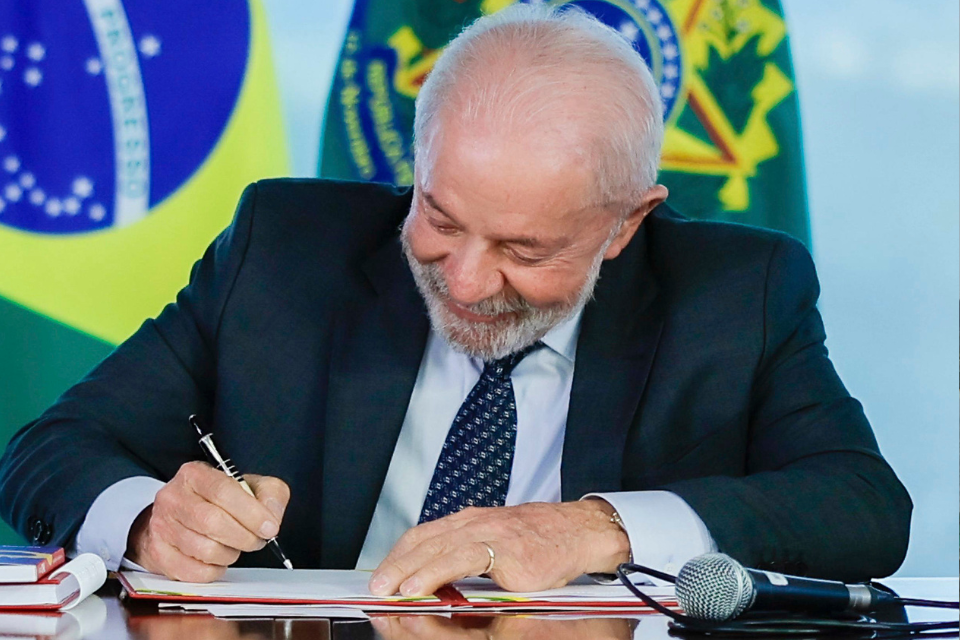
President Luiz Inácio Lula da Silva is heading into Brazil’s 2026 presidential campaign with an important advantage over Senator Flávio Bolsonaro: more free electoral advertising time on television and radio. Under calculations based on congressional representation and Brazil’s electoral rules, Lula’s coalition is positioned to command a larger share of the country’s highly valuable broadcast slots. Before the final coalition arrangements, CNN calculated that Lula would have approximately 5 minutes and 28 seconds in each fixed presidential advertising block, compared with 4 minutes and 24 seconds for Flávio Bolsonaro, giving the incumbent roughly 24% more airtime. Ronaldo Caiado was projected to receive 2 minutes and 3 seconds and Augusto Cury 36 seconds. Candidates divide two 12-minute-and-30-second blocks on Tuesdays, Thursdays and Saturdays, alongside 14 minutes of shorter daily insertions. The arithmetic helps explain Flávio’s push to attract Republicanos. Had the party joined his coalition, CNN estimated his allocation could have risen to 5 minutes and 20 seconds, ahead of Lula’s 4 minutes and 47 seconds. The contest is particularly significant because 90% of broadcast time is allocated according to the congressional strength of the parties in each coalition, while only 10% is divided equally.
With few women on presidential tickets, campaigns turn to ‘godmothers’ for the female vote
Brazil’s presidential campaigns are increasingly relying on prominent female political figures, or “madrinhas” (godmothers), to reach women voters, even as women remain under-represented at the top of the major tickets themselves. The briefing highlights this as a defining feature of the emerging campaign strategy. The electoral incentive is considerable. Recent polling has shown Lula holding a significant advantage among women. A Datafolha poll cited by UOL put him at 50% among female voters compared with 40% for Flávio Bolsonaro. An earlier Genial/Quaest survey produced an even wider first-round divide, with 41% for Lula and 24% for Flávio among women. Flávio’s campaign has consequently sought to strengthen its appeal to women through female conservative leaders. Michelle Bolsonaro remains an important electoral figure for the right, while Flávio has also brought former Caixa president Daniella Marques into his economic policy team and publicly discussed increasing women’s representation in leadership positions. Before the final ticket negotiations, names including Júlia Zanatta, Bia Kicis, Priscila Costa, Tereza Cristina and Simone Marquetto had circulated as possible running mates.
STJ weighs punishment for Marco Buzzi over sexual harassment allegations
Brazil’s Superior Court of Justice (STJ) scheduled 6 August to consider the disciplinary case against Justice Marco Buzzi, who faces allegations of sexual harassment and sexual misconduct from two women. Buzzi has been removed from judicial duties since February 2026, and the court formally opened administrative disciplinary proceedings in April. He denies the accusations. One complainant is an 18-year-old daughter of family friends, who alleges that Buzzi harassed her while they were swimming at Balneário Camboriú, Santa Catarina, in January 2026. Another allegation came from a woman who worked in a subordinate position in Buzzi’s STJ office. CNN reported that testimony from the latter complainant was considered significant when the court unanimously decided to suspend him in February. The Federal Public Prosecutor’s Office (MPF) has asked for Buzzi to receive the maximum administrative sanction of compulsory retirement, arguing that the evidence demonstrates conduct incompatible with the dignity and standards expected of the judiciary. Buzzi’s defence has submitted medical evidence and challenged the allegations. The MPF rejected one element of that defence, saying a medical report identifying moderate sexual dysfunction contained nothing that would rule out the alleged conduct.
Entrepreneurs warn that legal uncertainty is becoming a brake on Brazilian investment
Brazil’s business environment is facing renewed scrutiny over legal uncertainty, with Rodrigo Marinho arguing on CNN Talks that unpredictable regulation and inconsistent interpretation of rules are damaging entrepreneurs’ ability to invest and plan for the future. The issue is one of the major economic themes identified in the briefing. For companies, legal certainty is more than a technical legal issue. Investment decisions involving factories, infrastructure, employment and long-term financing depend on businesses having a reasonable understanding of taxation, contracts, regulation and property rights over the lifespan of an investment. When those rules become unpredictable, investors price the uncertainty into projects, delay decisions or redirect capital elsewhere. The argument is particularly relevant as Brazil attempts to attract more private capital into infrastructure and raise productivity. Marinho’s intervention places institutional predictability alongside taxation, financing costs and bureaucracy as a competitiveness issue, suggesting that improving Brazil’s business environment requires not only economic reform but clearer and more consistent application of the law.
RECOMMENDED FOR YOU
Lula rejects Trump's terrorist designation for Brazilian gangs
Port executives say Brazil is ignoring 40% of a contested market
Brazil’s ports are emerging as another potential constraint on growth. The briefing highlights a warning from NeoWise that approximately 40% of the market contested between ports is being overlooked, alongside a stark assessment from André de Seixas on CNN Talks: “Without a port, I can’t grow Brazil.” The argument goes well beyond the maritime industry. Brazil is a major exporter of agricultural commodities, minerals and manufactured products, making port capacity and efficiency integral to the competitiveness of the wider economy. Congestion, inadequate capacity or weak connections between ports and inland transport networks can increase freight costs and undermine Brazilian exporters in global markets. The problem becomes particularly visible in agriculture. Brazil remains heavily dependent on imported fertilisers, while geopolitical disruption has made those supply chains more vulnerable. CNN reported that Russia, Ukraine and the Middle East collectively account for roughly 30% to 40% of internationally traded NPK fertilisers, meaning global disruption can quickly translate into higher costs and logistical pressure for Brazilian producers.
This story is written and edited by the Global South World team, you can contact us here.