Brazil votes on October 4 with its economic future and the Amazon at stake
Key Takeaways
- Brazil votes on 4 October to choose its president, governors and lawmakers.
- Lula faces Flávio Bolsonaro in a close race, with the economy, security and Amazon protection at stake.
- A presidential run-off will take place on 25 October if no candidate wins more than half of the valid votes.

Brazil votes on Sunday, October 4, in elections that will shape its economic policies, environmental protections and political direction, as President Luiz Inácio Lula da Silva faces a close contest against Senator Flávio Bolsonaro.
More than 158.7 million people are eligible to elect a president, all 513 members of the Chamber of Deputies, 54 of the Senate’s 81 members and governors for the country’s 26 states and the Federal District.
The results will determine both who leads the country and how much support the next government has to address household finances, public security and pressure on public services.
Lula faces Bolsonaro’s son
Luiz Inácio Lula da Silva, of the Workers’ Party, is seeking a fourth presidential term overall and a second consecutive term since returning to office in 2023. Vice-President Geraldo Alckmin is again his running mate.
His main challenger, Flávio Bolsonaro of the Liberal Party, is a senator representing Rio de Janeiro and the eldest son of former president Jair Bolsonaro. He is running alongside congressman Alfredo Gaspar and seeking to return his father’s conservative movement to the presidency.
RECOMMENDED FOR YOU

Six countries account for three-quarters of Europe’s unicorn startups
Twelve presidential candidates remain following Leonardo Avalanche’s withdrawal on September 30. Other contenders include Ronaldo Caiado, Romeu Zema, Renan Santos and Augusto Cury.
A Datafolha poll released on October 1 showed Lula with 42% of total voting intentions and Bolsonaro with 38%. Among valid voting intentions, Lula had 45% and Bolsonaro 40%. In a simulated run-off, Lula’s 48% against Bolsonaro’s 45% represented a statistical tie within the poll’s margin of error.
The survey interviewed 2,506 electors between September 29 and October 1, with a national margin of error of two percentage points. The figures leave the outcome uncertain and suggest the contest could continue to a second round.
Household finances and public spending
The candidates offer different approaches to managing the economy and financing government programmes.
Lula proposes maintaining his administration’s fiscal framework while protecting social spending and public investment. He also supports consolidating the consumption-tax reform approved during his current term.
Bolsonaro proposes cutting at least 10 ministries, reducing appointed positions and changing fiscal rules to lower public debt relative to the economy. He wants to review the tax reform to reduce the burden on production and consumption.
These proposals will influence how Brazil balances demands for jobs and better services with pressure to control spending and borrowing costs. Major changes would require support from Congress.
Security and violence against women
Public safety has been a major campaign concern, with violence against women receiving particular attention. Women account for 53% of the electorate, making their support crucial to both leading candidates.
RECOMMENDED FOR YOU
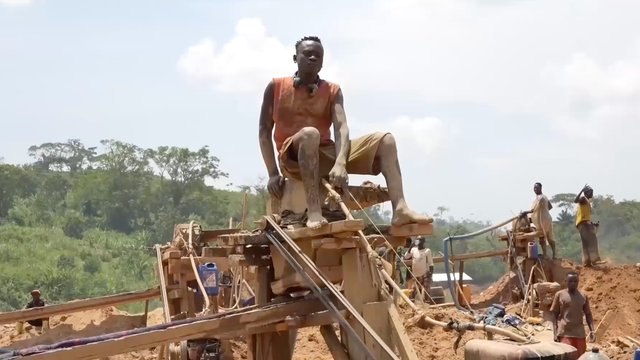
Gold rush spreads ebola - Doctor warns about movement of Ituri miners in eastern DRC
Bolsonaro has proposed chemical castration for sex offenders and expanded assistance for victims. Lula has pledged to strengthen existing protections, including real-time monitoring of offenders wearing electronic ankle bracelets. Both support tougher penalties, which would require parliamentary approval.
The Amazon and Indigenous land rights
Brazil contains about 60% of the Amazon rainforest, giving its environmental decisions consequences beyond its borders.
Lula’s programme targets zero net deforestation by 2030. Bolsonaro promises to end illegal deforestation by 2029, while easing environmental licensing and allowing Indigenous communities greater discretion over economic activities on their land.
The distinction between the targets matters: ending illegal clearing still permits authorised forest loss. Environmental specialists warn that weaker protections could reverse recent progress against deforestation. Despite these stakes, Amazon conservation has received relatively little attention during the campaign.
Congress, the courts and accountability
The congressional elections will shape the next president’s ability to pass legislation, approve budgets and carry out campaign promises. Senators also approve senior appointments and conduct presidential impeachment trials. Those elected this year will serve eight-year terms.
Jair Bolsonaro’s conviction for attempting to overturn his 2022 election defeat remains part of the political backdrop. Flávio Bolsonaro has advocated an amnesty, with a presidential pardon as a possible alternative. Either proposal would face legal questions; a victory would not automatically secure his father’s release.
The Banco Master controversy has also kept judicial accountability in the campaign debate. On October 1, Lula defended Justice Flávio Dino’s decision to pause proceedings concerning allegations involving Justice Alexandre de Moraes and banker Daniel Vorcaro. The allegations remain distinct from established findings of wrongdoing.
How the electoral process works
Voting across Brazil will take place from 8 a.m. to 5 p.m., Brasília time, with corresponding local hours in other time zones. People already queuing when polling stations close may still vote.
RECOMMENDED FOR YOU
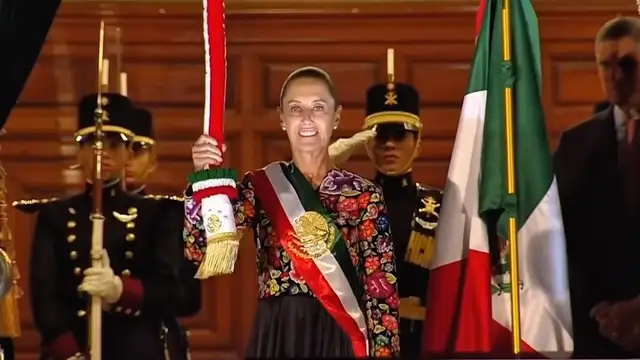
Sheinbaum rings historic bell as thousands fill Zocalo for Mexican Independence Day
Voting is compulsory for literate citizens aged 18 to 70. It is optional for 16- and 17-year-olds, people over 70 and people who cannot read or write. Voters must present an accepted photo ID.
Most voters casting ballots in Brazil will make six choices on an electronic voting machine, in this order: federal deputy, state or Federal District deputy, two different senators, governor and president.
Votes for president and governor automatically include their running mates. Repeating the same Senate candidate invalidates the second Senate vote. Electors registered abroad vote only for president and vice-president.
To win the presidency or a governorship in the first round, a candidate must receive more than half of valid votes. Blank and invalid ballots do not count towards that threshold. If nobody achieves it, the two leading candidates contest a run-off on 25 October.
Senators are elected in a single round, with the two highest-polling candidates in each state and the Federal District winning. Deputies are elected through proportional representation, meaning party and federation vote totals help determine how seats are allocated.
Official results will begin appearing from 5 p.m., Brasília time, according to the TSE. Even if the presidential race continues to a run-off, Sunday’s congressional results will already have shaped the next government’s ability to act.
This story is written and edited by the Global South World team, you can contact us here.