Brazilian democracy relies on women — Opinion
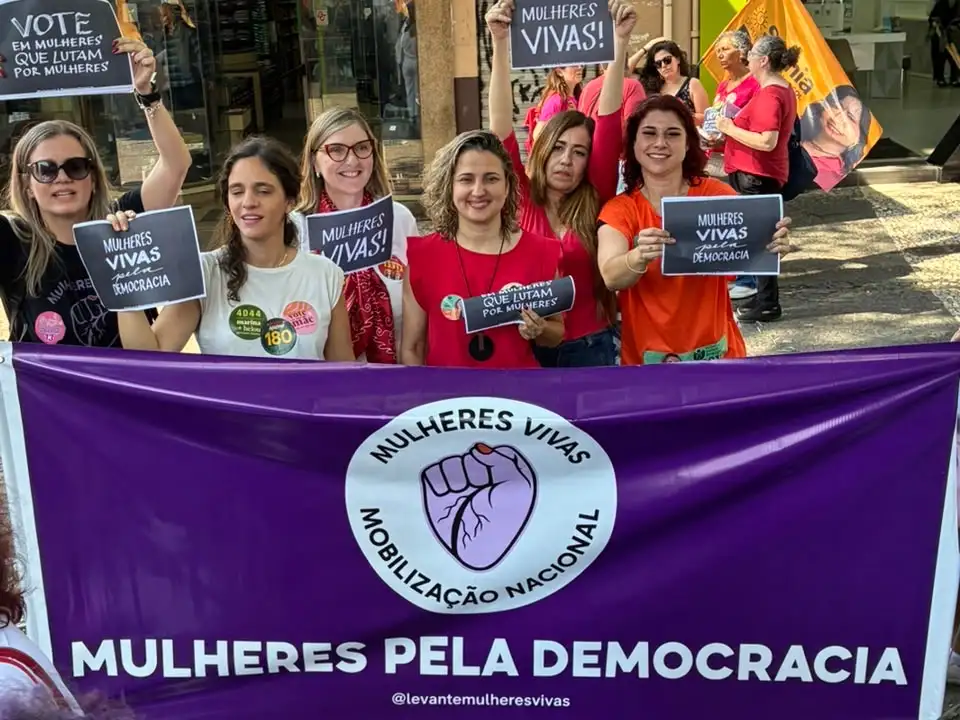
Brazilian women are 52% of the Brazilian electorate, yet simply having the right to vote doesn't mean we have the power to make important political decisions.
Looking at the overall Brazilian political scenario, Brazil actually falls behind countries like Kuwait, Oman, Kyrgyzstan, and Yemen, places where formal female representation in parliament is higher than ours, which totally challenges that stereotyped Western narrative from Eastern countries.
At the same time, in Brazil, we hold only 17% of the seats in the Lower House, 19.8% in the Senate, and out of 27 states, we only have two female governors. And it is crucial to remember that until 2016, the Federal Senate didn't even have a women's restroom. It shows us a physical reminder that these spaces of power were quite literally never designed for us.
This low representation is deeply connected to violence. According to the Brazilian Public Security Yearbook, the country recorded 1,571 feminicides in 2025, and the TSE (Superior Electoral Court) recently reported an overwhelming 380% increase in political gender violence against women who dare to step into the “political game”.
This surge isn’t a coincidence; it's fueled by conservative waves online, driven by misogynistic rhetoric and internet coaches promising a "rescue" of a supposed traditional masculinity, one based in times when women weren't even considered citizens under the law.
RECOMMENDED FOR YOU
Six countries account for three-quarters of Europe’s unicorn startups
And let´s not forget that part of this anti-democratic machinery includes women in our political system aligned with the Christian coalition in Congress who have even tried to push for the removal of quotas for female candidates. Even though Brazil is officially a secular state, this bloc exists and remains a powerful force.
As women, we need to realise that everything is political, and this wake-up call is urgent. We are the primary providers in 51% of Brazilian households, yet we face systemic discrimination in the job market. The numbers are frightening: a study by
FGV shows that 49% of women lose their jobs during or right after their maternity leave protection ends. Here we are in 2026, and maternity is still treated as this "sacred gift" that somehow clashes with professional life, as if giving birth to the other half of the population were some kind of professional barrier.
Beauvoir reminds us that it only takes a political, economic or religious crisis for women's rights to be called into question and to break this cycle, we need to look back and remember the Bancada do Batom (the Lipstick Bloc) from the 1988 Constituent Assembly, when women from across the political spectrum, left and right, joined forces to make gender equality a foundational pillar of our democracy.
These upcoming elections aren't about party lines; they are about our right to exist with dignity. Beyond our borders, this is also a crucial moment for all Latin American women.
With less than a week to go, the power is literally in our hands: we can either choose to move forward toward an equal society or risk sliding straight into a real-life Handmaid's Tale, because our fundamental rights are truly on the line.
RECOMMENDED FOR YOU
Olympic flame arrives on African soil for first time as Senegal begins Dakar 2026 countdown
The opinions and thoughts expressed in this article reflect only the author's views.
Vera Cambiatti holds a Bachelor's degree in Translation and Interpretation from Universidade Metodista de São Paulo, a Teaching Degree in Portuguese and English from Fundação Santo André, and a degree in Pedagogy from Universidade Presbiteriana Mackenzie. She has a postgraduate degree in English Language Teaching, an MBA in School Management from USP, international certifications from Cambridge and Bridge Education, plus extensions in Blended Learning and Anti-Racist Education. Currently, she is pursuing a postgraduate degree in Politics and International Relations at FAAP and serves as a volunteer Public Policy Strategist for the Instituto Levante Mulheres Vivas.
