Countries redraw political maps as governments build and shift capitals

Equatorial Guinea has formally changed its capital, while Indonesia, Egypt and Uzbekistan are building or expanding new centres of government
Several countries are moving government institutions or building new administrative cities, driven by congestion, development goals and pressure on existing capitals. But the projects vary widely, from completed legal relocations to proposals that remain uncertain.
Equatorial Guinea officially moved its capital from Malabo to Ciudad de la Paz in January 2026. The new capital is on the mainland, while Malabo is located on Bioko Island.
Indonesia is still developing Nusantara in East Kalimantan. The government is targeting 2028 for the city to function as the country's political capital, meaning Jakarta has not yet been fully replaced.
In Egypt, many government operations have already moved to the New Administrative Capital east of Cairo. More than 100 government agencies, including 30 ministries, had relocated there by 2023.
RECOMMENDED FOR YOU
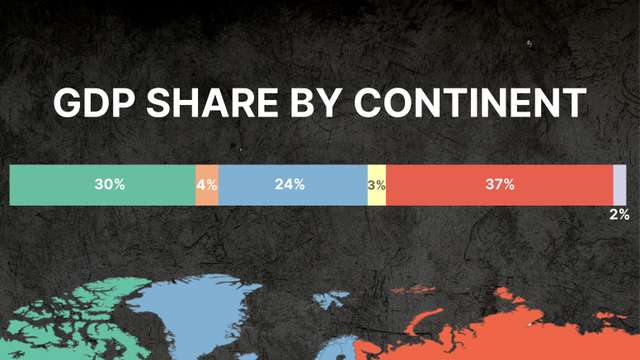
Asia produces the largest share of global GDP
Uzbekistan is building New Tashkent, where dozens of government buildings are planned. However, it is an administrative expansion rather than a confirmed replacement for Tashkent as the national capital.
Malaysia and South Korea have taken a different approach. Kuala Lumpur remains Malaysia's official capital, while Putrajaya serves as the federal administrative centre. Seoul remains South Korea's capital, although many ministries operate from Sejong.
Several countries have successfully relocated capitals in previous decades. Brazil moved from Rio de Janeiro to Brasília in 1960, Nigeria from Lagos to Abuja in 1991, and Kazakhstan from Almaty to Astana in 1997. Tanzania designated Dodoma as its capital in 1974, while Côte d'Ivoire designated Yamoussoukro in 1983.
Plans involving South Sudan, Iran and Thailand are less certain. South Sudan has considered Ramciel as a future capital, Iran has discussed shifting government activity away from Tehran, and Thailand has debated Bangkok's long-term climate risks. None represents a completed capital relocation.
One point in the infographic also needs correction. Myanmar did not move its capital to Naypyidaw in 2025. The government began relocating ministries from Yangon in 2005, with Naypyidaw becoming the country's capital soon afterwards.
The distinction matters. Moving ministries or building a new administrative city does not necessarily mean a country has officially changed its capital.
This story is written and edited by the Global South World team, you can contact us here.