Europe leads world in milk and dairy consumption at 221 kg per person
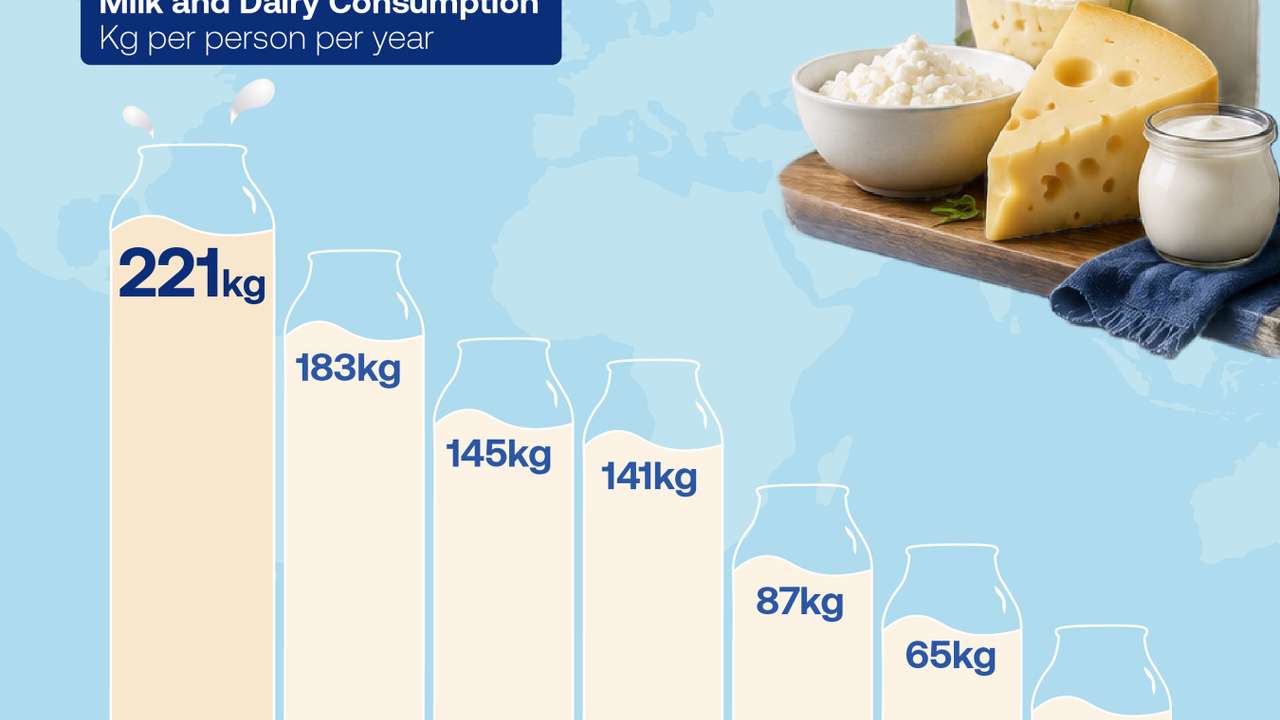
Europeans consume more milk and dairy products per person than any other major region, highlighting a wide global divide in dairy consumption, according to figures presented using data from the Food and Agriculture Organisation of the United Nations.
Main Points
- Europe leads global dairy supply at 221 kg per person
- North America follows at 183 kg per person
- Asia and Africa remain below the 87 kg global average
Europeans consume more milk and dairy products per person than any other major region, highlighting a wide global divide in dairy consumption, according to figures presented using data from the Food and Agriculture Organisation of the United Nations.
Europe's annual consumption stands at about 221 kg per person, compared with 183 kg in North America and 145 kg in Oceania, according to the regional figures. South America follows at 141 kg, while the global average is about 87 kg per person.
The figures are consistent with FAO's broader assessment that milk availability and consumption remain substantially higher in Europe and other developed regions. FAO classifies per-capita milk supply above 150 kg a year as high and specifically places Europe and North America in that category.
Asia records about 65 kg per person annually, less than one-third of Europe's level, while Africa has the lowest figure shown at 35 kg per person, around one-sixth of European consumption.
RECOMMENDED FOR YOU

Requena's 101-metre strike tops football's longest goals
FAO says dairy consumption varies considerably between countries and regions because of differences in income, dietary habits, processing capacity, market demand and cultural preferences. Consumption is generally higher in developed economies, although the gap with developing countries has narrowed over time.
The disparity is particularly pronounced in parts of Asia. FAO says per-capita milk supply remains below 30 kg a year in most of East and Southeast Asia, although demand has been rising in countries including China, Indonesia and Vietnam as incomes, urbanisation and populations grow.
Despite Europe's current lead, future growth is increasingly centred on emerging economies. The OECD-FAO Agricultural Outlook 2025-2034 projects rising consumption of livestock products, driven mainly by population and income growth in middle-income countries.
FAO estimates that more than six billion people worldwide consume milk and dairy products, with most living in developing countries. It also says per-capita milk consumption in developing economies has almost doubled since the early 1960s.
Europe nevertheless remains central to the global dairy industry. Beyond its high domestic consumption, the region accounts for more than 70% of global dairy-product exports, according to FAO.
This story is written and edited by the Global South World team, you can contact us here.