Exclusive-US slows transfers of Islamic State detainees to Iraq, sources say
- #Americas
- #Asia
- #Pacific
- #Conflicts
- #War
- #Peace
- #Diplomacy
- #Foreign Policy
- #Europe
- #Middle East and Africa
- #Emerging Market Countries
- #Enterprise Reporting
- #Exclusive
- #Insurgencies
- #Judicial Process
- #Court Cases
- #Court Decisions
- #Middle East
- #Pictures
- #North America
- #government
- #Politics
- #International
- #National Security
- #South-Eastern Europe
- #South-West Asia
- #Gulf
- #Military Conflicts
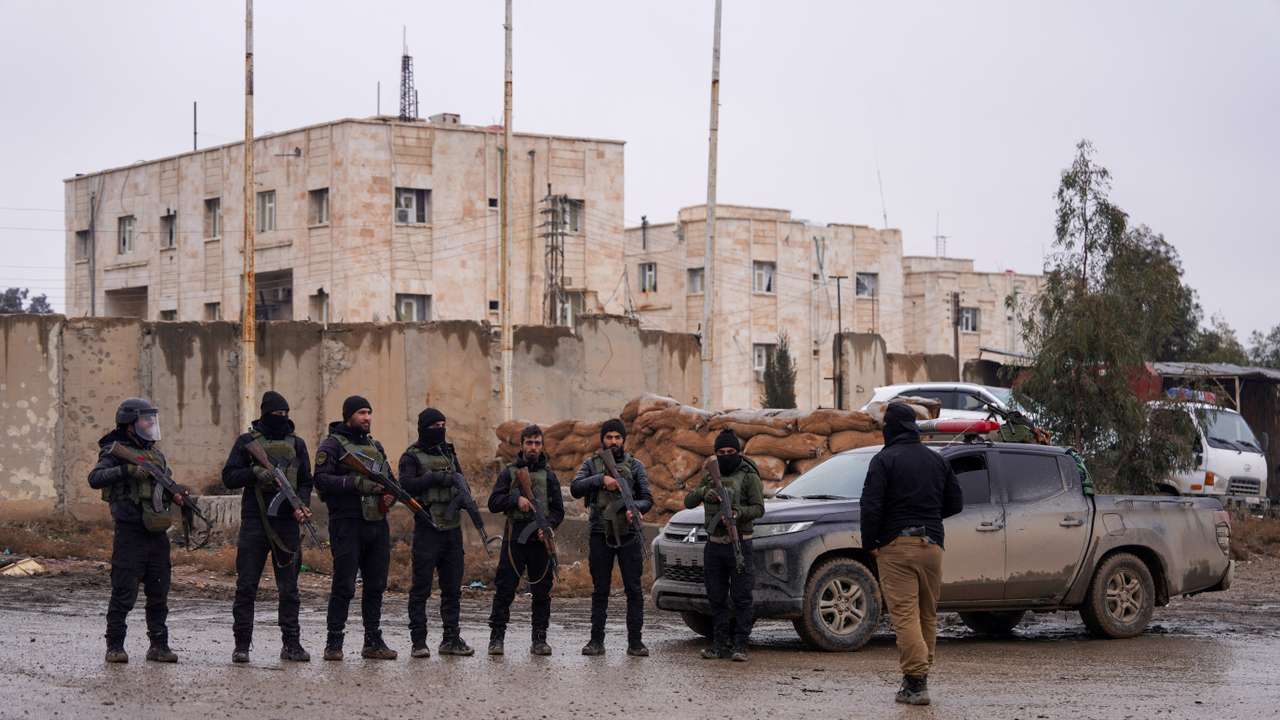
By Ahmed Rasheed, Maya Gebeily and John Irish
Transfers of Islamic State detainees from Syria to Iraq by the U.S. military have slowed this week, seven sources familiar with the matter said, following calls by Baghdad for other countries to repatriate thousands of foreign jihadists.
The U.S. military said on January 21 it had started to transfer the detainees. Its announcement followed the rapid collapse of the Kurdish-led Syrian Democratic Forces in northeast Syria, which caused uncertainty about the security of prisons and detention camps they were guarding.
The United States had expected to transfer up to 7,000 fighters to Iraq within days. But more than a week later, only about 500 have been moved, according to two Iraqi judicial officials, two Iraqi security officials and three diplomats, some from countries whose nationals are among those transferred.
RECOMMENDED FOR YOU

Six countries account for three-quarters of Europe’s unicorn startups
An Iraqi foreign ministry official put the number at under 500 so far.
Baghdad asked the U.S. to slow the influx to make time for negotiations with other countries on repatriating their own nationals among the detainees and to prepare additional facilities to host the fighters, the Iraqi officials and a Western diplomat told Reuters.
Those moved to Iraqi facilities so far include about 130 Iraqis and some 400 foreigners, the Iraqi judicial sources, the Iraqi security officials and a Western diplomat said.
The slowdown, which has not previously been reported, is linked to Western governments' reservations about bringing home their own citizens who joined the Islamic State's brutal self-declared caliphate across swathes of Syria and Iraq from 2014.
Most foreign fighters were subsequently captured in Syria and held in prisons in the northeast for years without trial.
The U.S. State Department and the Pentagon did not immediately respond to Reuters requests for comment on the transfers.
IRAQ BALKS AT MASS TRANSFER
Iraq agreed to host the detainees being moved by the U.S. military after a brief escape by dozens of fighters from one facility in Syria prompted concerns that more could flee, Iraqi government officials said.
RECOMMENDED FOR YOU
Malaria surge in Sudan’s Khartoum as millions return home
But although it has already tried and sentenced dozens of foreign fighters in recent years, Baghdad balked at the prospect of having the full 7,000 in its custody, the officials said.
The influx could overwhelm Iraq’s courts and prisons, and sentencing detainees to death would prompt criticism from Western countries and rights groups, they said.
"It's a trap," one of the senior Iraqi judicial sources said. "These Western countries object to the death penalty, but refuse to receive their terrorists. Why should we bear the burden of being seen as the butcher?"
Responding to questions from Reuters, Hisham al-Alawi, Undersecretary of Iraq's Foreign Ministry for Political Planning, said fewer than 500 detainees had been transferred to Iraq so far.
"For years, Iraq has been urging foreign states to assume their responsibilities by taking back their citizens and dealing with them in accordance with their own laws. While some countries have taken the initiative, a large number of states have not responded to our requests," Alawi said.
The dilemma of what to do with foreign nationals who joined Islamic State has plagued Western countries for the last decade.
Securing guilty verdicts against such detainees in their home countries could be harder than in Iraq, said four diplomats from countries whose nationals were captured in Syria, citing a greater need to prove direct participation in violent crimes.
Governments in such countries could face a public backlash if Islamic State fighters were repatriated and then freed, the diplomats said.
RECOMMENDED FOR YOU
Sheinbaum rings historic bell as thousands fill Zocalo for Mexican Independence Day
The return of an Islamic State-linked woman to Norway in 2020 caused a cabinet crisis that ultimately brought down the government.
As a result of Western nations' hesitations, thousands of foreign fighters detained in Syria and Iraq remained there for nearly a decade - even though the U.S., which repatriated and tried its nationals, urged other countries to do the same.
REPATRIATION THE ONLY ANSWER, EXPERT SAYS
The senior Iraqi judicial source said Baghdad was working with the U.S. State Department on increasing pressure on other countries to begin repatriations.
Secretary of State Marco Rubio said after transfers had begun that foreign Islamic State members would be in Iraq temporarily. "The United States urges countries to take responsibility and repatriate their citizens in these facilities to face justice," he said.
Two diplomats from countries with nationals now in Iraq said their governments faced an uncomfortable choice between repatriation - which would be unpopular domestically - and the possibility that their nationals would face the death penalty if tried in Iraq, an outcome that could outrage voters at home.
One of the diplomats said Baghdad had begun conversations with their country about repatriations but that their government's policy was unchanged.
"It would be difficult for us to accept that they are transferred to Iraq if they are then going to get their head chopped off," the second diplomat said.
RECOMMENDED FOR YOU

Israelis rally against Netanyahu government ahead of October election
Letta Tayler, an associate fellow at the International Centre for Counter-Terrorism, said the mass transfer of detainees to Iraq "has mind-boggling legal implications, none of them positive."
It could prolong their indefinite detention without trial and place detainees at risk of torture and executions based on flawed convictions, Tayler said. The U.S. has raised concerns about unfair trials of Islamic State detainees in Iraq.
"The only viable solution is for countries with fair justice systems to repatriate their nationals," Tayler said.
This article was produced by Reuters news agency. It has not been edited by Global South World.