Factbox-Bangladesh's history of upheaval and coups
Factbox-Bangladesh's history of upheaval and coups
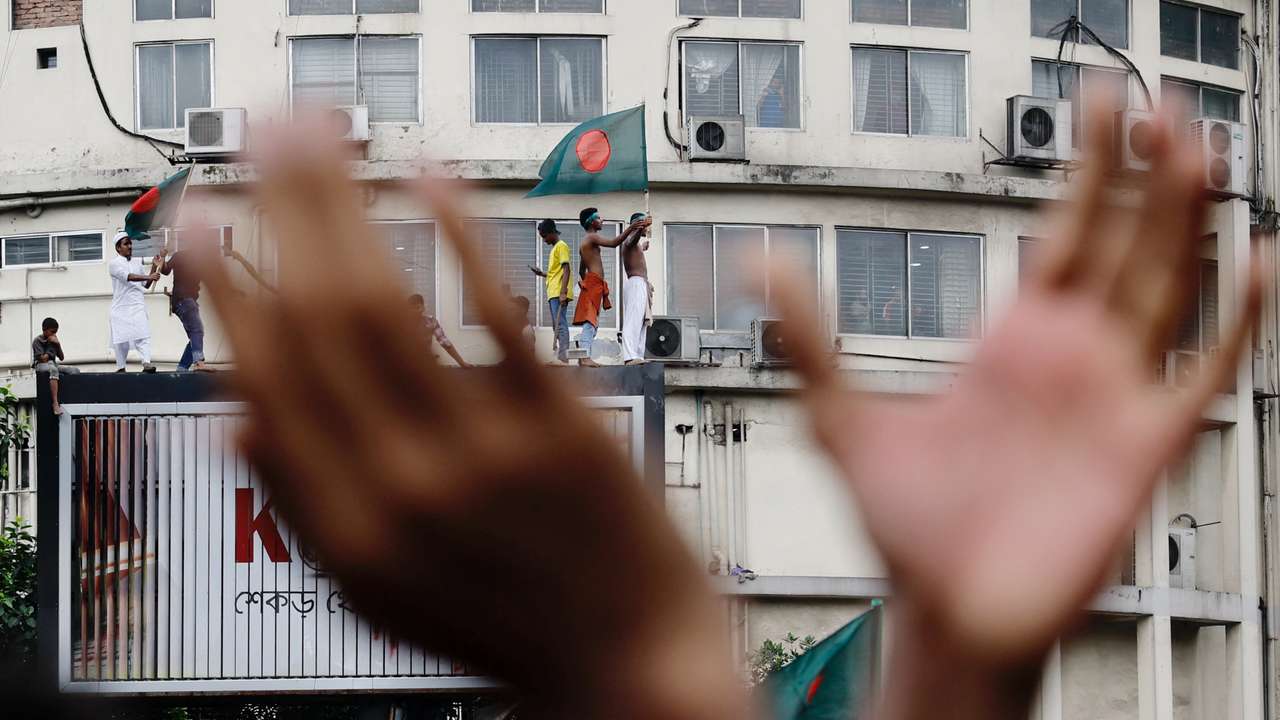
Bangladesh Prime Minister Sheikh Hasina's resignation after weeks of violent protests, announced on Monday in a televised address by the army chief, has brought focus once more to the country's history of political upheaval and coups.
1975
The country's first Prime minister Sheikh Mujibur Rahman, Hasina's father, was assassinated along with most of his family members in a military coup that brought in a long period of military rule. Two more coups in the same year ended with General Ziaur Rahman seizing power in November.
RECOMMENDED FOR YOU

New Asia Forum: Indonesia to set out progress on sustainable AI data centres
1981
Ziaur Rahman was assassinated by rebels who stormed into a government guest house in Chittagong city where he was residing. The violence was believed to be the act of a small group of army officers, but the army itself remained loyal and suppressed the rebellion.
1982
Rahman's successor, Abdus Sattar, was ousted in a bloodless military coup led by Hussein Muhammad Ershad, who took over as chief martial-law administrator and later assumed the office of president.
2007
The army chief staged a military coup and backed a caretaker government that ruled the country for the next two years until Hasina took power in 2009.
2009
Unhappy with their wages and living conditions, revolting paramilitary forces killed more than 70 people in the capital Dhaka, most of whom were army officers.
RECOMMENDED FOR YOU

A wake-up call: The countdown for Latin American democracy — Opinion
The mutiny, as it was called, which had spread to nearly a dozen towns, ended after six days as the angry guards surrendered following a series of discussions.
2012
The Bangladesh army said it had foiled a coup attempt by retired and serving officers that was driven by a campaign to introduce Sharia, or Islamic law, throughout the country.
2024
Bangladesh's Army Chief General Waker-Uz-Zaman said Hasina had resigned following violent anti-quota protests and an interim government would be formed to lead the country.
This article was produced by Reuters news agency. It has not been edited by Global South World.