Fertilizer shipments through Strait of Hormuz fall to zero as food security fears grow
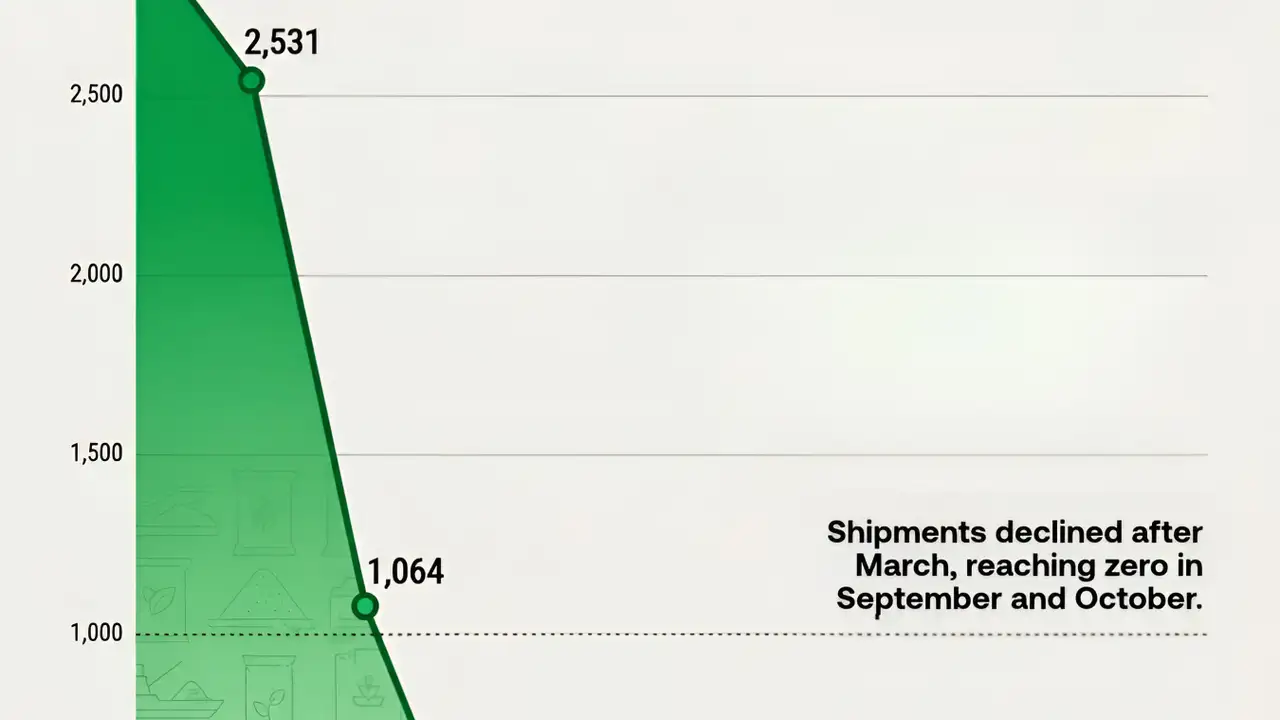
Fertilizer shipments through the Strait of Hormuz fell to zero in September and remained there in October 2026, according to vessel-tracking data from the World Trade Organisation (WTO) and maritime intelligence provider AXSMarine, raising concerns about global food supplies.
Main points
- Tracked fertilizer shipments through Hormuz fell to zero.
- The disruption has lasted more than seven months.
- The UN warns of food shortages in parts of Asia and Africa.
Fertilizer shipments through the Strait of Hormuz fell to zero in September and remained there in October 2026, according to vessel-tracking data from the World Trade Organisation (WTO) and maritime intelligence provider AXSMarine, raising concerns about global food supplies.
The chart above shows how shipments through the vital waterway have collapsed since the conflict involving Iran began in late February, disrupting one of the world's most important routes for fertilizer exports.
The chart's shipment volume index stood at 2,960 in January and 2,531 in February before falling sharply to 1,064 in March.
It dropped further to 278 in April and 225 in May, briefly recovered to 343 in June, and then declined to 87 in July and 62 in August.
RECOMMENDED FOR YOU
Europe's rainfall divide: Norway's coast receives over 3,000 mm while parts of Spain remain dry
By September, the index had reached zero, where it remained in October.
The figures reflect shipments detected through vessel-tracking systems rather than all fertilizer exports from the Gulf region. They also represent an index, not actual tonnes of fertilizer shipped.
The disruption has raised concerns about fertilizer availability, particularly in countries that depend heavily on imports to support agricultural production.
On October 14, a senior United Nations official warned that failure to reach an agreement allowing fertilizer shipments through Hormuz within weeks could trigger a food security crisis in parts of Asia and Africa.
The UN has developed a mechanism to facilitate fertilizer shipments, but its implementation depends on an agreement between the United States and Iran.
UN Under-Secretary-General Jorge Moreira da Silva said the arrangement could become operational within seven to 10 days of an agreement.
Global fertilizer trade adjusts to disruption
The Strait of Hormuz connects the Persian Gulf to the Gulf of Oman and is a major shipping route for fertilizer, energy and other commodities.
Although shipments through the strait have largely stopped, global fertilizer trade has not come to a complete halt.
RECOMMENDED FOR YOU

New York protesters demand ICE removal after agent shoots Dominican man
The WTO reported in October that imports of nitrogen-based fertilizers worldwide were only 2.8% below recent averages, while imports of phosphate fertilizers were 2.2% higher, as buyers turned to alternative suppliers.
However, the prolonged disruption continues to create uncertainty for farmers, particularly in countries where planting seasons are approaching and fertilizer supplies are already under pressure.
This story is written and edited by the Global South World team, you can contact us here.