Germany tightens controls at all borders in immigration crackdown
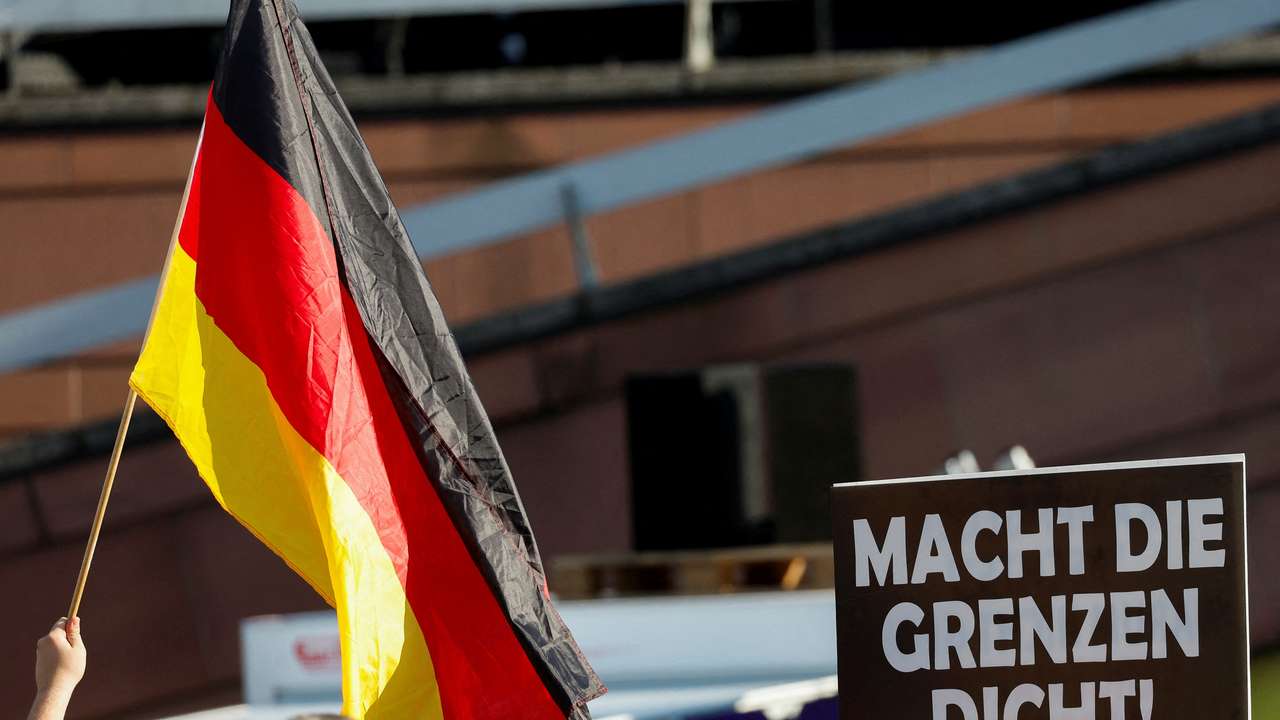
Germany tightens controls at all borders in immigration crackdown
By Alexander Ratz and Sarah Marsh
Germany's government announced plans to impose tighter controls at all of the country's land borders in what it called an attempt to tackle irregular migration and protect the public from threats such as Islamist extremism.
The controls within what is normally a wide area of free movement - the European Schengen zone - will start on Sept. 16 and initially last for six months, Interior Minister Nancy Faeser said on Monday.
RECOMMENDED FOR YOU

Indonesia's 2026 forest fires burn nearly 2 million hectares as crisis worsens
The government has also designed a scheme enabling authorities to reject more migrants directly at German borders, Faeser said, without adding details on the controversial and legally fraught move.
The restrictions are part of a series of measures Germany has taken to toughen its stance on irregular migration in recent years following a surge in arrivals, in particular people fleeing war and poverty in the Middle East.
Chancellor Olaf Scholz's government is seeking to seize back the initiative from the opposition far-right and conservatives, who have seen support rise as they tap into voter worries about stretched public services, integration and security.
"We are strengthening internal security and continuing our hard line against irregular migration," Faeser said, noting the government had notified the European Commission and neighboring countries of the intended controls.
Recent deadly knife attacks in which the suspects were asylum seekers have stoked concerns over immigration. The Islamic State group claimed responsibility for a knife attack in the western city of Solingen that killed three people in August.
The AfD earlier this month became the first far-right party since World War Two to win a state election, in Thuringia, after campaigning heavily on the issue of migration.
Polls show it is also voters' top concern in the state of Brandenburg, which is set to hold elections in two weeks.
Scholz and Faeser's centre-left Social Democrats (SPD) are fighting to retain control of the government there, in a vote billed as a test of strength of the SPD ahead of next year's federal election.
RECOMMENDED FOR YOU

A wake-up call: The countdown for Latin American democracy — Opinion
"The intention of the government seems to be to show symbolically to Germans and potential migrants that the latter are no longer wanted here," said Marcus Engler at the German Centre for Integration and Migration Research.
A TEST FOR EUROPE
A backlash had been building in Germany ever since it took in more than a million people mostly fleeing war-torn countries such as Syria during the 2015/2016 migrant crisis, migration experts say.
It reached a tipping point in the country of 84 million people after it automatically granted asylum to around a million Ukrainians fleeing Russia's 2022 invasion even as Germany was struggling through an energy and economic crisis.
Since then, the German government has agreed tighter deportation rules and resumed flying convicted criminals of Afghan nationality to their home country, despite suspending deportations after the Taliban took power in 2021 due to human rights concerns.
Berlin last year also announced stricter controls on its land borders with Poland, the Czech Republic and Switzerland. Those and controls on the border with Austria had allowed it to return 30,000 migrants since October 2023, it said on Monday.
Faeser said a new model would enable the government to turn back many more - but it could not talk about the model before confidential negotiations with the conservatives.
The controls could test European unity if they lead to German authorities requesting other countries to take back substantial numbers of asylum seekers and migrants.
RECOMMENDED FOR YOU
How Indonesia is fighting forest fires from ground and sky
Under EU rules countries in the Schengen area, which encompasses all of the bloc bar Cyprus and Ireland, are only allowed to introduce border checks as a last resort to avert threats to internal security or public policy.
Germany shares its more than 3,700-km-long (2,300 miles) land border with Denmark, the Netherlands, Belgium, Luxembourg, France, Switzerland, Austria, the Czech Republic and Poland.
Austria's Interior Minister Gerhard Karner told Bild newspaper on Monday that his country would not take in any migrants turned away by Germany at the border.
"There's no room for manoeuvre there," he said.
The measures may not immediately result in many more migrants being turned away at the border, but they could result in more returns to other European countries down the line, as well as acting as a deterrent, said Susan Fratzke at the Migration Policy Institute.
The number of asylum applications in Germany already fell 21.7% in the first eight months of the year, according to government statistics.
This article was produced by Reuters news agency. It has not been edited by Global South World.