Global naval power in 2026: U.S. retains top capability, while China fields the largest fleet
From protecting trade routes to projecting force across oceans, naval power remains one of the clearest indicators of global military strength.
From protecting trade routes to projecting force across oceans, naval power remains one of the clearest indicators of global military strength.
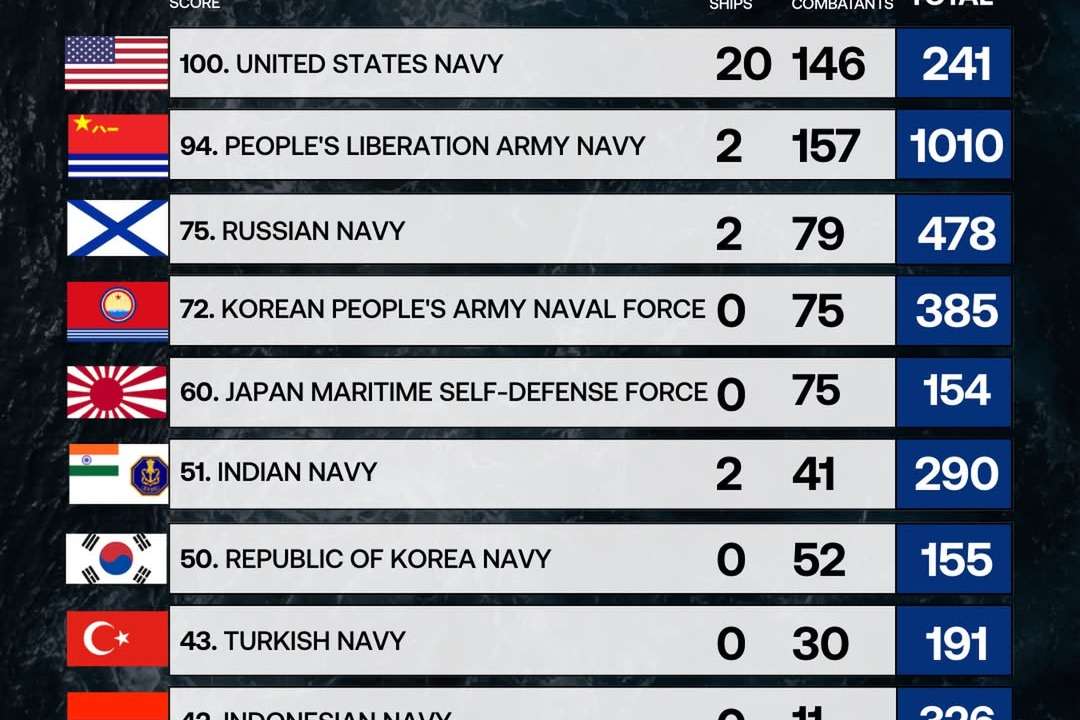
According to the 2026 Global Navy Index, the United States Navy remains the most capable naval force in the world, even as China commands the largest fleet by ship count.
The Global Navy Index evaluates naval strength on a 0–100 scale, measuring overall combat capability rather than simply the number of vessels. The ranking considers factors such as fleet composition, advanced technology and combat effectiveness.
The United States Navy ranks first with a score of 100, reflecting its unmatched ability to operate across multiple oceans simultaneously. While the U.S. does not possess the largest fleet in raw numbers, it maintains a powerful combination of aircraft carriers, nuclear submarines and advanced destroyers that allow it to project power globally.
RECOMMENDED FOR YOU

France split into three nearly equal populations shows how unevenly the country is settled
The American fleet included 20 capital ships and 146 major combatants in 2026, with 241 ships counted in the core fleet measured by the index. Carrier strike groups, supported by long-range missiles and sophisticated surveillance systems, give the U.S. Navy a level of operational reach no other maritime force currently matches.
China’s People’s Liberation Army Navy (PLAN) ranks second in overall capability with an index score of 94, but it stands out as the largest navy in the world by number of vessels.
China’s fleet includes 157 major combatants and more than 1,000 vessels in total, a dramatic expansion driven by the country’s rapid shipbuilding programme over the past two decades.
Beijing has invested heavily in modern destroyers, submarines and aircraft carriers as part of a strategy to secure maritime trade routes and strengthen its influence in the South China Sea and the wider Indo-Pacific region.
Russia occupies third place in the ranking with a score of 75. The Russian Navy operates 79 major combatants and nearly 480 vessels overall, supported by a significant submarine fleet.
Although Russia retains formidable capabilities, particularly in nuclear-powered submarines and missile systems, analysts note that parts of its surface fleet are ageing and undergoing gradual modernisation. Moscow continues to focus its naval strategy on areas such as the Arctic, the North Atlantic and the Black Sea, where it seeks to maintain strategic influence.
North Korea’s navy ranks fourth in the index with a score of 72, largely due to the size of its fleet. The Korean People’s Army Naval Force operates around 385 vessels, including 75 major combatants, though it lacks large capital ships.
Most of these vessels are smaller patrol ships, submarines and coastal defence craft designed for regional operations rather than long-distance power projection.
RECOMMENDED FOR YOU
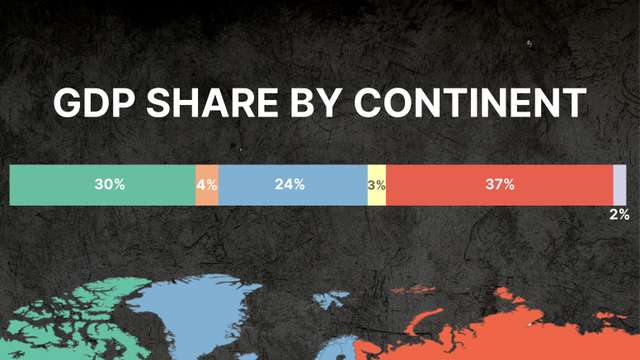
Asia produces the largest share of global GDP
Several Asian powers are strengthening their maritime forces as strategic competition intensifies in the Indo-Pacific.
Japan’s Maritime Self-Defence Force ranks fifth, with an index score of 60. The Japanese fleet includes 75 major combatants and around 154 ships, with a strong emphasis on advanced destroyers, missile defence systems and submarine warfare. Japan’s naval strategy focuses heavily on safeguarding vital sea lanes and maintaining stability in East Asia.
India follows in sixth place with a score of 51. The Indian Navy operates two capital ships, 41 major combatants and roughly 290 vessels in total. India has been steadily expanding its naval capabilities to secure the Indian Ocean region, which carries a large portion of the world’s maritime trade.
Other countries appearing in the ranking include South Korea, Turkey, Indonesia and Finland, each maintaining naval forces designed primarily for regional defence and maritime security.
South Korea’s navy operates 52 major combatants and around 155 ships, while Turkey maintains 191 vessels and 30 major combatants, reflecting its strategic position between the Mediterranean and Black Sea.
Indonesia fields a large fleet of 326 vessels, emphasising maritime patrol across its vast archipelago, while Finland maintains a coastal defence navy of around 200 vessels focused on Baltic security.