India's Rajasthan finds some MDH and Everest spices unsafe for consumption
India's Rajasthan finds some MDH and Everest spices unsafe for consumption
By Aditya Kalra and Arpan Chaturvedi
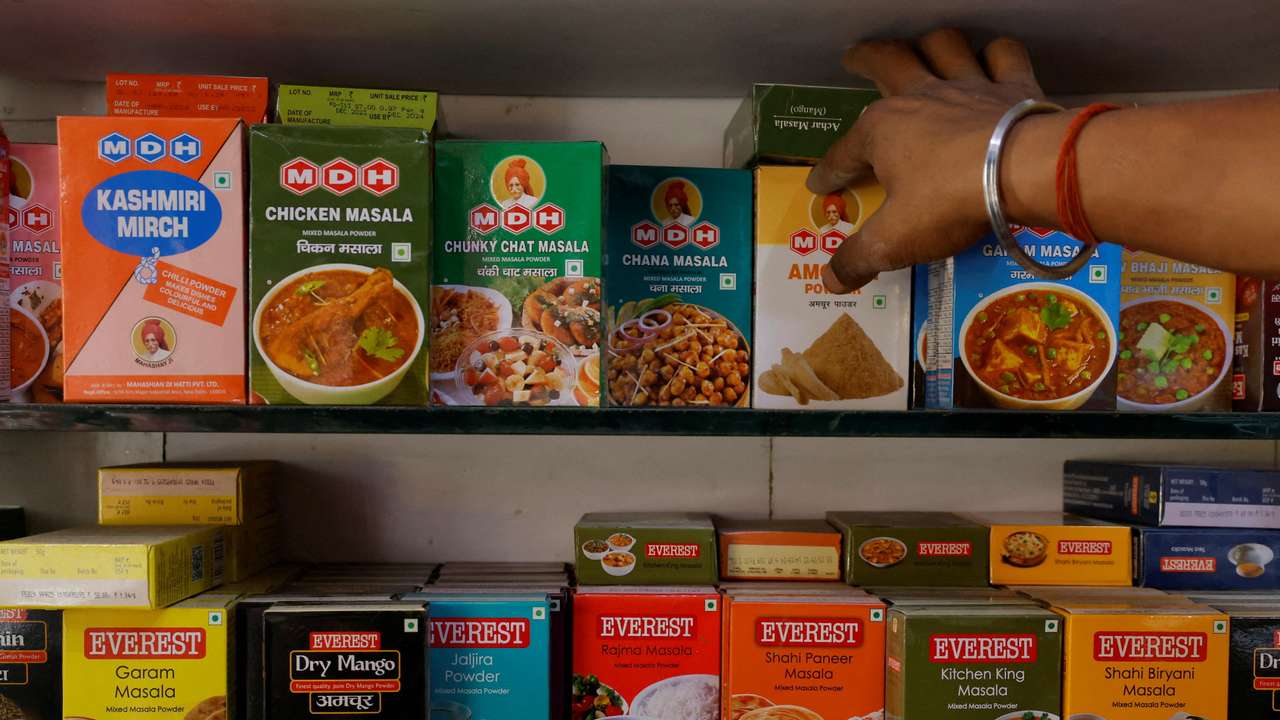
India's Rajasthan state has told the federal government it found some spices of popular brands MDH and Everest "unsafe" for consumption after tests, a letter shows, as local and global scrutiny of the brands for alleged contamination intensifies.
Hong Kong in April suspended sales of three spice blends produced by MDH and one by Everest, saying they contained high levels of a cancer-causing pesticide ethylene oxide, triggering scrutiny by regulators in India and other markets.
RECOMMENDED FOR YOU

‘Hamas could reach Paris’ - Netanyahu warns Macron amid France protests
Singapore also ordered a recall of the Everest mix. New Zealand, the United States and Australia have said they were looking into the issues. Britain has applied extra controls on all spices entering from India, the world's biggest exporter, producer and consumer of spices.
Rajasthan state checked samples of many spices and found a batch of Everest spice mix and two of MDH's unsafe, according to a private letter from a senior health official in the northwestern state, Shubhra Singh, to the Food Safety and Standards Authority of India (FSSAI).
MDH and Everest, whose spices are among the most popular in India and are also sold in Europe, Asia and North America, have said their products are safe for consumption.
Asked about the Rajasthan government's findings, Everest said by email that it "does not add any pesticides to spices during any stage of manufacturing and packing."
MDH did not respond to a request for comment.
State authorities of Gujarat and Haryana, where the MDH and Everest batches were made, "should be asked to take action in the matter without delay," Singh, who is the additional chief secretary for health, wrote in her letter which is not public but has been seen by Reuters.
The FSSAI and Singh did not respond to requests for comment.
While the letter did not detail its findings, Rajasthan state authorities said last week in a statement said it had seized 12,000 kilograms of various spices for alleged contamination, and Singh had written letters informing the federal body and states.
RECOMMENDED FOR YOU

Lula rallies thousands in Brazil's Minas Gerais ahead of presidential run-off
The statement added that Rajasthan collected dozens of samples of spices in May, and found that some contained a "very high level" of pesticide and insecticides.
India's domestic market for spices was valued at $10.44 billion in 2022, according to Zion Market Research.
This article was produced by Reuters news agency. It has not been edited by Global South World.