Iran's new supreme leader vows to keep Hormuz shut, Netanyahu issues threat
By Parisa Hafezi and Maya Gebeily
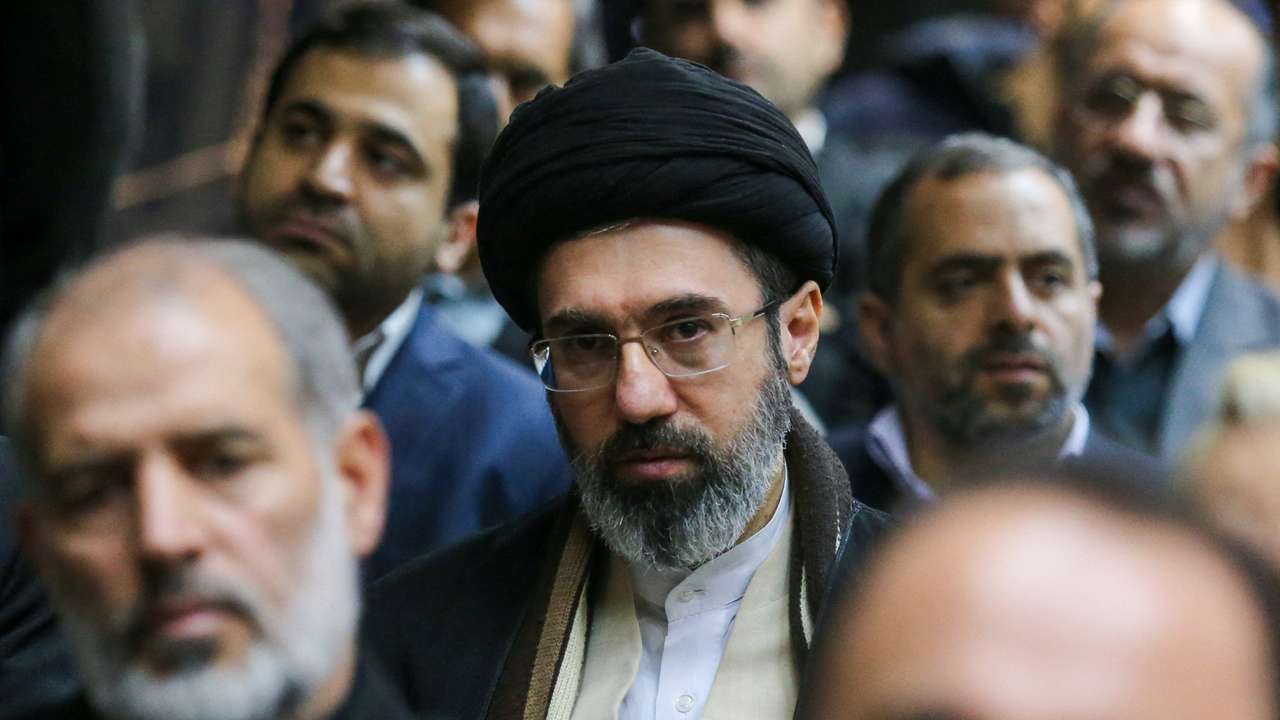
Iran will fight on and keep the Strait of Hormuz shut as leverage against the United States and Israel, new Supreme Leader Mojtaba Khamenei said on Thursday in defiant first comments attributed to him since he succeeded his slain father.
Hours later, Israeli Prime Minister Benjamin Netanyahu used his first press conference since the start of the war to make his own strong statement, issuing a veiled threat to kill Khamenei and defending the military assault on Iran, which has claimed thousands of lives and shaken energy and stock markets.
"I wouldn’t issue life insurance policies on any of the leaders of the terrorist organization ... I don't intend to give an exact message here about what we are planning or what we are going to do," Netanyahu said, standing between two Israeli flags and taking questions via video link.
RECOMMENDED FOR YOU

Six countries account for three-quarters of Europe’s unicorn startups
In Iran, Khamenei did not appear in person and his remarks were read out by a state television presenter. No images have been released of him since an Israeli strike at the start of the war that killed much of his family, including his father and wife.
Khamenei's statement called on Iran's neighbours to shut U.S. bases on their territory and warned that Iran would continue to target them.
"I assure everyone that we will not neglect avenging the blood of your martyrs," said the hardline cleric, who is close to Iran's top military force.
"The popular demand is to continue our effective defence and make the enemy regret it. The lever of blocking the Strait of Hormuz must continue to be used," Khamenei added, referring to the shipping route through which a fifth of global oil normally passes along Iran's coast.
Iranian state television offered no explanation for why the message was read out rather than delivered in person. Iranian officials have said Khamenei was lightly wounded in the initial February 28 airstrikes, but the extent of his injuries is unclear.
The prospect of one of the most severe disruptions ever to global energy supplies enduring sent oil prices up about 9% to $100 a barrel, after falling earlier in the week on hopes of a swift end to the conflict. [O/R]
U.S. stocks fell on Thursday, with the S&P 500 notching its biggest three-day percentage drop in a month.
TANKERS ABLAZE IN IRAQI PORT
RECOMMENDED FOR YOU
Niger appoints new army chief weeks after failed mutiny
Two tankers were ablaze in an Iraqi port after a hit by suspected Iranian explosive-laden boats, a clear sign of defiance toward U.S. President Donald Trump, who said on Wednesday the United States had already won the war.
Images verified by Reuters as filmed from the Iraqi port of Basra showed ships engulfed in massive orange fireballs that lit up the night sky. At least one crew member was killed.
Hours earlier, three other ships were struck in the Gulf. Iran's Revolutionary Guards claimed responsibility for at least one attack - on a Thai bulk carrier that was set ablaze. Another container vessel reported being struck by an unknown projectile near the United Arab Emirates.
On another front in the unpredictable war, Israeli airstrikes hit a building in central Beirut on Thursday, sending thick smoke above the Lebanese capital.
Israel also ordered residents out of another swathe of southern Lebanon, intensifying its offensive against the Iran-backed Hezbollah group after it fired its biggest volley of rockets into Israel since the start of the war.
So far the war has killed more than 2,000 people, including almost 700 in Lebanon.
AS DRONES FLY, TRUMP SAYS US WILL BENEFIT
Undermining U.S. and Israeli claims to have knocked out much of Iran's stock of long-range weapons, more drones were reported flying into Kuwait, Iraq, the UAE, Bahrain and Oman.
RECOMMENDED FOR YOU

Russia signs BRICS Pay and technology deals in New Delhi
Additionally, a U.S. military refueling aircraft crashed in western Iraq on Thursday, in an incident the U.S. said involved another aircraft but was not the result of hostile or friendly fire. Since the U.S. and Israel started carrying out strikes against Iran on February 28, seven U.S. troops have been killed.
Iran has said it will not let oil back through the strait until U.S. and Israeli attacks cease, but Trump played down the higher prices.
"The United States is the largest Oil Producer in the World, by far, so when oil prices go up, we make a lot of money," Trump wrote on social media.
U.S. Treasury Secretary Scott Bessent told Sky News in an interview that the U.S. Navy, perhaps with an international coalition, would escort vessels through the Strait of Hormuz when it is militarily possible.
The U.S. is a net oil exporter but also the world's biggest oil consumer. Economists say sustained high prices would drive broad inflation.
Separately, Trump said the Iranian men's national soccer team was welcome to participate in the 2026 World Cup, which the U.S. is co-hosting, but added that it was not appropriate that they be there "for their own life and safety".
'SECURITY FORCES ARE EVERYWHERE'
Inside Iran, residents said security forces were increasing their presence to demonstrate continued control.
RECOMMENDED FOR YOU
Iceland has more renewable freshwater per person than any other country
"Security forces are everywhere, more than before. People are afraid to come out, but supermarkets are open," teacher Majan, 35, said by phone from Tehran.
Israel said it had struck checkpoints in Tehran of the Basij, the Revolutionary Guard's voluntary militia.
Israel and the United States have called on Iranians to rise up and topple their clerical rulers. Many Iranians want change and some openly celebrated the elder supreme leader's death on February 28, the war's first day, after his forces had killed thousands of anti‑government protesters in January. But there has been no sign of organised dissent while the country is under attack.
TEHRAN SEEKS PROLONGED ECONOMIC SHOCK
Iran's message is that its strategy now is to impose prolonged economic shock to force Trump to back off. A spokesperson for Iran's military command said on Wednesday the world should prepare for oil prices of $200 a barrel.
U.S. Energy Secretary Chris Wright said on Thursday he did not expect that to happen, but did not totally rule it out. "I would say unlikely, but we are focused on the military operation and solving a problem," Wright told CNN.
Oil prices rose despite the announcement Wednesday that developed countries would release 400 million barrels of oil from strategic reserves, nearly half from the United States.
This article was produced by Reuters news agency. It has not been edited by Global South World.